On 19/3, the Dutch TTF natural gas futures contract, Europe's benchmark price, briefly rose 35% to 74 euro (nearly 85 USD) per MWh during opening trading. Prices then slightly decreased, currently standing at 70,8 euro. Natural gas prices in the US increased by 4,4%.
Crude oil prices also saw a sharp increase. This afternoon, Brent crude oil prices at one point rose over 6% to 114 USD per barrel. US WTI crude currently reached 97 USD per barrel.
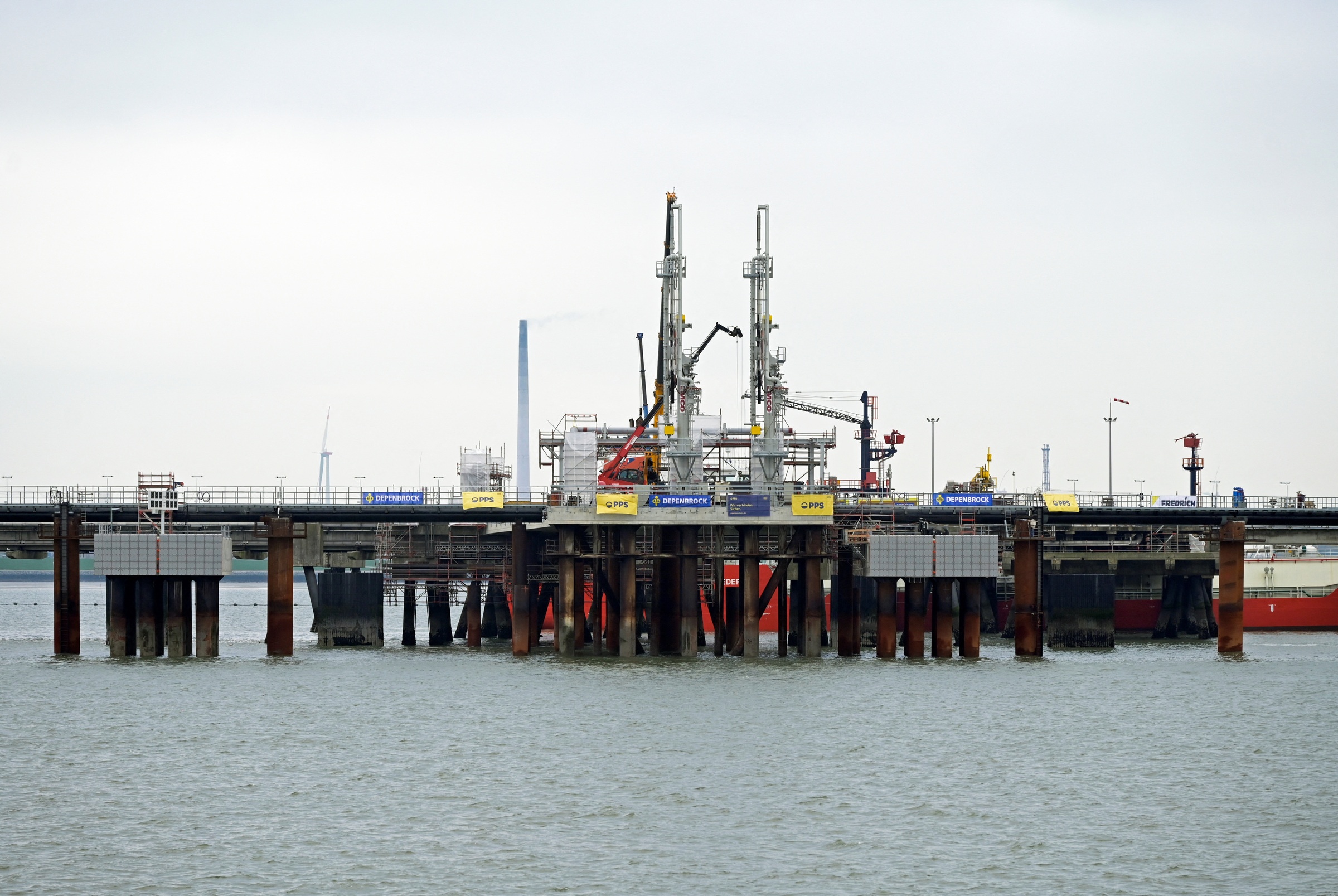 |
Floating LNG terminal in Wilhelmshaven, Germany. *Photo: Reuters*. |
The market saw volatility after repeated attacks on energy infrastructure in the Middle East, sparking concerns over supply. On 18/3, QatarEnergy, Qatar's national oil and gas corporation, confirmed that Iranian missiles struck the Ras Laffan liquefied natural gas (LNG) complex. This facility is the world's largest LNG production site, supplying about 20% of global output.
The strike occurred just hours after Israel's attack on Iran's massive South Pars gas field. Saudi Arabia also announced it intercepted and destroyed several ballistic missiles targeting Riyadh, and thwarted a drone attack on a gas facility in the eastern part of the country.
European gas prices remain far below their 2022 crisis peak of 340 euro. However, if prices continue to rise sharply, Europe has little room to maneuver. Global LNG plants are already operating near maximum capacity. Norway, the largest intra-EU gas supplier, is pumping gas at maximum levels. Qatar also halted LNG production since the beginning of the month due to the ongoing conflict.
Europe currently imports 25,4% of its gas from the US. Supply from Qatar and the UAE accounts for less than 10%. Since 2022, Europe ceased pipeline gas imports but continues to purchase Russian LNG.
Since early this month, experts have warned of a potential "scramble for gas" between Europe and Asia in the spot market, where shipments are traded daily to the highest bidder. At that time, European Union officials stated there was no risk of gas shortages and the situation remained under control. But after a harsh winter, its reserves currently stand at only 29%, a significant decrease compared to the same period in 2024 and 2025.
Ha Thu (according to CNBC, Reuters)