On 7/1, spot gold prices globally fell by 38 USD, settling at 4,455 USD per ounce. David Meger, Director of Precious Metals Trading at High Ridge Futures, attributed the market downturn to "investors selling off to take profits after several gaining sessions."
However, weaker-than-expected US employment data limited the precious metal's decline, reinforcing expectations that the Federal Reserve (Fed) could cut interest rates. The market currently anticipates the Fed will reduce interest rates by 61 basis points this year, according to financial data firm LSEG.
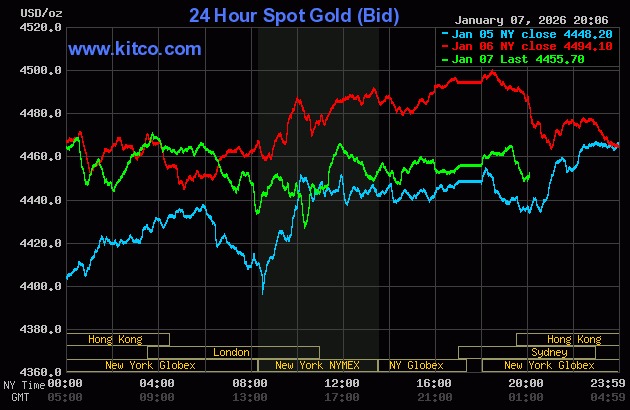 |
Global gold prices reversed course after several strong sessions of gains. Chart: Kitco. |
The number of job openings in the US in November fell more sharply than forecast, reaching an 11-month low. A separate report from ADP also indicated slower-than-expected growth in new jobs in December. The official US employment report is scheduled for release on 9/1.
Geopolitical developments continue to support gold prices. Following the raid and arrest of President Nicolas Maduro last week, the US announced plans to refine and sell Venezuelan crude oil. The White House also confirmed discussions regarding control over Greenland.
Official data also revealed that China's Central Bank purchased gold reserves for the 14th consecutive month. "This report indicates strong demand from Asia, reinforcing expectations for gold price increases," Meger noted.
Beyond gold, other precious metals also saw declines on 7/1. Silver fell by 4.1% to 77.9 USD. HSBC raised its silver price forecast to 68.2 USD this year, but cautioned about significant volatility if supply improves. Goldman Sachs also anticipates strong fluctuations in silver prices.
Platinum prices decreased by 6.5% to 2,285 USD. Palladium lost 5.2%, reaching 1,727 USD.
Ha Thu (according to Reuters)