Global oil prices plunged on 4/8, with Brent and US WTI crude reaching a three-week low. This decline follows hopes for a diplomatic solution to Middle East tensions. Brent crude settled down 5.3% at USD 78.3 a barrel, while WTI crude dropped 5.7% to USD 75.7. Prices continue to hover around these levels this morning.
The market's downturn followed optimistic comments from US and Qatari officials. These statements fueled expectations of a diplomatic solution to the Middle East conflict, which would improve oil flow through the Strait of Hormuz.
US Secretary of State Marco Rubio announced progress in discussions with Iran and Oman. These talks aim to increase vessel traffic through the Strait of Hormuz, though a final agreement remains pending. Earlier, Secretary of the Treasury Scott Bessent suggested an agreement with Iran to reopen the Strait could materialize as soon as 4/8 or 5/8.
Qatar's Foreign Ministry spokesperson, Majed al-Ansari, confirmed ongoing efforts for a diplomatic solution to the conflict. Concurrently, a US State Department spokesperson revealed a new round of US-mediated negotiations between Israel and Lebanon. These talks began on 4/8 and are scheduled to conclude on 6/8.
Simon-Peter Massabni, Business Director at brokerage firm XS.com, attributes the recent price drop to a diminishing "geopolitical risk premium" in oil prices. This reduction stems from the prospect of a diplomatic breakthrough. He stated, "If negotiations between the US and Iran make significant progress, the market could continue to price in a lower probability of supply disruptions."
Disruptions to shipping through the Strait of Hormuz have historically forced Middle Eastern nations to sharply reduce oil output. This waterway previously accounted for about 20% of global oil and gas transport before the conflict's escalation. Saudi Aramco reported that the world has lost over 2.6 billion barrels of oil since the conflict began in late February.
Massabni emphasized that the oil market remains highly sensitive to political developments. For instance, early yesterday, prices briefly rose after an Iranian source informed Reuters that Tehran seeks to control and potentially intervene in vessel movements within the Strait of Hormuz. This initiative is part of a plan Iran is discussing with Oman to re-establish this strategic maritime route.
Goldman Sachs bank projects Brent oil prices will trade within the USD 80-90 range per barrel. This outlook holds until either a new agreement between the US and Iran is confirmed, or the conflict rapidly escalates.
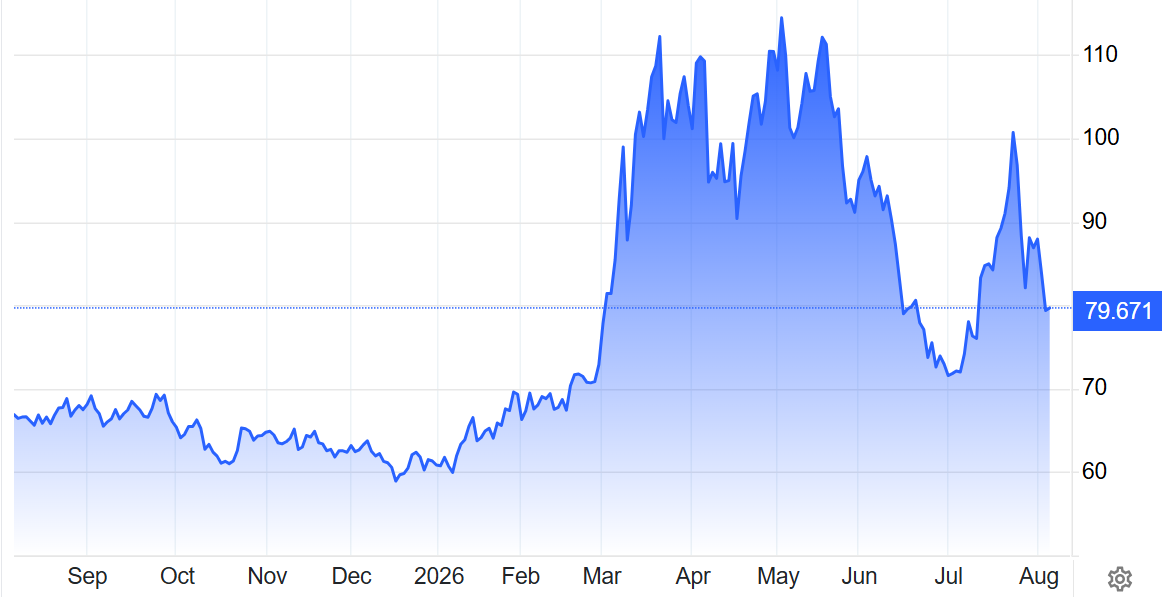 |
Brent price movements over the past year. Chart: Trading Economics |
Ha Thu (according to Reuters)