Opening today's trading session, Brent crude oil prices rose 4% to 111.8 US dollars a barrel. US WTI crude increased 2.8% to 99.6 US dollars.
The market surged from the previous session after Iran attacked several energy facilities across the Middle East. Earlier, Iran's South Pars gas field was also hit by airstrikes, marking a significant escalation in the conflict with the US and Israel.
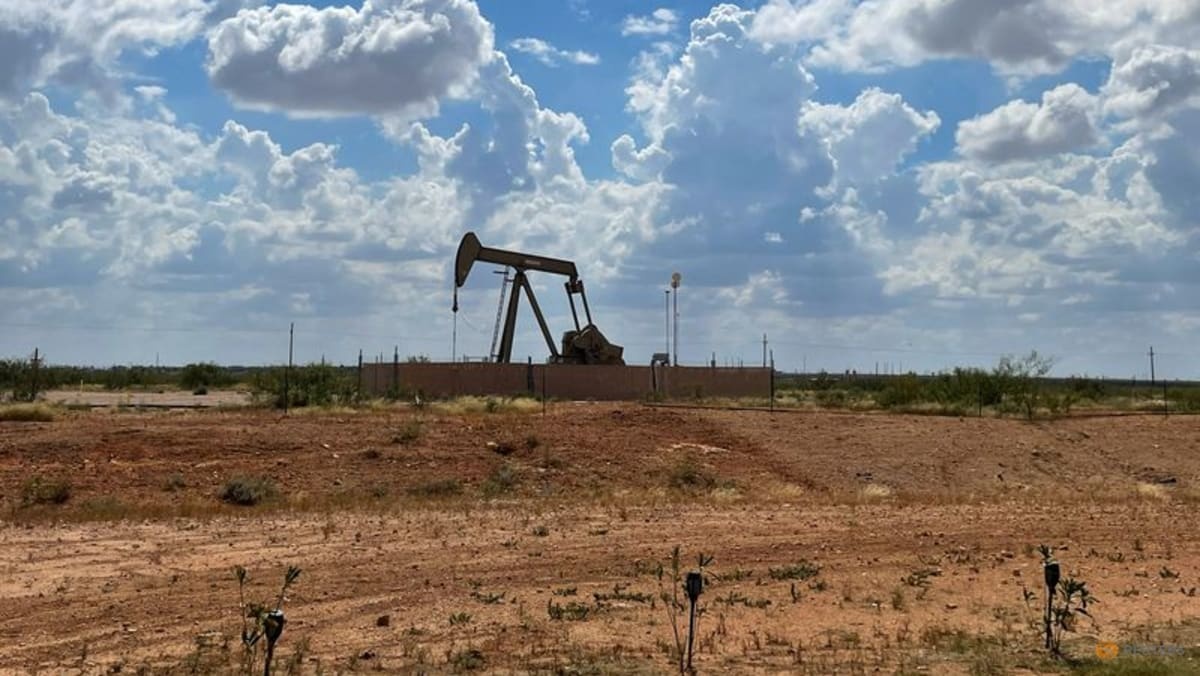 |
A oil drilling site in Texas, US, 10/2025. *Photo: Reuters*
Qatar's national oil and gas company announced on 18/3 that the Ras Laffan industrial complex, the center of the country's energy industry, suffered "severe damage" after being hit by Iranian missiles. Saudi Arabia also reported intercepting and destroying several ballistic missiles targeting Riyadh, while thwarting a drone attack on a gas facility in the country's eastern region.
Iran had previously issued evacuation warnings for multiple energy facilities in Saudi Arabia, UAE, and Qatar on 18/3. State media reported that these targets would be attacked "in the next few hours". This warning followed the attack on their South Pars gas field.
"Attacks on the South Pars field have driven up oil and gas prices. Escalation in strikes on energy infrastructure will continue to push prices higher," stated Ole Hvalbye, an analyst at SEB.
The conflict has nearly halted shipping through the Strait of Hormuz for almost three weeks. This maritime route carries about 20% of global oil and liquefied natural gas (LNG) supplies. Oil output in the Middle East is estimated to have decreased by 7-10 million barrels per day, equivalent to 7-10% of world demand.
On 18/3, US President Donald Trump's administration announced a temporary waiver of the Jones Act shipping regulations for 60 days. This allows foreign-flagged vessels to temporarily transport fuel, fertilizer, and goods between US ports.
The US government also temporarily eased regulations on summer blended gasoline to reduce pollution, according to Reuters sources. However, these measures have a limited impact on fuel prices. Traders and analysts believe these actions might help cool US fuel prices, but are unlikely to significantly affect global energy prices.
Ha Thu (according to Reuters)