The government recently issued Decree 141 on 29/4, revising tax exemption regulations for individuals and business households. This decree doubles the current annual tax-exempt revenue threshold to one billion dong. Consequently, these entities will no longer be required to pay personal income tax or value-added tax (VAT).
Significantly, small businesses will also benefit from a one billion dong annual tax-exempt revenue threshold, a first for this group. This marks a departure from the current Corporate Income Tax Law, which previously offered only time-based exemptions, reductions, or specific tax rates, without a fixed revenue threshold for exemption.
However, this tax exemption does not extend to subsidiaries or related companies linked to businesses that do not meet the exemption criteria.
The decree is set to take effect on 1/1/2026. For business households, individuals, and small businesses with annual revenue of one billion dong or less who have already declared and paid taxes in the first quarter of the year, the paid amount will be offset or refunded.
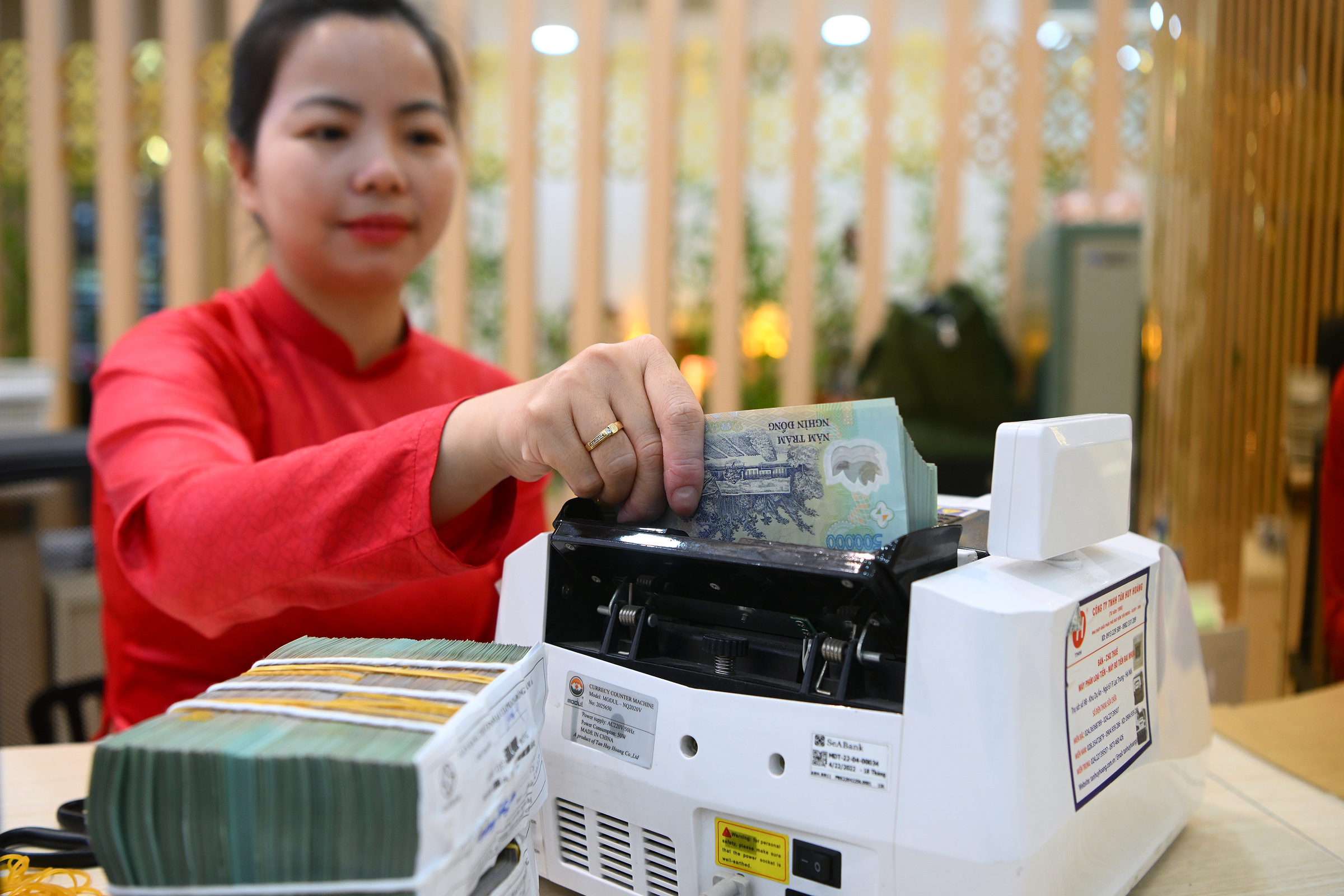 |
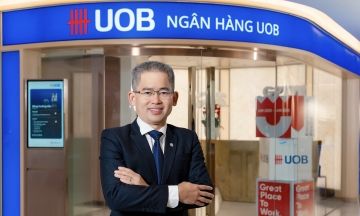
Transaction office at a bank. Photo: Giang Huy
According to tax authority data, approximately 2.56 million business households and individuals currently have revenue below one billion dong. The Ministry of Finance estimates that this policy will reduce state budget revenue by about 4,850 billion dong compared to the existing policy (with a 500 million dong threshold). This reduction could reach an estimated 16,650 billion dong when compared to 2025, a period when lump-sum tax and a 100 million dong threshold were still in effect.
The Ministry of Finance explained that the increased threshold aims to support the small business sector, which has faced rising input costs, especially for fuel and logistics, alongside weakened purchasing power. The policy also seeks to establish a more "scientific, reasonable" tax system, thereby reducing incentives for tax evasion. Furthermore, a higher exemption threshold is expected to help business households maintain operations, accumulate capital for expansion, and encourage their transition into formalized businesses, thus "nurturing long-term revenue sources" for the state.
For the business sector, this policy encourages business households to convert into enterprises with professional management, fostering conditions for scaling up and improving efficiency. This regulation aligns with the Politburo's Resolution 68, which targets achieving two million businesses by 2030. It is projected that corporate income tax exemptions will amount to approximately 2,164 billion dong, benefiting around 235,800 businesses.
Phuong Dung