With this solution, merchant partners can authorize Grab to issue invoices for eligible GrabFood orders. Merchant partners only need to complete service registration on the GrabMerchant app. Grab will then issue invoices for authorized orders based on registered information and provide them to users. This reduces the effort and resources partners dedicate to invoicing. It also conveniently meets customer demands for invoices, opening new business opportunities on the platform.
Regulations on tax management and e-invoices are evolving, imposing new requirements on business households and individual business owners. Decree 68/2026/ND-CP specifies tax policies and tax management for business households and individual business owners. Decree 254/2026/ND-CP regulates e-invoices and electronic documents, permitting sellers of goods and services to authorize third parties to issue e-invoices.
For restaurants and eateries, especially business households and individual business owners, adapting requires not only understanding regulations but also addressing operational challenges: how to handle invoicing procedures conveniently and accurately without adding time and resource pressure. With guidance from the E-commerce Tax Sub-department and the Tax Department, Grab invested in technology to implement the invoice issuance authorization solution. This makes it easier for sellers on the platform to integrate new regulations into their operations.
 |
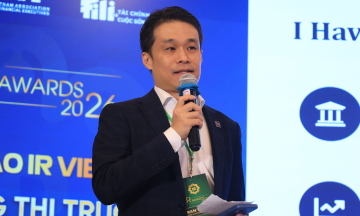
Grab announced the launch of its invoice issuance authorization service, supported by the E-commerce Tax Sub-department and the Tax Department. Photo: Quynh Nhu |
Beyond optimizing merchant operations, the invoice issuance authorization service also expands opportunities for store owners to reach corporate clients using Grab For Business (GFB). Grab data shows that most GFB clients prefer restaurants that provide invoices for convenient payment and expense settlement. This segment often places group orders for meetings, events, or internal activities, resulting in higher order values. Meeting invoice requirements conveniently helps partners serve this potential customer segment and increase revenue.
Nguyen Anh Khoa, owner of Matcha 1996 and a GrabFood store owner who uses the service, stated that previously his shop could not issue invoices, limiting its ability to serve corporate clients. Since he started using Grab's invoice issuance authorization service, orders from corporate clients have increased from about two to three per week to almost daily. "More convenient invoicing also saves the shop time and allows us to focus better on operations", said Khoa.
Tran Hoang Tuan, Market Development Director at Grab Vietnam, believes that policy changes are creating new demands for business households and individual business owners, while also motivating Grab to continue investing in technology to help partners adapt more easily. "We will continue to develop practical solutions, ensuring technology becomes a tool that helps partners operate efficiently and grow sustainably", Tuan stated.
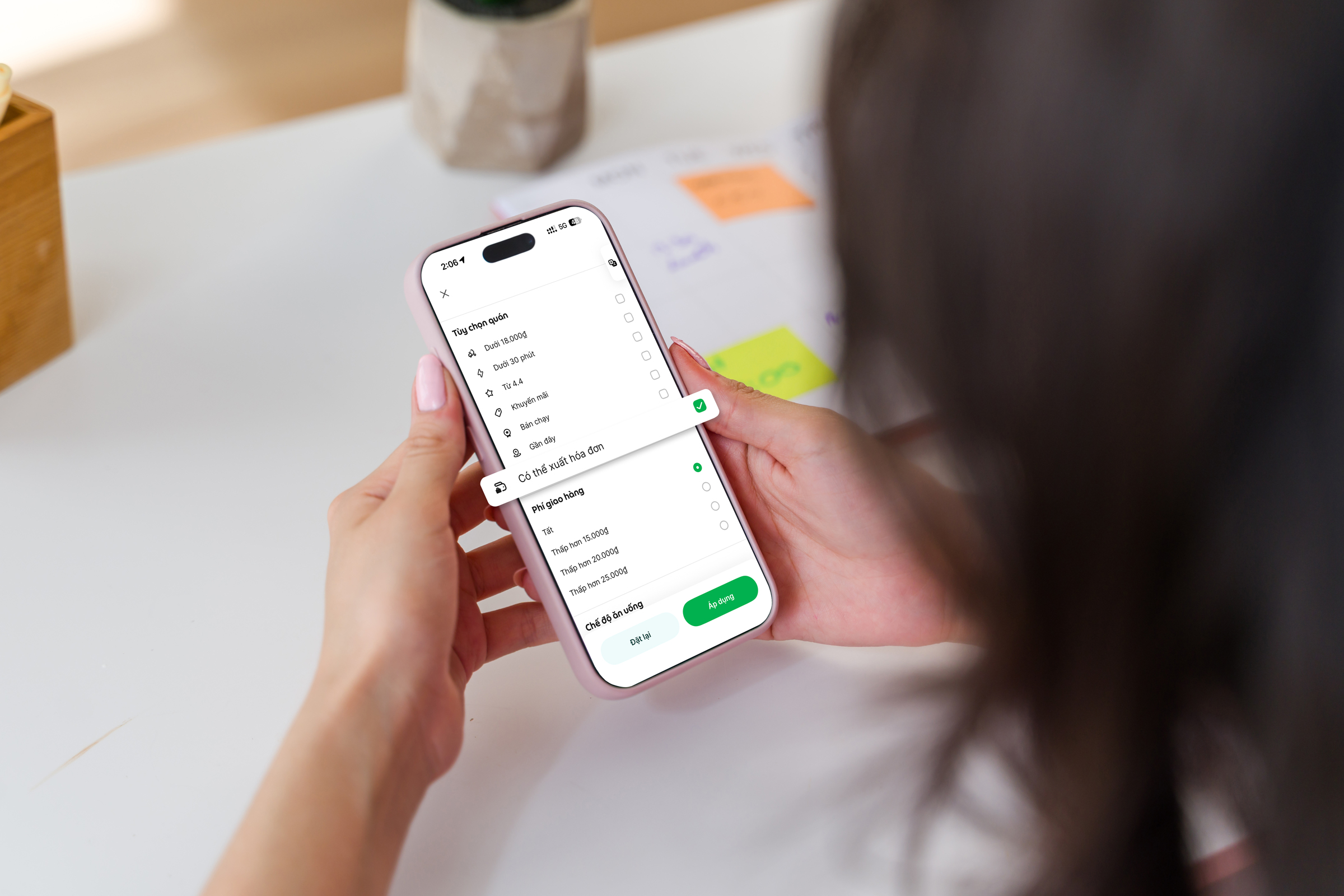 |
Grab users select restaurants that issue invoices on the app. Photo: Quynh Nhu |
Alongside developing platform solutions, Grab continues to collaborate with tax authorities and experts to bring tax policy information closer to merchant partners. On 17/9, Grab organized the restaurant partner conference "Go Digital, Get More Orders - Leading Technology with Grab" in TP HCM, following a similar event held in Hanoi in July.
The conference helped merchant partners, especially business households and individual business owners, update on new tax policies and regulations through presentations from tax authority representatives and experts. Additionally, Grab showcased solutions enabling partners to better utilize the GrabFood ecosystem for business growth, including opportunities from the corporate client segment.
Kim Anh
Grab users who require an invoice can follow the instructions here.