As Vietnam's stock market recently saw an upgrade, the demand for capital from businesses is growing. However, a common mistake many public companies make, according to experts, is trying to please all shareholder groups, including 'short-term' investors. Spreading resources too thinly can distract businesses from their long-term objectives and create additional governance issues.
At the recent IR Awards 2026 ceremony, organized by the Vietnamese Association of Financial Executives (VAFE), experts noted that while short-term capital is attractive due to its active trading and potential impact on stock prices, businesses should not allow this group to dominate their investor relations (IR) activities.
Darren Wang, Director of Investor Communications & Professional Development at the Taiwan Investor Relations Institute (TIRI) and Managing Director of Bays Capital, offered a guiding principle: "You cannot please every investor, so don't try."
According to Wang, the market always features many short-term investors who focus on momentum trading or anticipate quarterly earnings fluctuations. The capital from this group moves quickly, and their sentiment is highly volatile.
If businesses dedicate too many resources to meeting short-term information requests or appeasing 'short-term' shareholders, the IR department and leadership will be diverted from strategic goals. More seriously, businesses risk attracting opportunistic shareholders, who can pressure management into short-term decisions or quickly withdraw capital during market volatility.
Wang shared that he himself "wasted much time dealing with investors with unpredictable motives" early in his career. From this lesson, he realized that not chasing short-term capital is a crucial first step for businesses to protect their strategic direction and maintain discipline in the capital market.
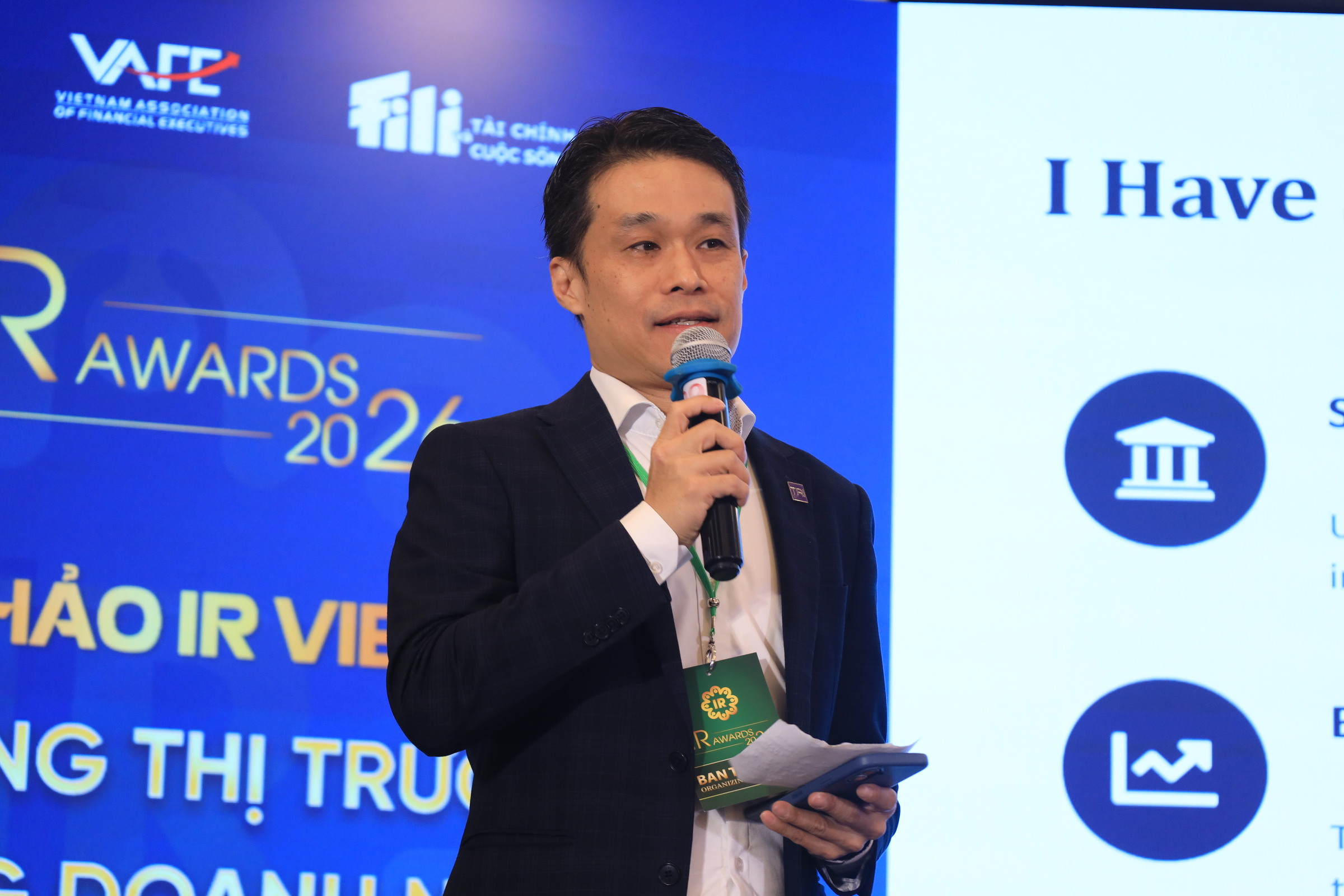 |
Darren Wang, Director of Investor Communications & Professional Development at the Taiwan Investor Relations Institute (TIRI). Photo: Organizer provided |
To escape this trap, businesses need to restructure their IR activities systematically and focus on long-term value. Daniela Peeva, President of the Bulgarian Association of Investor Relations Directors (ABIRD), believes that companies should transition from traditional IR, which primarily revolves around disclosing short-term profits, to an integrated IR model. This model emphasizes proactively building trust with institutional investors.
Transparency should be demonstrated by providing accurate, updated information and clear long-term scenarios, rather than merely chasing quarterly targets. Non-financial and ESG factors should also be integrated into the business model and investment thesis for risk management, instead of being treated as mere formal reports.
From a practical perspective, Darren Wang asserted that businesses must aim to become a "source of truth"—a place where investors can find quality information not easily obtained from other sources.
According to Wang, the IR department should concentrate on three content groups: First is an in-depth perspective on the entire industry, from upstream to downstream, much like how semiconductor chip manufacturer TSMC created a market-leading effect through its investor conferences. Second is an analysis of policy trends and legal regulations that could impact the industry. Third is management's view on the business's and market's development cycles.
A professional IR strategy also directly impacts corporate finance. According to Daniela Peeva, transparent, consistent, and highly predictable information helps reduce investors' "perceived risk." When this risk decreases, the market discount rate applied to the company can fall, thereby optimizing the cost of capital and supporting valuation multiples. Additionally, international IR standards facilitate deeper access to green finance, sustainable investment funds, and international institutional capital.
Darren Wang cited Taiwan, where over 50% of capital comes from foreign investors, to illustrate IR's role in building relationships with international capital. He stated that a key benefit of a sound IR strategy is creating a "self-selecting shareholder base." When a company adheres to transparency and a long-term vision, short-term investors tend to be filtered out, while institutional funds and global ETFs are more motivated to remain partners through economic cycles.
The direct consequence of this sustainable shareholder structure is a significant increase in the price-to-value multiple. As a result, the company's stock can maintain a prominent position and exhibit much higher resilience compared to its industry competitors.
Tat Dat