Ho Chi Minh City is embarking on an ambitious plan to transform its export landscape, aiming for high and medium-tech goods to comprise 70% of its export turnover by 2030. This strategic direction is outlined in the Action Plan for the Implementation of the Goods Import-Export Strategy for the 2026-2030 period, issued by the Ho Chi Minh City People's Committee. The city intends to significantly expand the scale and improve the quality of its import and export products, positioning itself as a leading economic hub driven by advanced technology.
Increasing technological content for export goods
As the nation's economic locomotive, Ho Chi Minh City plans to establish the manufacturing and processing industry group as its primary export sector, targeting a 90% share of total exports. This represents a 15% increase from the current structure. Products with medium and high technological content are expected to reach approximately 70% of all exports.
This strategic shift reflects the city's commitment to enhancing the value of its goods, boosting localization rates, and integrating more research and innovation into its export products. To achieve this, the city has identified several priority sectors: electronics, semiconductor microchips, computers and components, renewable energy equipment, precision mechanics, and supporting industries.
The city also plans to attract multinational corporations to invest in semiconductors, electronic components, and high technology through various incentives. Concurrently, it will support research and development (R&D) activities and facilitate connections between foreign direct investment (FDI) enterprises and domestic businesses. This initiative aims to raise the localization rate within the production chain, fostering a more robust and self-reliant industrial base.
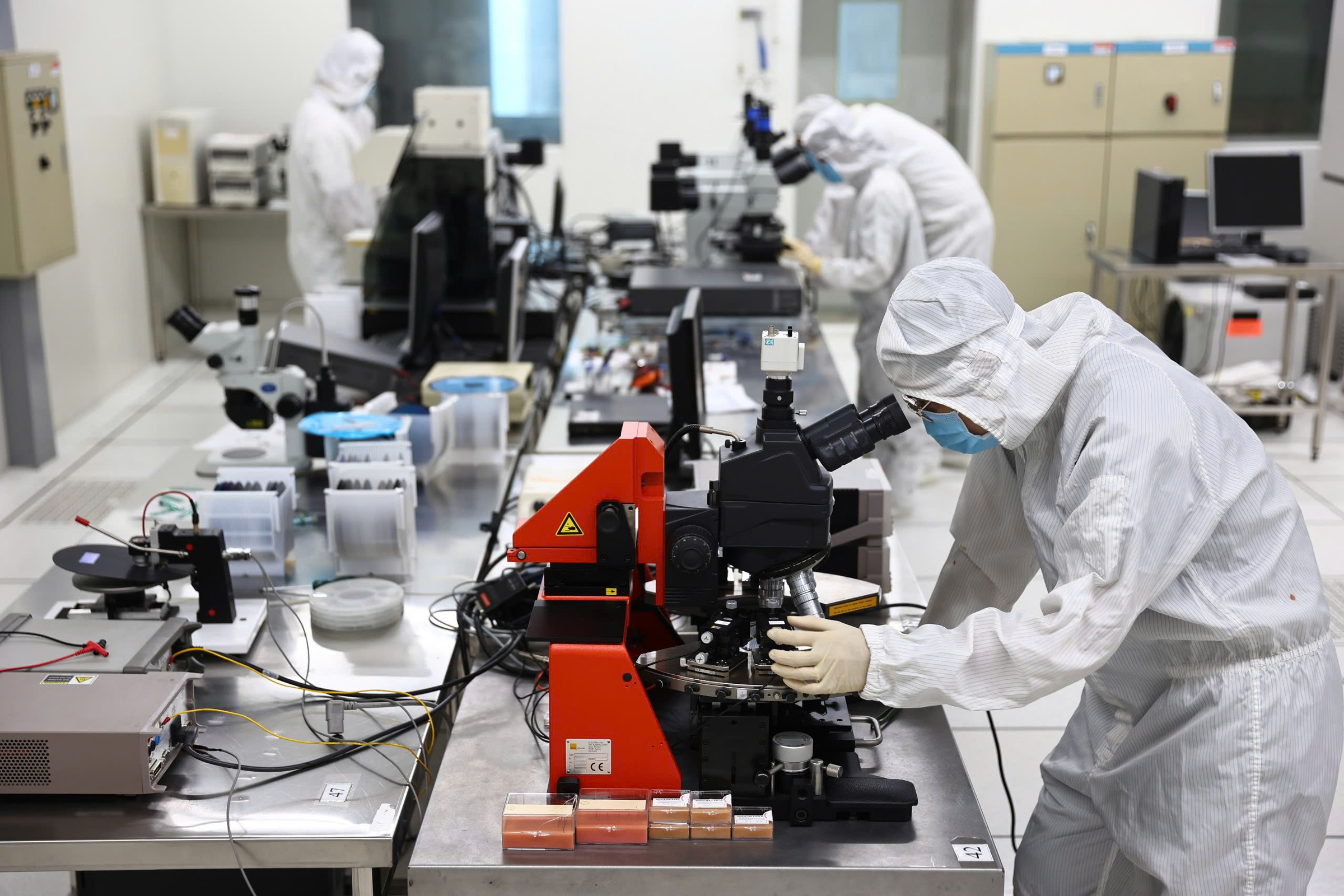 |
Inside a semiconductor laboratory at Ho Chi Minh City Hi-Tech Park. *Quynh Tran*. |
The city's traditional industrial development model, which emerged after the Doi Moi (renovation) period, will undergo restructuring. This transformation will steer industries towards high technology, automation, circular economy principles, and reduced emissions. The city announced it will develop and implement plans to convert and reorient industrial parks and export processing zones within its area.
Concurrently, resource-intensive and high-emission export industries will not receive encouragement for development. Instead, the locality prioritizes green economy products, circular economy models, and environmentally friendly products, aligning with global sustainability trends.
Growth driven by market diversification
Ho Chi Minh City aims to maintain an average export growth rate of 10-11% annually. The plan outlines continued exploitation of traditional markets such as the United States, the EU, Japan, South Korea, and China. Simultaneously, the city will expand into new territories including the Middle East, South Asia, Africa, Latin America, and Halal markets, aiming to reduce reliance on any single export region.
To lay the groundwork for this transition, Ho Chi Minh City plans significant investment in logistics infrastructure and supply chain connectivity. The city targets an annual logistics industry revenue increase of 13-16%, contributing 8-10% to its gross regional domestic product (GRDP), and reducing logistics costs to 11-14% by 2030. Furthermore, over 80% of export goods are expected to pass directly through the city's seaports, airports, railway stations, and dry ports.
Another notable direction is the development of new-generation free trade zones, integrated with smart logistics centers, international transit ports, and cargo airports. The plan also aims to leverage the role of the International Financial Center (IFC) to develop financial services essential for import and export, such as: trade finance, insurance, and exchange rate risk management.
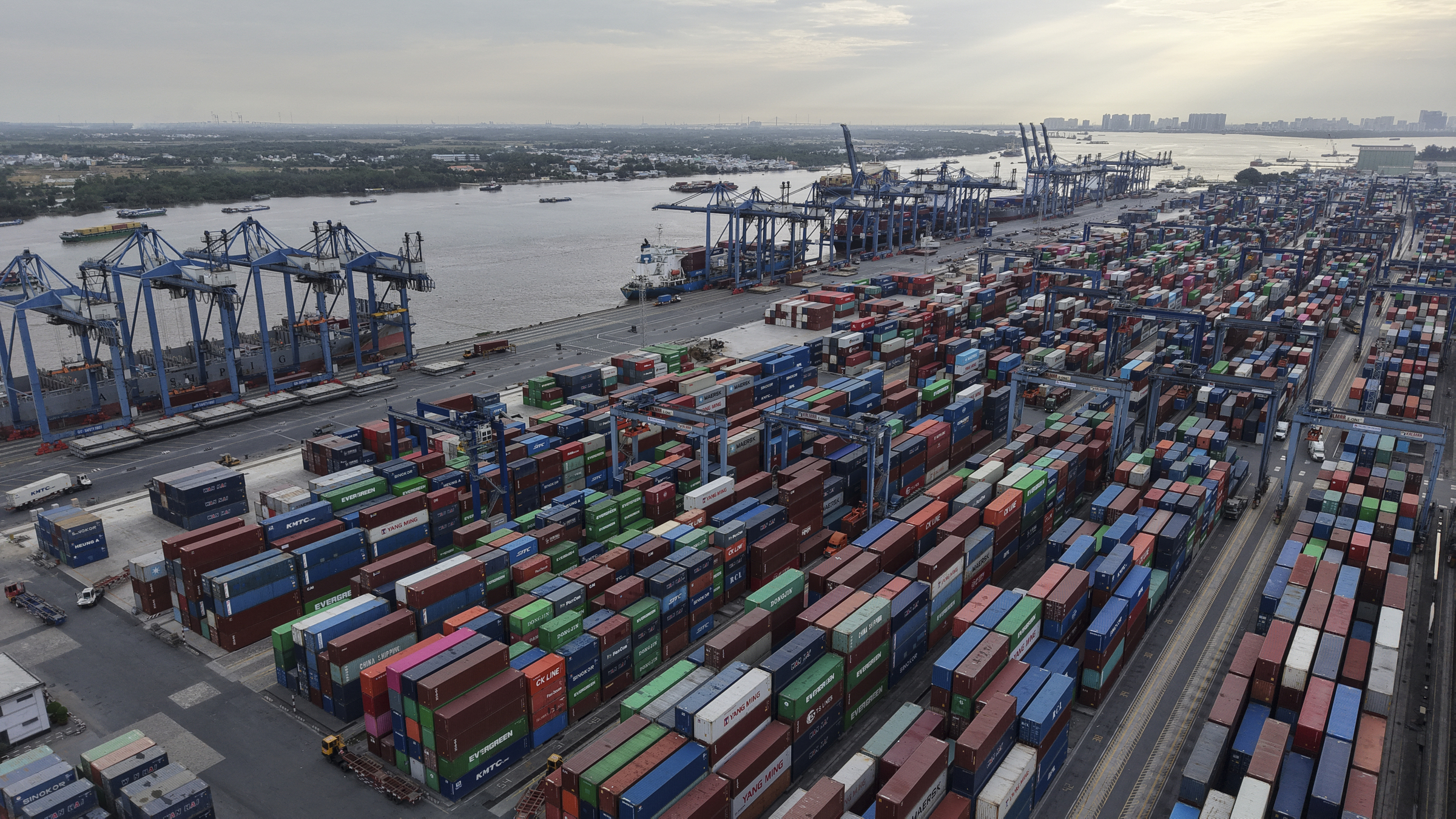 |
A view of Cat Lai Port with tens of thousands of containers awaiting export, early 2026. *Thanh Tung*. |
Businesses will receive support to meet international standards regarding environment, traceability, carbon emissions, environmental, social, and governance (ESG), Carbon Border Adjustment Mechanism (CBAM), and Halal. This initiative also promotes investment in clean technology, the use of renewable energy, and the expansion of cross-border e-commerce.
In the e-commerce sector, the plan aims to support businesses, particularly small and medium-sized enterprises (SMEs), in joining international platforms like Amazon and Alibaba. This support will come through training, consulting, and initial cost assistance programs. Concurrently, the city encourages the application of artificial intelligence, big data, and digital platforms in marketing, sales, and international distribution channel management.
Beyond direct exports, Ho Chi Minh City is exploring the development of "on-site export" models through shopping tourism. The city plans to pilot one to two outlet centers integrated with commercial, tourism, and logistics zones to attract international visitors. This strategy also aims to promote key products and high-quality Vietnamese goods.
Import activities will adopt a more selective approach. Instead of encouraging mass imports, the city prioritizes modern machinery, equipment, technology lines, and raw materials essential for production, especially from industrially developed nations.
The new strategy aims for Ho Chi Minh City to achieve a sustainable trade surplus, maintain its role as the country's largest import and export hub, and gradually become a goods transit center for Southeast Asia. This vision involves trade activities relying more on technology and added value, thereby increasing competitiveness in the global supply chain.
Hoai Phuong