On 18/7, Prime Minister Le Minh Hung chaired a key conference of the Standing Government with the business community, themed "removing bottlenecks, unlocking resources, and promoting growth."
This marked the first meeting of the new Standing Government with the business community, a force identified as a direct driver of economic growth. The prime minister affirmed that achieving double-digit growth targets this year and in the coming years depends heavily on the business community, especially domestic and foreign direct investment (FDI) enterprises.
In this context, the conference aimed to identify and resolve obstacles, refine policies, and address implementation issues.
Emphasizing the need for direct feedback, Prime Minister Hung told delegates, "I ask businesses to frankly contribute ideas. If there's anything to praise the government, save it for another occasion. Today's conference should primarily focus on difficulties and propose solutions so that the government, ministries, sectors, and local authorities can perform their functions well, and businesses can operate effectively to contribute to overall achievements."
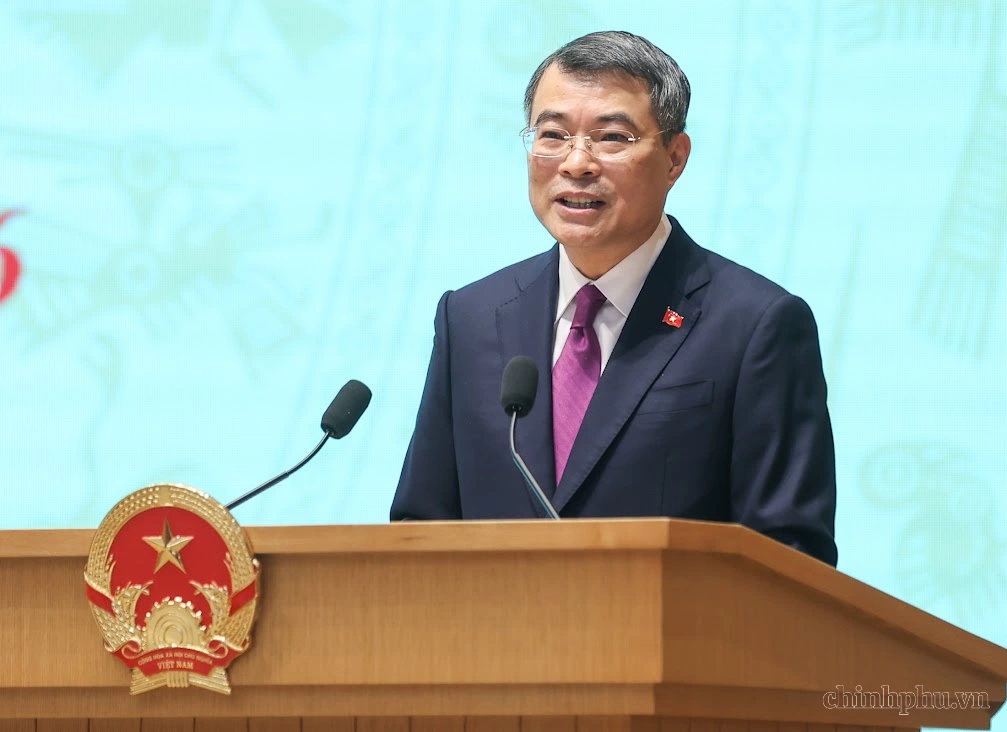 |
Prime Minister Le Minh Hung chaired the Standing Government's conference with the business community on 18/7. *Photo: VGP* |
According to the head of government, a synthesis of feedback from business associations and reports from ministries and sectors indicated that many obstacles persist. These include institutional issues, limited access to resources, high production costs, market challenges, science and technology gaps, and linkages among business sectors. Policy implementation was identified as the most frequently reported bottleneck.
The prime minister called on delegates to thoroughly assess the real difficulties businesses face and propose solutions to foster investment and business expansion. He also mandated ministries, sectors, and localities to engage directly with businesses, outlining action plans and timelines for resolving each proposal.
"All legitimate practical obstacles and difficulties reported by businesses will be carefully considered, monitored, and directed for thorough resolution, ensuring that commitments are met with substance and effectiveness," the prime minister stated.
He further encouraged businesses to actively contribute to major draft laws slated for National Assembly review soon, such as the Penal Code, Land Law, Investment Law, Small and Medium-sized Enterprises Law, and various tax laws, to strengthen the legal framework for production and business.
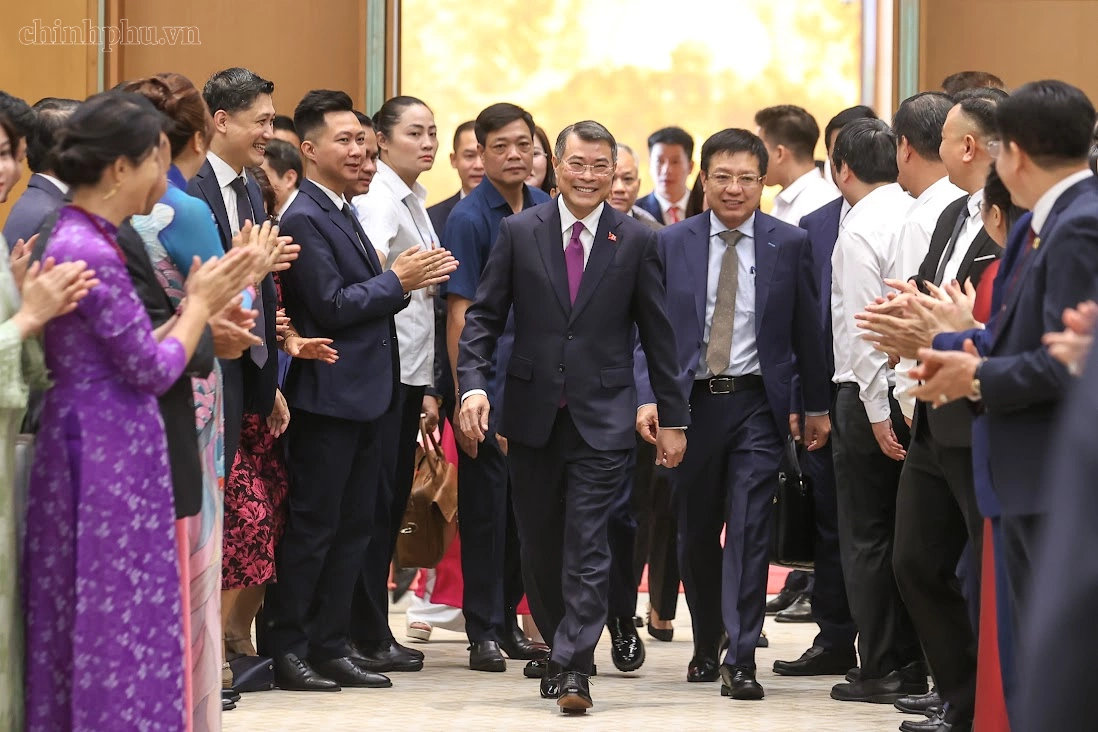 |
Prime Minister Le Minh Hung attended the conference with the business community. *Photo: VGP* |
Reporting at the conference, Minister of Finance Ngo Van Tuan stated that a synthesis of feedback from the business community and reviews by ministries and sectors revealed six major bottlenecks hindering production and business activities. Specifically, these include overlapping regulations, slow issuance of guiding documents, inconsistent interpretations across localities, fragmented administrative procedures, and a tendency to avoid responsibility.
Additionally, businesses struggle with accessing credit, land, and production resources. High costs for raw materials, logistics, capital, and labor compound pressures from green standards and new compliance demands. Businesses are also affected by trade protectionism trends, environmental, social, and governance (ESG) standards, insufficient innovation mechanisms, and weak linkages among state-owned, private, and FDI enterprises. The minister stressed that these issues primarily stem from implementation bottlenecks rather than a lack of policies.
To unlock resources, the Ministry of Finance proposed comprehensive legal system improvements, accelerated administrative reform, and expanded capital access via cash flow and data-based lending. The ministry also plans to address land issues, review logistics costs, help businesses meet green standards, and strengthen linkages across state-owned, private, and FDI enterprises in value chains.
Representing businesses at the conference, Tao Duc Thang, Chairman and General Director of Viettel, proposed that the government promptly identify a list of leading state-owned enterprises and assign specific strategic tasks. He also suggested mechanisms for state-owned enterprises to prioritize using products and services from Vietnamese companies. Additionally, he called for resolving logistics bottlenecks and establishing an overseas investment promotion fund to support market expansion.
Meanwhile, Nguyen Van Than, Chairman of the Small and Medium-sized Enterprise Association, advocated for including sole proprietorships in the revised Law on Support for Small and Medium-sized Enterprises. He also recommended that the government allow the Association to pilot independent credit ratings for small and medium-sized enterprises, continue studying raising tax thresholds, and setting specific development targets for the SME sector and business households.
Phuong Dung