Ho Chi Minh City's Statistics Office reported that total registered foreign direct investment (FDI) in the locality reached 17.2 billion USD as of 20/9. This significant inflow included over 1,400 newly licensed projects with a total capital exceeding 9.35 billion USD, alongside 225 existing projects that increased their capital by more than 4.9 billion USD.
Additionally, there were 1,450 cases of foreign investors contributing capital, purchasing shares, or buying stakes in domestic enterprises, amounting to over 2.9 billion USD.
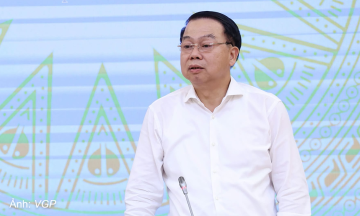
Nguyen Cong Vinh, Vice Chairman of the Ho Chi Minh City People's Committee, commented on these figures at the government's regular September meeting on 3/10. He noted that the robust FDI attraction indicates positive business confidence, following strong decentralization and clarification of policy mechanisms by the central government.
Beyond new registrations, foreign investors actively disbursed capital throughout the first nine months of the year. This capital was channeled into investments and business expansion initiatives within Ho Chi Minh City, solidifying its role as the nation's economic engine.
According to the Ho Chi Minh City Statistics Office, the total social investment implemented across the city during this period was estimated at nearly 510,300 billion dong, marking a 10.2% increase compared to the same period in 2025. Foreign investment alone contributed over 109,100 billion dong, representing 21.4% of the total and an increase of 7.4%.
In the first nine months of the year, Ho Chi Minh City's Gross Regional Domestic Product (GRDP) grew by 9.06%. Nguyen Cong Vinh emphasized that for the city to achieve its annual target of over 10% growth, the fourth Quarter's growth must exceed 13.23%.
Regarding public investment, the city has disbursed 75.5% of the plan assigned by the government. The local administration aims to complete 100% of the public investment target in the remaining three months, allocating the equivalent of 36,000 billion dong primarily to regional transport connectivity projects.
For non-state and foreign capital projects, the city is committed to supporting investors in the disbursement process for key initiatives. These include: Can Gio International Transshipment Port, Can Gio Coastal Urban Tourism Area, International University Urban Area, Ben Thanh - Can Gio Railway Line, Cai Mep Ha General and Container Port, and the AI Data Center.
To further support economic growth, the city is implementing several solutions. These involve promptly resolving obstacles related to procedures, land, premises, capital, and labor. Additionally, efforts focus on stimulating year-end consumer demand, tourism, and trade; promoting industrial production, exports, and logistics; and assisting businesses in expanding orders, markets, and accessing capital.
Vien Thong