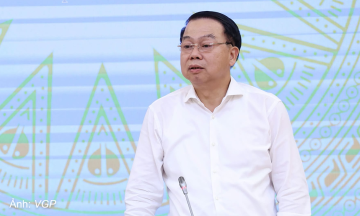
During a government press conference on 3/10, Deputy Minister of Industry and Trade Truong Thanh Hoai highlighted Vietnam's urgent need to diversify electricity sources due to rapidly increasing demand.
Traditional power source and grid projects typically require extensive implementation periods. In contrast, rooftop solar power offers a swift installation process, avoids land acquisition or site clearance, and significantly eases pressure on the national transmission system.
This sector has experienced rapid growth recently, making a substantial contribution to meeting the country's electricity needs. According to Vietnam Electricity (EVN) statistics, total rooftop solar power capacity nationwide currently stands at approximately 11,000 MWp.
To further promote its development, the Ministry of Industry and Trade submitted Directive 10 to the Government. This directive encourages organizations and individuals to install self-producing, self-consuming rooftop solar power systems, including battery storage. Directive 10 sets a target for approximately 10% of government offices and 10% of households nationwide to adopt this power solution.
Regarding the allocation of targets, Mr. Hoai confirmed that the Ministry has assigned specific goals to each province within Power Master Plan VIII. The Ministry has also instructed provincial People's Committees to implement solutions for promoting rooftop solar power, including establishing support policies within their respective authorities.
"Currently, some provinces already have these policies," Mr. Hoai stated. "In the coming time, the Ministry will continue to urge localities to issue support policies."
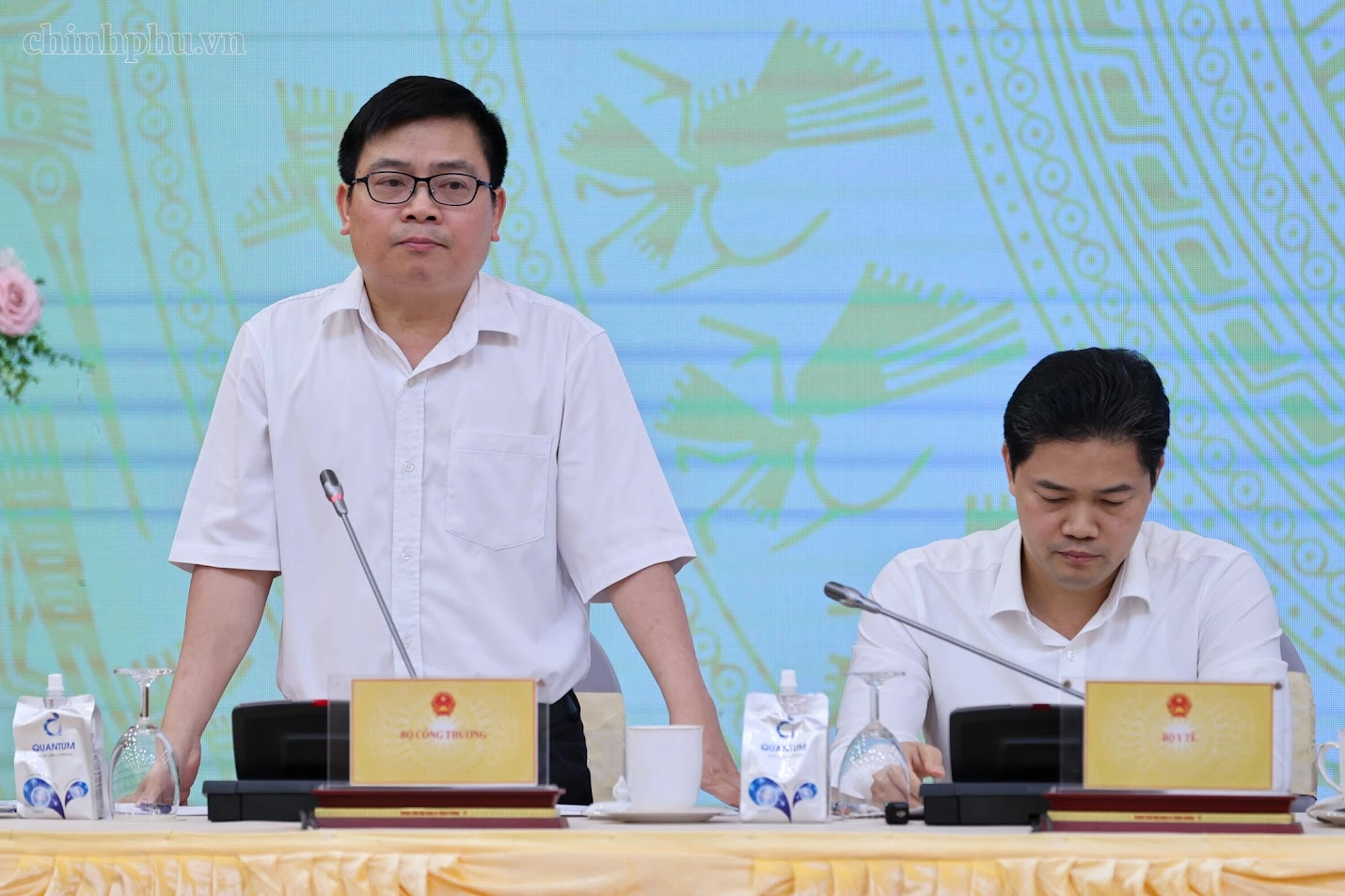 |
Deputy Minister of Industry and Trade Truong Thanh Hoai speaking at the Government press conference on 3/10. *Photo: VGP* |
Beyond rooftop solar, the Ministry of Industry and Trade is actively reviewing additional power solutions to meet development targets by 2030. The Deputy Minister acknowledged that the implementation of Power Master Plan VIII has been relatively slow.
The Ministry is now focused on amending the Electricity Law and revising Power Master Plan VIII. This aims to replace and update delayed power sources, aligning with resolutions from the National Assembly and directives from the Prime Minister.
Mr. Hoai emphasized that the most crucial aspect of policy and mechanisms is accelerating the implementation of planned power source and grid projects. Under decentralization, localities are responsible for overseeing investment in projects within their jurisdictions.
The Ministry of Industry and Trade plans to submit the amended Electricity Law to the National Assembly session in October. This move seeks to remove barriers and facilitate investment in the power sector.
In addition to expanding supply, the Deputy Minister stressed the importance of implementing electricity saving measures as outlined in the Law on Economical and Efficient Energy Use. This is a vital strategy to manage the approximately 10% annual increase in electricity demand, crucial for economic development.
Phuong Dung