Tanee, an architecture student in Iran, expressed despair following Washington's announcement this week of its toughest sanctions yet on the country, intended to de-escalate the Middle East conflict. "I've lived my entire life under sanctions", she stated. "Our dinner tables are growing increasingly bare."
Iranians have endured Western sanctions since the 1979 Islamic Revolution, and many now fear the latest US policy will further exacerbate their daily struggles. "This pressure affects my entire family, from food and clothing expenses to tuition fees", Tanee added. "My father even urged us to buy groceries immediately, anticipating future price hikes."
The cost of her essential study materials has tripled. She expressed concern that US pressure would intensify as the Middle East conflict appeared to stretch beyond six months. "We can only cherish the small things we still have", she remarked. "There's nothing else we can do."
Washington's announcement earlier this week intensified fears among Iranians of surging prices and supply shortages. Residents in Tehran flocked to markets and formed long queues at gas stations.
Kia Farahani, a 45-year-old English teacher, stated he had to "forego many planned purchases" due to the sharp increase in food prices in recent months. "I believe this conflict will increasingly become an economic one, placing immense pressure on the populace", Farahani commented, referencing protests that occurred in January. "Protests might erupt once more."
Beyond food and medicine, nearly all goods in Iran have become costly, with the exception of subsidized gasoline. Last week, an assistant to the Iranian President indicated that the nation's daily gasoline consumption now exceeds its production, suggesting a potential price hike.
The International Monetary Fund (IMF) projects Iran's inflation to near 70% by year-end. Furthermore, the nation's gross domestic product (GDP) could decline by over 5% after a decade of sanctions. The Iranian rial has also reached a new low against the US dollar, with over 2 million rial required to exchange for 1 US dollar.
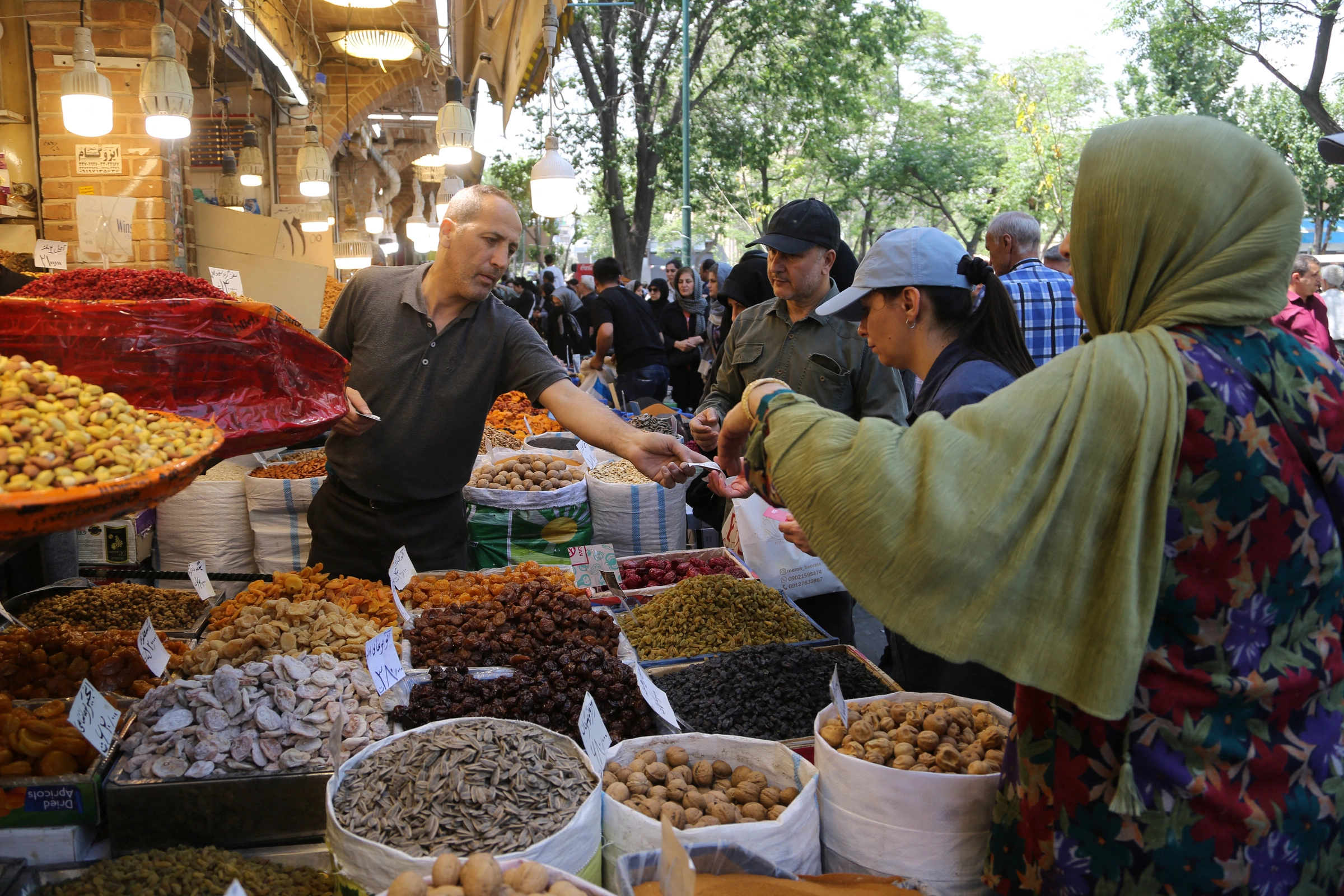 |
Iranians at a stall in Tehran on 28/4. Photo: AFP |
Iranian officials have largely dismissed US threats, branding them "failed policies". They maintain that Washington's strategy will not compel Tehran to alter its stance.
The method by which Tehran plans to circumvent these new measures remains unclear. The latest sanctions stipulate that foreign companies and financial institutions engaging in transactions with Iran will be barred from the US financial system. Iran has endured sanctions for decades, with its officials consistently demonstrating a firm stance.
Despite this, some Iranians are urging government intervention. Mehdi Yazdian, 55, a real estate broker, called for the government to "control prices" as citizens acutely feel the economic strain. "These sanctions have been imposed for 47 years", he stated.
Conversely, others appear resigned to the situation. "We have consistently faced sanctions since the Islamic Revolution; they are always harsh", a 74-year-old housewife remarked. "This time is no different."
Gesturing towards recently purchased vegetables at a local market, she noted that prices rise almost daily, yet she remains resolute. "We will not succumb to this pressure", she declared.
By Ha Thu (AFP, Reuters)