Japan will release national strategic oil reserves starting 26/3, Prime Minister Sanae Takaichi announced. The move aims to ensure the country's necessary supply amid global disruptions.
Takaichi stated on X on 24/3 that oil from shared reserves, which other producing countries have placed in Japan, is also expected to be released this month. Last week, Tokyo began releasing oil from private sector reserves, an amount equivalent to 15 days of consumption. Government reserves, equal to one month of consumption, will also be released.
Japan maintains one of the world's largest strategic oil reserves, exceeding 400 million barrels as of 12/2025. Earlier this month, the country announced plans to sell 80 million barrels of oil, representing a 45-day supply.
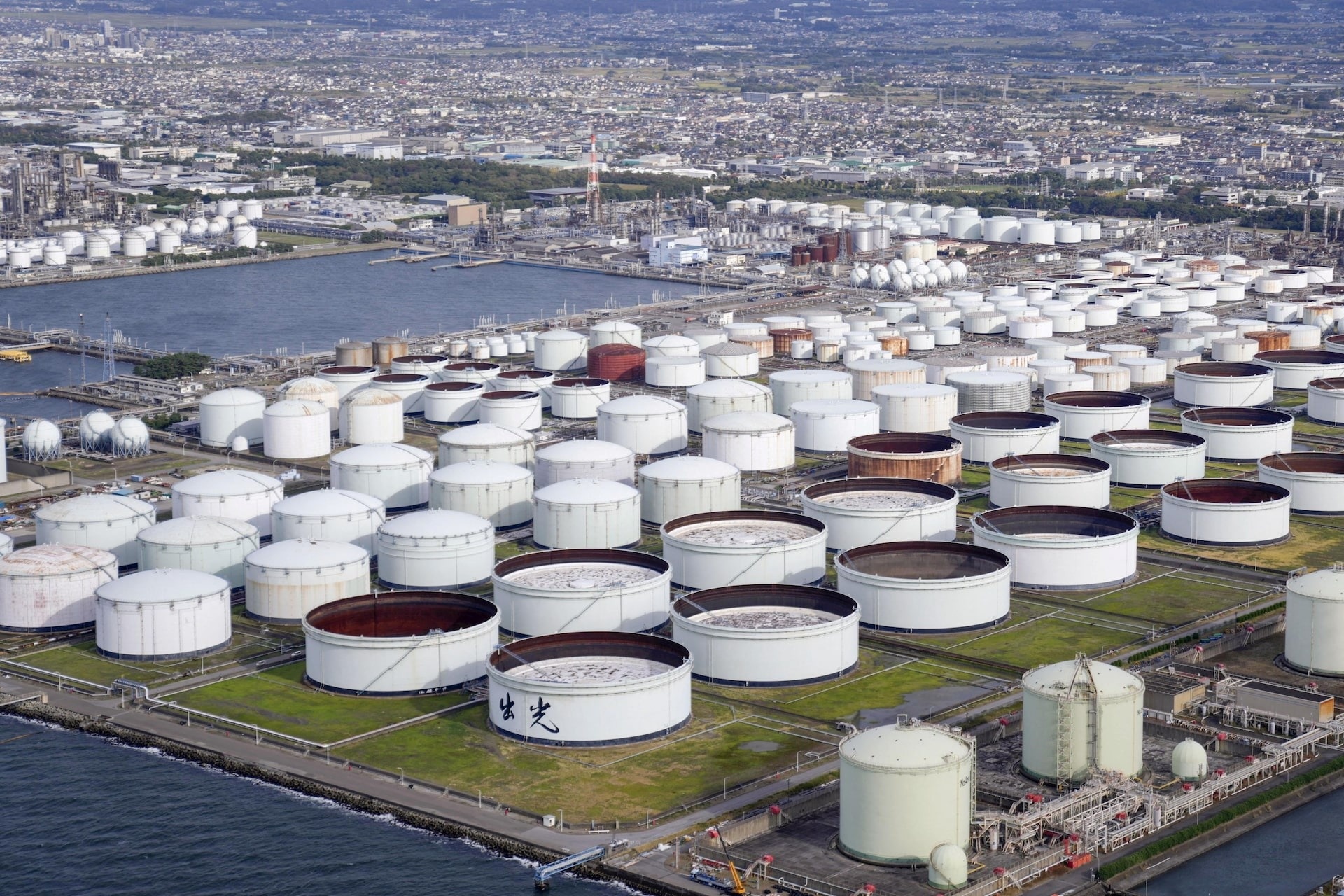 |
Oil tanks at an Idemitsu Kosan plant in Ichihara, Japan, 11/2021. Photo: Reuters |
This action comes as the Middle East, which accounts for 95% of Japan's imported oil, faces an ongoing conflict. The hostilities have disrupted global oil and gas supplies for over three weeks.
According to the Japan Petroleum Association, shared reserves located in Japan belong to Saudi Arabia, UAE, and Kuwait. Typically, these shared reserves are for commercial purposes. However, in emergencies, Japanese oil companies receive priority purchasing rights.
Japan is also seeking to purchase oil from Saudi Arabia and UAE ports via routes that avoid the "Strait of Hormuz". Economy Minister Ryosei Akazawa told reporters on 24/3 that the country is expanding its supply sources to include the United States.
The decision aligns with broader international efforts. On 11/3, member countries of the International Energy Agency (IEA) agreed to release a record 400 million barrels of oil from reserves. This measure aims to cool crude oil prices, which have climbed approximately 40% since the conflict began in late February.
The 32 IEA members collectively hold over 1.2 billion barrels of oil in national emergency reserves, along with approximately 600 million barrels in corporate reserves. In 2022, IEA countries released about 182 million barrels of oil to support the energy market after the Russia-Ukraine conflict erupted.
Ha Thu (via AFP)