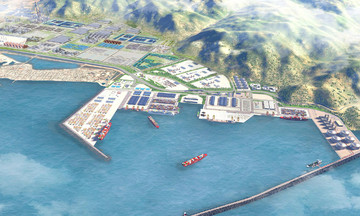
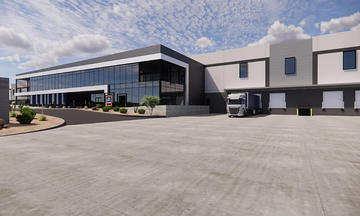
The center, an investment of over 140 million USD, spans 113,000 square meters with a storage capacity of 147,000 square meters. This makes it one of Maersk's largest warehousing projects globally. The facility offers end-to-end fulfillment services, catering to customers in China, the Asia-Pacific region, and other international markets.
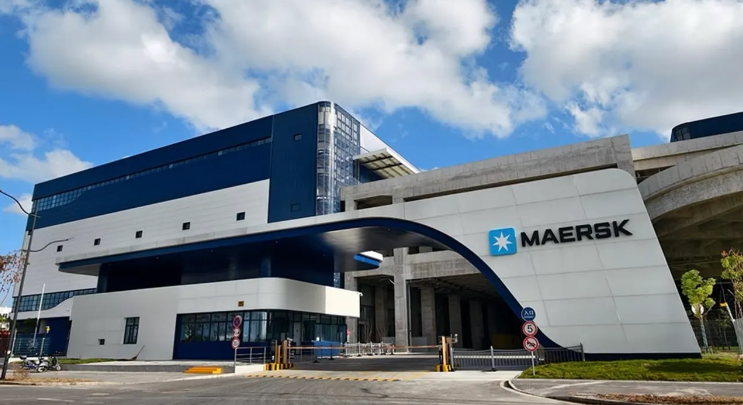 |
Maersk has been active for over a century in shipping, supply chain management, and integrated logistics services. Photo: Maersk
Vincent Clerc, CEO of Maersk, stated that the new center marks a significant milestone in the group's integrated logistics strategy in China. China is both the world's largest exporter and a leading consumer market. "This facility significantly enhances omnichannel fulfillment capabilities and China's trade connections with the world," he said.
Leveraging Shanghai's robust transport infrastructure and its status as a global maritime hub, the Lin-gang center aims to serve both domestic and international customers simultaneously.
The facility integrates with Maersk's sea, air, and land transportation networks, offering four main service categories: export distribution, import distribution, regional/global transshipment, and cross-border e-commerce.
With an in-house customs clearance team and a robust certification system, the new warehouse facilitates rapid, cost-effective customs clearance. It can also handle both bonded and non-bonded goods at the same location.
Silvia Ding, Managing Director of Maersk Greater China, observed that China's international trade is evolving from a pure export model to a more diversified one, encompassing export, import, and transshipment. "Brands increasingly require unified inventory management for diverse commercial needs. The new center's omnichannel fulfillment capabilities help them efficiently meet both B2B and B2C orders," she stated.
Maersk, a leading Danish transport and logistics group, has operated for over a century in shipping, supply chain management, and integrated logistics services. It is recognized as one of the world's largest container shipping lines, with an operational network spanning over 130 countries and a global fleet. In recent years, Maersk has accelerated its transformation strategy from a traditional shipping carrier to an integrated logistics solutions provider. This involves significant investments in digitalization, supply chain management, and multimodal transport to meet the growing demands of international trade.
The Dan (according to Seatrade Maritime News)