Since the end of October, Hong Van, 30, from Ho Chi Minh City, submitted a home loan application but was informed by credit officers at state-owned banks that the preferential package was no longer available.
This loan package, designed for young homebuyers, was launched by four state-owned banks in Quarter I, offering an interest rate of 5,5% with a three-year term. The program had been considered the "most attractive" in many years by both industry insiders and borrowers.
Minh Tung, a credit officer at a BIDV branch in Ho Chi Minh City, stated that he received notice from his superiors to discontinue the package due to its unprofitability. The loan program had undergone several adjustments to its conditions and incentives before being completely halted at the end of October.
Instead, this branch is now offering a different loan package with interest rates ranging from 6% to 6,8%, applicable for a period of six to 18 months. Compared to the previous package, the new rates are 0,5% to 1,3% higher and apply for a shorter duration. After the preferential period, the floating interest rates, as per the contract, also carry a 1% higher margin compared to loans disbursed one month ago. According to Tung, loan conditions are no longer as straightforward as they were a few months prior.
At VietinBank, a credit officer at a Ho Chi Minh City branch confirmed that this bank no longer offers the preferential interest rate package of 5,6% (three-year term), instead applying a 7,5% interest rate for 18 months.
Similarly, Agribank, one of the four state-owned banks, also announced the cessation of its preferential home loan programs for young people from the end of October.
Thus, the low-interest loan packages for young people are temporarily suspended amid rapid credit growth across banks and upward pressure on input interest rates.
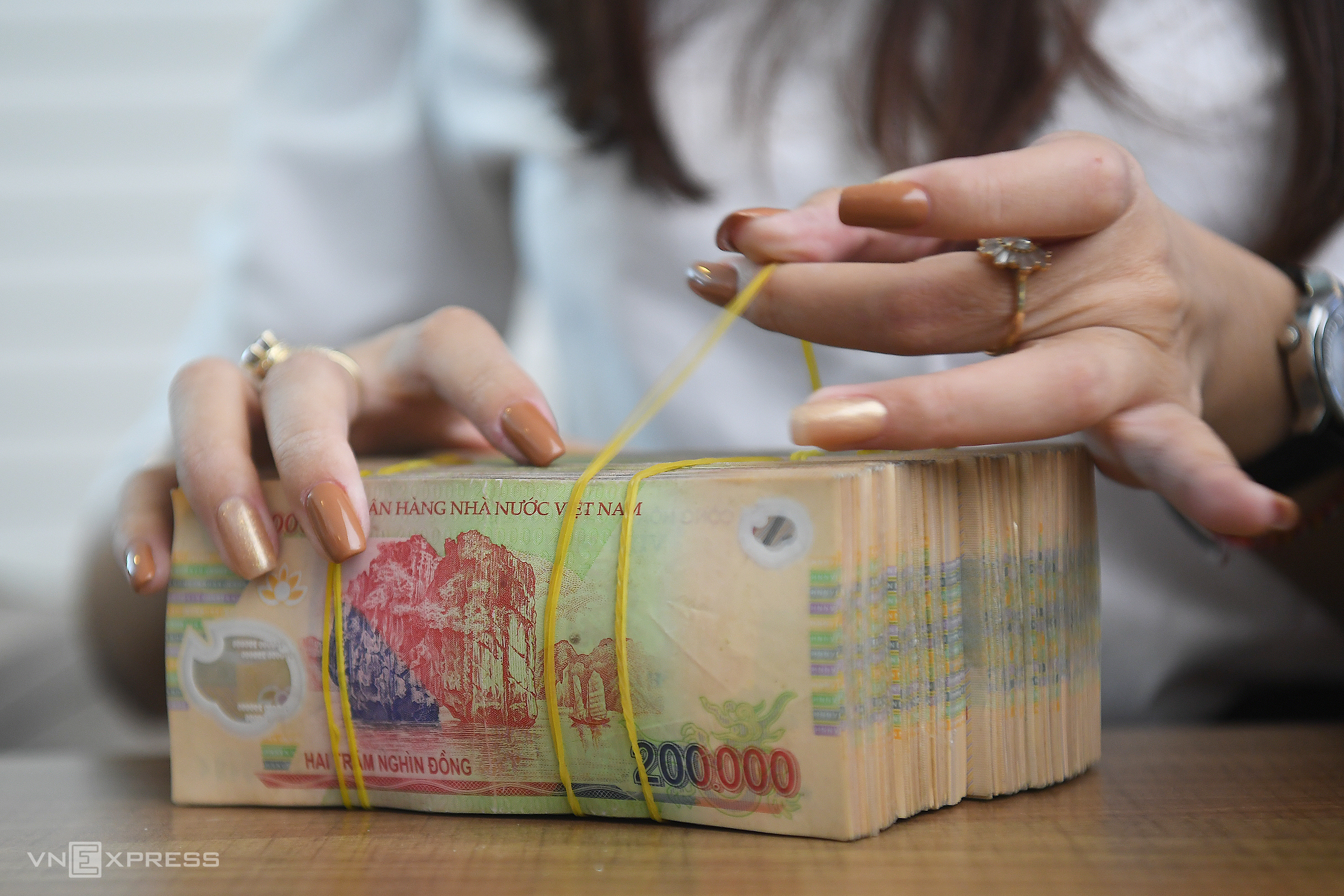 |
Transactions at a commercial bank. Photo: Giang Huy. |
Can Van Luc, Chief Economist at BIDV and Director of the BIDV Training and Research Institute, noted that the loan package for young people at this bank experienced slow disbursement due to a shortage of housing supply and persistently high prices.
The slight increase in lending rates towards the year-end was also anticipated by bank leaders, given the upward trend in savings rates over the past six months.
The Director of Capital Markets and Financial Markets at Vietnam Prosperity Joint Stock Commercial Bank (VPBank) commented that the prolonged situation of "credit growing faster than mobilization" is exerting pressure on liquidity and interest rates towards the year-end.
Since mid-October, most private banks and the major state-owned VietinBank have simultaneously increased savings interest rates. Concurrently, banks have launched reward programs and high-interest deposit certificates to attract depositors. Consequently, banks must adjust their lending rates.
According to the State Bank of Vietnam, as of 30/10, total credit outstanding across the system increased by approximately 15% compared to the end of 2024 and is projected to reach 19-20% by the end of this year – the highest level in many years.
Quynh Trang