With over 90% of delegates in favor, the National Assembly passed a resolution on mechanisms to address difficulties in implementing the Land Law on the morning of 11/12.
The resolution adds three cases where the state can recover land for socio-economic development. The first involves land recovery for implementing free trade zone projects or international financial centers.
The second case applies when an investor has successfully negotiated with over 75% of the land area and more than 75% of landowners. The provincial People's Council will then consider and approve the recovery of the remaining land to assign it to the investor. Finally, the third case allows the state to recover land to create a land fund for payment under build-transfer (BT) contracts, land leases, or to facilitate continued business production.
These additional land recovery cases will take effect from 1/1/2026.
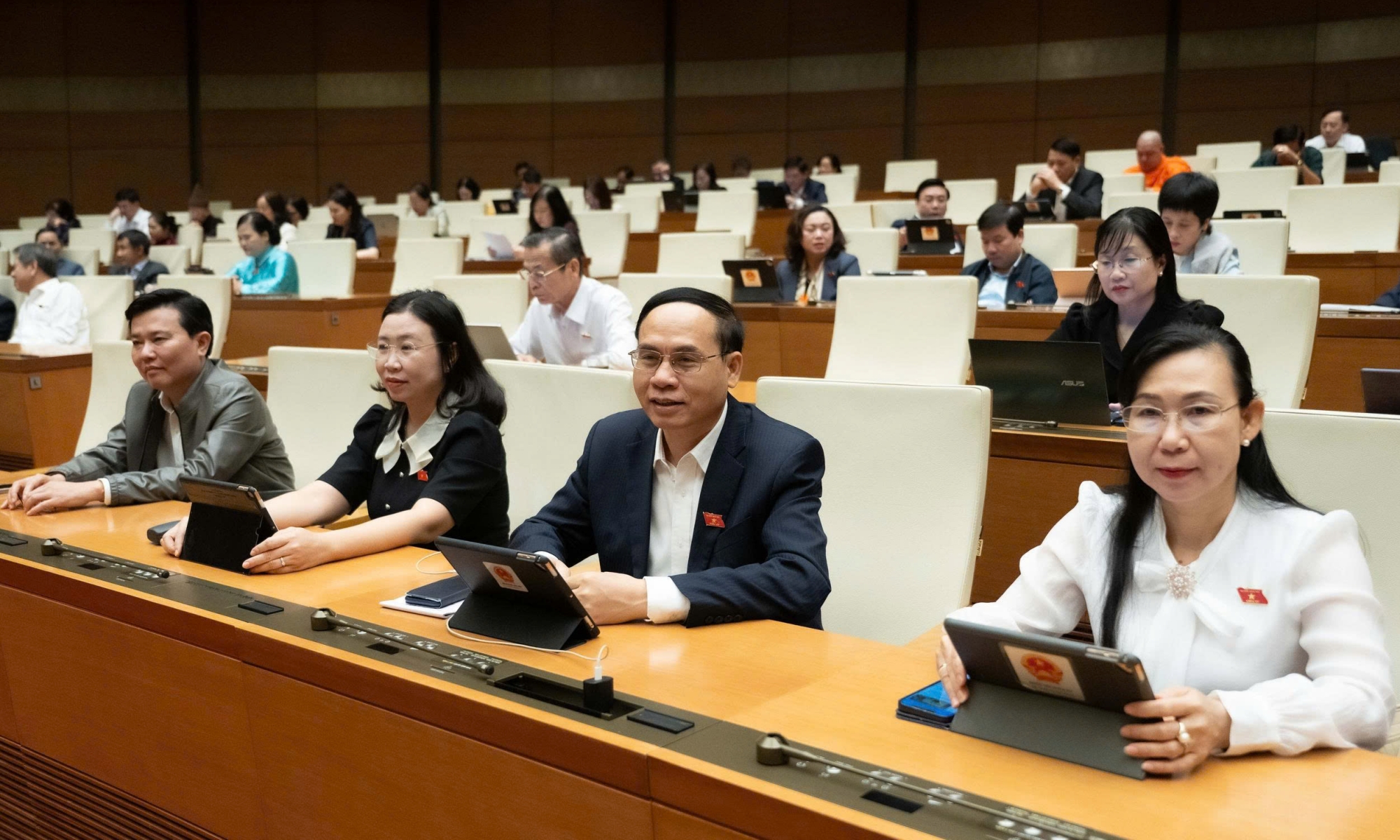 |
Delegates at the morning session on 11/12. Photo: National Assembly Media
The current Land Law specifies 32 cases for state land recovery for socio-economic development. These are categorized into three main groups: construction of public works, state agency headquarters, and important projects such as industrial parks, industrial clusters, high-tech zones, and land reclamation activities.
The resolution also stipulates that land price tables and adjustment coefficients will serve as the basis for compensation when the state recovers land. Currently, compensation is determined by specific land prices decided by the local Communal People's Committee at the time of approving compensation and resettlement plans.
Land price tables will be developed based on land type, location, and area. The provincial People's Council will decide these tables, which will be applied from 1/1/2026. The land price tables will be revised and supplemented as needed.
Before any land recovery, the competent authority must notify landowners at least 60 days in advance for agricultural land and 120 days for non-agricultural land (commercial, service). Compensation, support, and resettlement plans must be publicly posted for 10 days at the Communal People's Committee headquarters. If dissenting opinions remain, management must organize a dialogue within 30 days of receiving public feedback.
Anh Tu