This content is outlined in Directive 34, signed by Prime Minister Pham Minh Chinh on 11/12, aiming to rectify the approval, purchase, sale, and rental of social housing.
Accordingly, the prime minister has requested functional agencies to increase inspections to ensure social housing sale prices are calculated correctly and fully, preventing businesses from exploiting policies for profit. Provinces and cities must also coordinate with the police to strictly punish illegal brokers and profiteering acts in purchase and sale applications and procedures.
Local authorities also need to strengthen post-inspections, revoking social housing purchase or rental eligibility in cases of dishonest declarations or violations of entitlement conditions, and publicly disclosing the list of violators.
Similarly, investors and businesses found violating buyer approval processes, or organizations and individuals engaged in illegal brokerage activities or policy profiteering, will also face penalties.
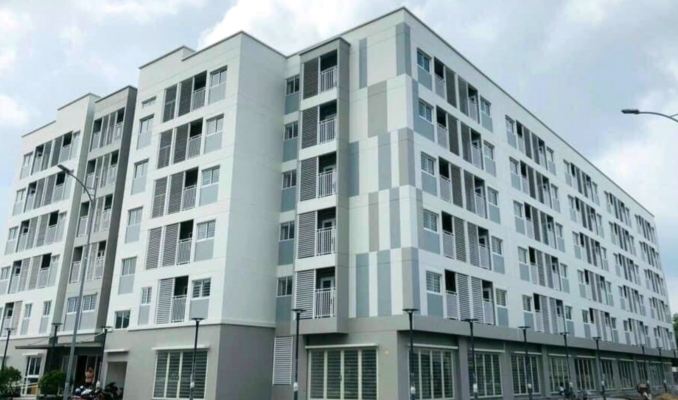 |
A social housing project. Photo: VGP |
The prime minister's directive comes amid recent shortcomings and risks of negativity in the approval, purchase, lease-purchase, and rental of social housing at several projects in Ha Noi, Da Nang, and Ho Chi Minh City. For instance, many projects have seen instances of touting, illegal brokerage, and advertisements promising "diplomatic allocations" or "guaranteed successful applications." Some projects announced sale prices 30-40% higher than the general market. Post-contract inspection and transfer monitoring by management agencies have been ineffective, posing risks of speculation and policy profiteering.
The prime minister stated that if these existing issues are not promptly rectified and strictly handled, they will erode public trust and impact social equity. This also distorts policy, fosters negativity, and creates an underground market for accessing social housing.
In addition to post-inspections, the prime minister has assigned provincial People's Committees comprehensive responsibility to the government and the prime minister for the results of social housing development, sale, rental, and lease-purchase policies within their jurisdictions. Specifically, local authorities must publicize project information after groundbreaking, including project name, investor, location, application submission details, progress, scale, and (estimated) sale prices.
They must also verify the eligibility of buyers, limiting instances where one person submits applications to purchase or rent at multiple projects. Subsequently, the list of approved buyers or renters must be made public and updated for post-inspection purposes.
Also, according to the prime minister's directive, investors are not permitted to collect deposits or authorize individuals or real estate exchanges to collect such fees outside of regulations. They must cooperate with functional agencies to detect and handle organizations, individuals, real estate exchanges, and brokers who exploit the guise of support or consultancy for profit.
As for buyers, they are only allowed to submit applications for one project and cannot use proxies. The verification of income for self-employed workers will be handled by commune-level police.
The government aims to construct at least one million social housing units for low-income individuals and industrial park workers by 2030, with 100,000 units to be completed this year alone. According to data from the Ministry of Construction, as of late October, there were 696 projects underway nationwide, encompassing approximately 640,000 apartments. The ministry estimates that about 89,000 units will be completed this year, achieving 89% of the plan.
Phuong Dung