Remittance flows have shown a downward trend from Q4/2025 into the beginning of this year, according to the State Bank of Vietnam, Region 2 Branch (covering Ho Chi Minh City and Dong Nai).
In the final quarter of 2025, remittances totaled nearly 2,4 billion USD, a 13% decrease from the preceding quarter. This figure further dropped to just over 2 billion USD in Q1/2026.
Ms. Tran Thi Ngoc Lien, Deputy Director of the State Bank of Vietnam, Region 2 Branch, attributed this decline to global and domestic economic impacts, alongside geopolitical factors. She noted that the slow global economic recovery and high inflation have increased living costs, directly affecting the income of Vietnamese living abroad.
Additionally, prolonged tight monetary policies in major economies continue to negatively affect production and business activities. This indirectly impacts income and the flow of money sent back to Vietnam.
Geopolitical conflicts in the Middle East also contribute to the remittance decline by increasing energy price volatility and global inflationary pressures. This directly reduces the real income of workers.
Moreover, localized economic disruptions in some countries in this region have decreased the income and remittance capabilities of Vietnamese laborers. According to a representative from the State Bank of Vietnam, as the proportion of remittances from this region is not substantial, the impact is primarily indirect.
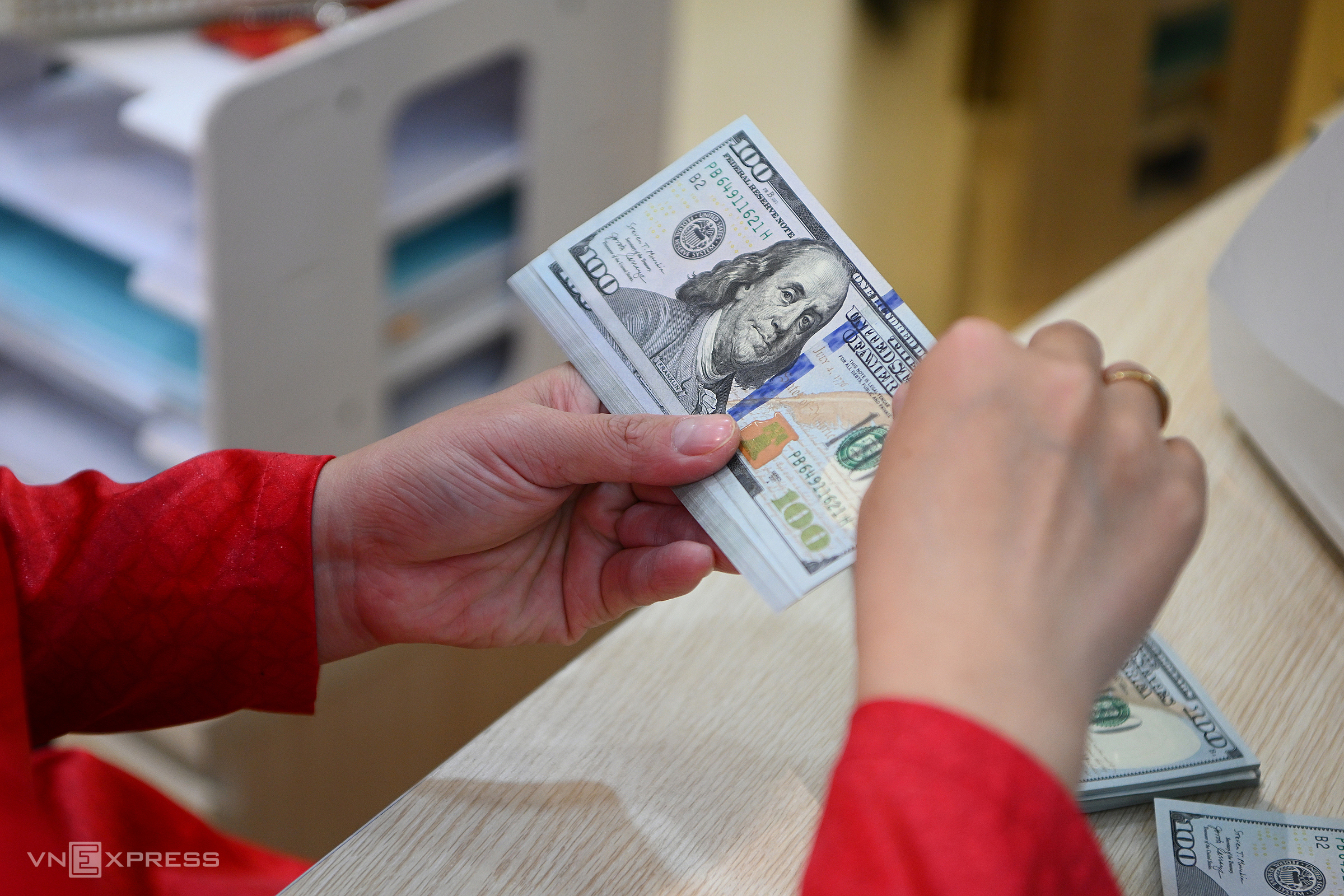 |
USD transactions at a private bank. Photo: Giang Huy |
Ms. Lien also observed that while macroeconomic stability persists, some investment channels in Vietnam are not particularly attractive for remittance capital. The narrow interest rate difference between VND and USD also somewhat influences decisions to send money home.
Furthermore, seasonal factors play a role, as remittance volumes typically decrease in the first quarter after the year-end peak for holiday and Lunar New Year (Tet) spending.
Looking ahead, a representative from the State Bank of Vietnam anticipates that remittances may not see a significant increase yet, as they remain dependent on domestic and international economic developments. Historically, after the low point at the beginning of the year, remittances tend to recover slightly in subsequent quarters as economic activities and overseas employment stabilize.
However, ongoing conflicts in the Middle East and other regions remain complex, continuing to affect energy prices, inflation, and market sentiment. This impacts the income and savings capacity of overseas Vietnamese.
Also, according to the State Bank of Vietnam, remittances to Dong Nai, primarily channeled through credit institutions, had decreased by over 16% compared to the previous quarter, reaching 36,4 million USD by 31/3.
Quynh Trang