On February 20, the US Supreme Court issued a ruling rejecting import tariffs based on the International Emergency Economic Powers Act (IEEPA). This decision reduced the average US import tariff by nearly half, from 15,4% to 8,3%, according to estimates by Global Trade Alert. For countries subject to high tariffs such as China, Brazil, and India, the reduction could reach double digits.
Markets reacted positively to the developments. US stocks rose 0,5-0,9%, as the Supreme Court's ruling could ease cost burdens for businesses. Shares of Amazon, a company reliant on products from China, increased by over 2%. Shares of other companies heavily impacted by tariffs, such as toy manufacturer Mattel and online furniture retailer Wayfair, also climbed.
The National Retail Federation assessed the ruling as providing "much-needed certainty" for trade activities. Small businesses welcomed the decision. Ann Robinson, owner of Scottish Gourmet in Greensboro, North Carolina, expressed "immense joy" upon hearing the news, as tariffs had cost her approximately USD 30,000 last autumn.
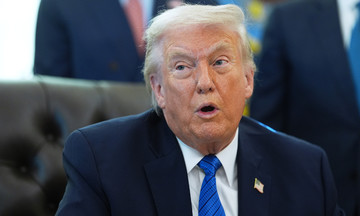
However, in response to the Supreme Court's ruling, President Donald Trump signed an executive order imposing an additional 10% global tariff for 150 days, effective from February 24. Mike Dickson, Head of Research at Horizon Investments, noted that investors breathed a sigh of relief when the new global tariff announced by Donald Trump was only 10%.
Many analysts, however, warned against this short-lived optimism. According to them, the Supreme Court's ruling offers little immediate support for global trade. In fact, another wave of tariff chaos is imminent as Donald Trump introduces alternative measures.
"Overall, I think the ruling only ushers in a new period of instability for world trade, as everyone tries to figure out what US tariff policy will be in the future," commented Varg Folkman, an analyst at the European Policy Center research institution.
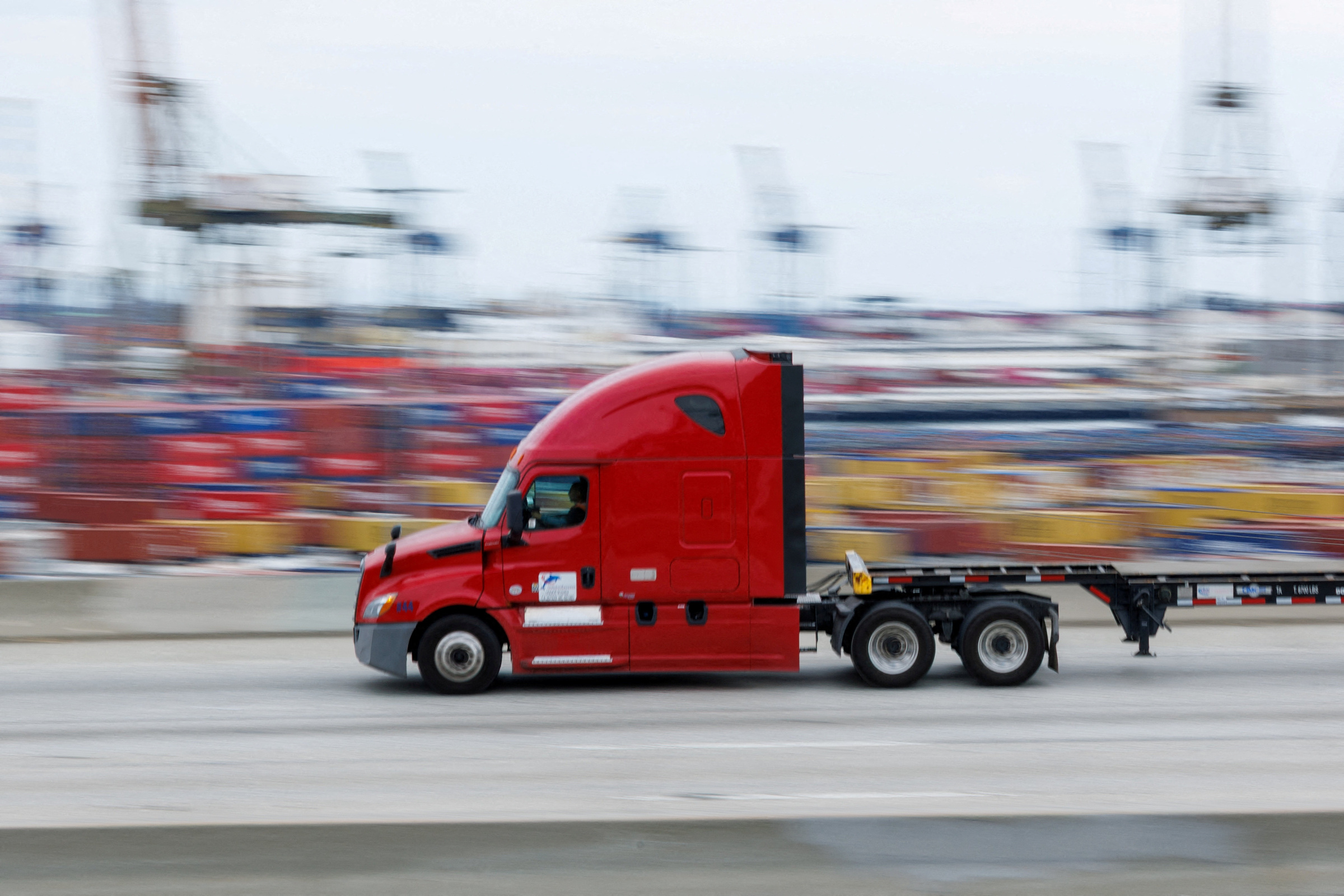 |
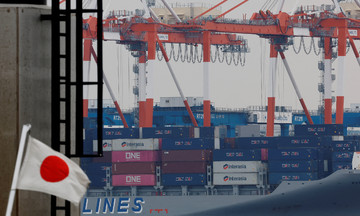
A container truck at the Port of Los Angeles, California, on 5/11/2025. Photo: Reuters |
Experts at the Dutch investment bank ING shared this view. "The scaffolding has been removed, but construction continues. Regardless of today's ruling, tariffs will persist," they stated.
At the close of trading on February 20, spot gold prices rose USD 111 to USD 5,105 per ounce, indicating increasing concern. "The president will find it hard to abandon tariffs. He uses other authorities to do this, increasing instability," noted Tai Wong, an independent precious metals investor.
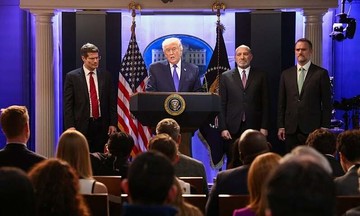
In fact, at a press conference following the Supreme Court's ruling, President Donald Trump stated that countries were celebrating, but this would not last long. Besides using Section 122 of the Trade Act of 1974 to impose an additional 10% global tariff, Donald Trump also initiated new investigations under Section 301. This provision allows for tariffs in response to unfair trade practices, such as intellectual property theft or forced technology transfer.
The US president previously used Section 301 during his first term to impose tariffs ranging from 7,5% to 25% on approximately USD 370 billion worth of imports from China. These tariffs were maintained for four years under the administration of former President Joe Biden.
US Trade Representative Jamieson Greer highlighted the advantage of tariffs imposed under this provision: their ability to withstand challenges in court.
Treasury Secretary Scott Bessent estimated that using alternative legal authorities like Sections 122, 232, and 301 would keep tariff revenues "nearly unchanged." Last year, the Trump administration utilized Section 232 to increase tariffs on steel and aluminum, along with thousands of products made from these metals, such as automotive parts, machinery, and household appliances.
Furthermore, experts noted that a host of unresolved issues continue to cast a shadow over global trade. These include: what new tariffs Donald Trump might impose, how businesses will receive refunds, and whether economies that have signed agreements with the US will reconsider their tariff arrangements.
Estimates suggest that tariffs imposed under IEEPA have collected over USD 175 billion, and the US government may have to refund this amount to businesses that paid last year. When asked about the refund process, Donald Trump indicated that this issue might need to be resolved through litigation over the next two to five years.
Michael Strain, an economist at the American Enterprise Institute, also warned that the ruling's impact on consumers might be limited. This is because the Trump administration already had plans to maintain its tariff policy under other legal authorities, simply waiting to implement them upon an unfavorable ruling. He even predicted that prices would rise this year.
"Even if tariff rates decrease, businesses might pass more of the tariff burden onto consumers compared to 2025. Therefore, consumers are unlikely to feel a significant difference," he forecast.
Phien An (according to Reuters, AP)