On the morning of October 18, the National Assembly held a group discussion on the socio-economic development results for 2026, the 2027 plan, and budget and public investment estimates. In the TP HCM group, City Party Committee Secretary Tran Luu Quang shared the city's solutions for the final quarter to meet its growth targets.
This year, the Government tasked TP HCM with achieving a 10,2% GRDP increase. After nine months, the city recorded 9,06% growth compared to the same period in 2025. To reach the full-year target, the economic powerhouse needs to grow by 13,23% in Q4.
Given the current context, Secretary Tran Luu Quang affirmed, "TP HCM is meticulously managing resources, the components that contribute to two-digit growth." He noted that "if TP HCM does not achieve its target, the entire nation's goal will also be difficult to reach."
According to Tran Luu Quang's calculations, if TP HCM's GRDP decreases by one percent, the remaining 33 provinces and cities would need to increase their growth by 0,25 points each to offset the shortfall. "If each individual does not make an effort, this is truly a challenge," he shared.
However, the TP HCM Secretary also stated that the more important aspect is for the city to develop sustainably, "not chasing quick gains or growth at all costs." He added, "In the event we do not achieve it, we will apologize to everyone and strive harder next year."
He cited that this year, TP HCM was expected to collect around 90 trillion VND in budget revenue from land auctions. However, the city's leadership instructed not to sell land if the price was not favorable, reserving it for the following year. According to Quang, the city also needs to prepare resources for 2027 and subsequent years.
 |
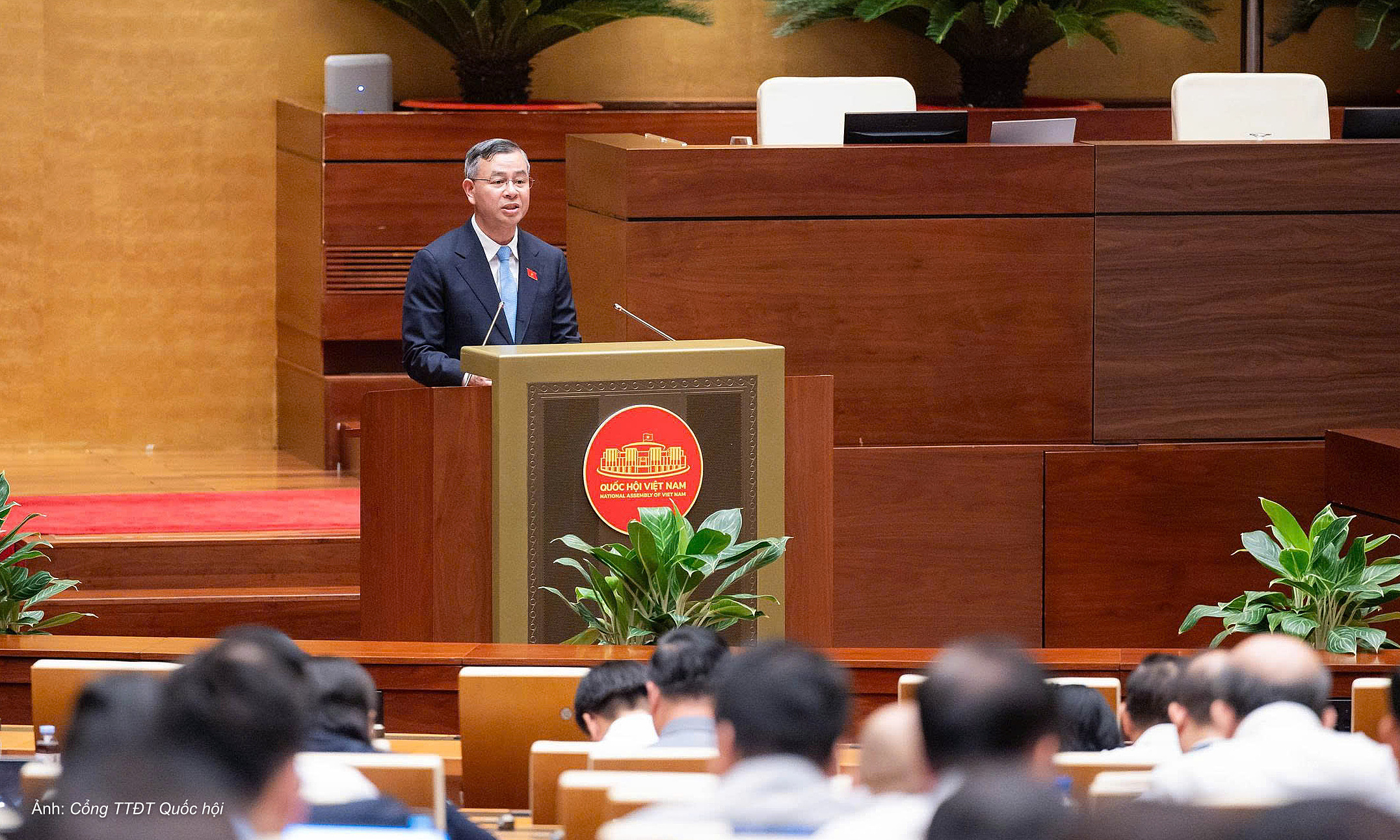
TP HCM Secretary Tran Luu Quang speaking at the session on the morning of October 18. Photo: Anh Tu |
The city has introduced a series of innovative, fundamental solutions for implementation in the final months of the year. Regarding demand stimulation, Quang stated that TP HCM would adopt a different approach, utilizing e-commerce and e-wallets to allow consumers to "buy now, pay later" during the year-end period. This marks a change from previous solutions, where consumers were not prepared with funds for shopping, and the city only prepared goods. He also noted that the city encourages businesses to provide Tet (Lunar New Year) bonuses in November and December, enabling employees to shop when prices are more favorable than closer to the Lunar New Year.
The city is also connecting various types of services to stimulate demand. For example, this weekend, TP HCM will host two popular concerts, "Anh trai say hi" and "Anh trai vuot ngan chong gai." In the coming period, the city will also feature other major entertainment programs designed to attract visitors.
"I do not have specific statistics yet, but hotels and restaurants in Ben Thanh Market are significantly busier," the TP HCM Secretary said. Alongside reducing goods prices, major hotels will also adjust room rates to attract tourists.
Additionally, Quang outlined other synchronized solutions, such as public investment disbursement and investment in build-transfer (BT) projects. He believes that, based on calculations, the city has ample capacity and room to achieve this year's targets.
 |
National Assembly Chairman Tran Thanh Man speaking at the session on the morning of October 18. Photo: Anh Tu |
According to the Government's report, 14 out of 15 socio-economic targets for 2026 are expected to be met or exceeded. Gross Domestic Product (GDP) growth reached 9,95% in Q3 and 9,01% after nine months, placing it among the highest in the region and globally.
Despite this, National Assembly Chairman Tran Thanh Man pointed out several limitations in the current economy that require improvement. According to the Chairman, under pressure from inflation and the need for macroeconomic stability, unskillful management could lead to inflation amidst volatile global prices.
He also observed that private investment has not seen a breakthrough, accounting for only 53% of total capital. Data from the Government's report shows that public investment disbursement reached nearly 63%, but unrecovered advance payments remain high, at approximately 37%. He proposed inspecting advance payments to contractors and accelerating project procedures.
The National Assembly Chairman emphasized that in 2027, public investment should be managed based on output results, with flexible capital reallocation, and a decisive approach to replacing officials who shirk responsibility.
Adding his input, Associate Professor Dr. Tran Hoang Ngan stated that the economy needs to address capital requirements while ensuring interest rates "remain moderate." According to Ngan, current market interest rates are 9-10%, while the consumer price index (CPI) for nine months reached 4,5%. This means the real interest rate (nominal interest rate minus inflation) is as high as 4,5-5%.
He argued that this level exceeds businesses' capacity, as real interest rates above three percent would significantly disadvantage production and business activities and reduce corporate resilience. "It is essential to solve the interest rate problem and the capital structure gap, as banks currently mobilize short-term capital (a maximum of one year) but supply medium and long-term funds," he said.
Ngan proposed that the State Bank of Vietnam re-finance to enable banks to access long-term capital for infrastructure, housing, and industrial park projects. This solution would help avoid using short-term mobilized capital for long-term loans, which poses liquidity risks during market fluctuations.
Previously, during a group discussion on the afternoon of October 17, Vietcombank Chairman Nguyen Thanh Tung stated that the bank committed to reducing lending interest rates by at least two percent from now until the end of the year to support businesses. Starting October 15, BIDV also reduced lending interest rates by up to two percent per year for short-term Vietnamese dong loans in priority sectors and industries.
Anh Tu