After the Lunar New Year, Hanoi and several northern provinces experienced widespread humid weather, with air humidity levels between 70-85%, accompanied by drizzle and early morning fog. This phenomenon, known as nom am, occurs in late winter and early spring, making floors, walls, and household items constantly damp and stuffy, creating an environment conducive to the growth of bacteria, viruses, and mold.
 |
Hanoi foggy on a humid day in early 2026. Photo: Ngoc Thanh. |
Hanoi foggy on a humid day in early 2026. Photo: Ngoc Thanh.
Health experts warn that humid weather increases the risk of respiratory illnesses such as influenza, sinusitis, laryngitis, bronchitis, and pneumonia. Children, the elderly, pregnant women, and individuals with underlying health conditions are particularly susceptible due to weaker immune systems. Minh Kiet from Thanh Xuan, Hanoi, shared that every humid season, his home's air becomes stuffy and the walls peel, affecting his family's health despite repeated cleaning and repainting.
During humid seasons, controlling indoor air quality becomes crucial for family health. At the scientific workshop "Healthy Living Spaces - Smart Ventilation Solutions for Tropical Climates," Philip Ong, Head of Standardization Promotion, Research and Standardization Division at Panasonic Singapore, stated that humans breathe approximately 18 kg of air daily, making indoor air quality a direct determinant of health.
"In modern living environments, indoor air can be polluted by fine dust, carbon dioxide, high humidity, mold, or volatile organic compounds if not controlled by appropriate ventilation and air conditioning systems," he said.
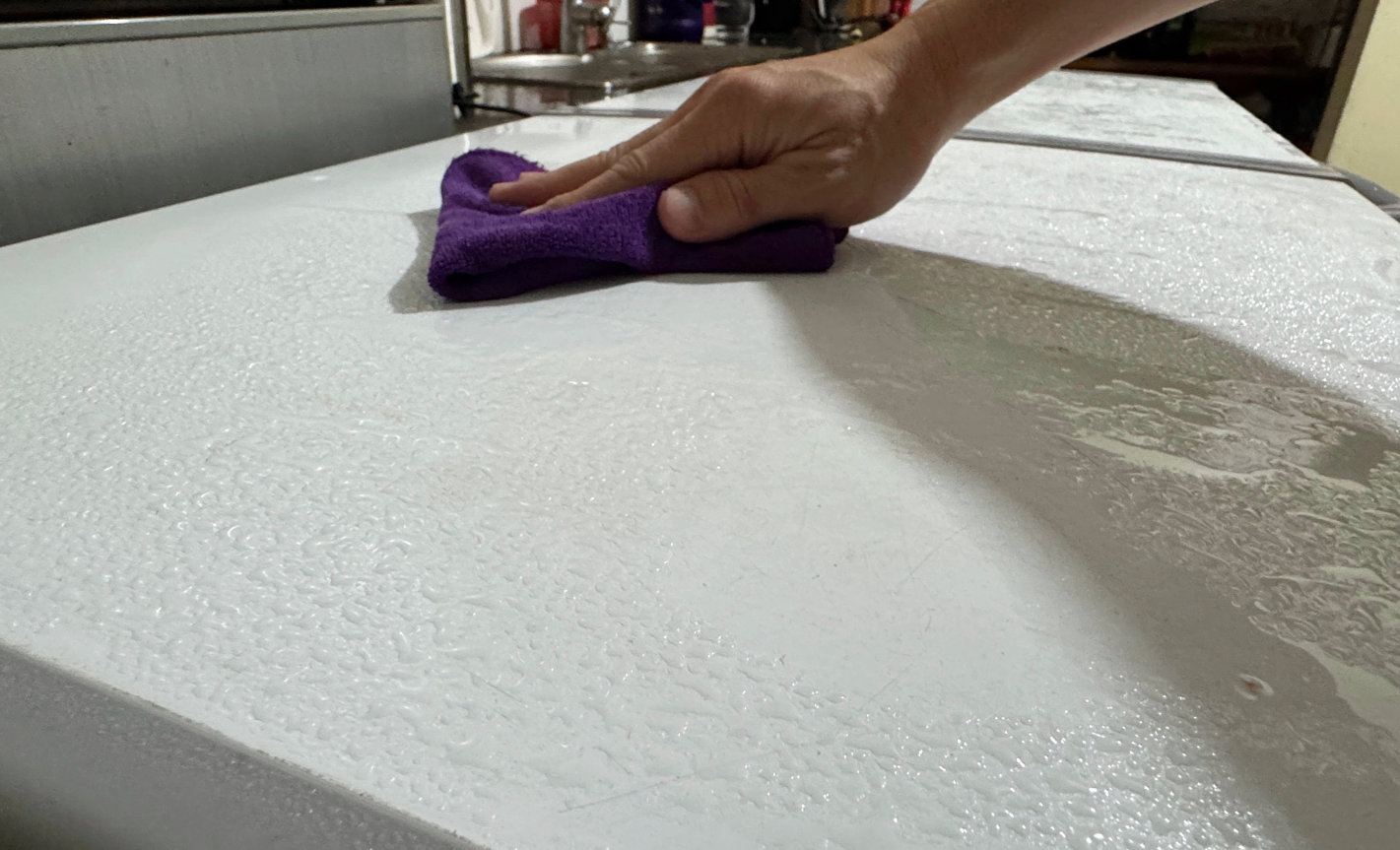 |
The refrigerator had condensation forming mottled spots on all five sides despite being wiped two to three times daily during the humid season in Hanoi. Photo: Hoang Giang. |
The refrigerator had condensation forming mottled spots on all five sides despite being wiped two to three times daily during the humid season in Hanoi. Photo: Hoang Giang.
Globally, many air treatment technologies have been developed to directly address pollutants at a microscopic level. Panasonic's nanoe™ X generation 3 represents a new technological advancement, capable of generating 48 trillion hydroxyl radicals per second, 100 times more than the first generation, according to Panasonic's announcement. "This technology helps deodorize, inhibit viruses and bacteria, and prevent pollutants from adhering to surfaces and in the air," a company representative stated.
According to test results from the Panasonic Japan Product Analysis Center in 2025, nanoe™ X generation 3 can inhibit 90% of three common mold toxins (Aflatoxin B1, Gliotoxin, Sterigmatocystin) within 5 minutes, under controlled conditions in a 45-liter test chamber. Panasonic further reported that when integrated into an air conditioning system, nanoe™ X generation 3 achieved a 94.3% inhibition rate for Aflatoxin B1 after 48 hours of operation. The World Health Organization (WHO) classifies Aflatoxin B1 as a high-risk carcinogen.
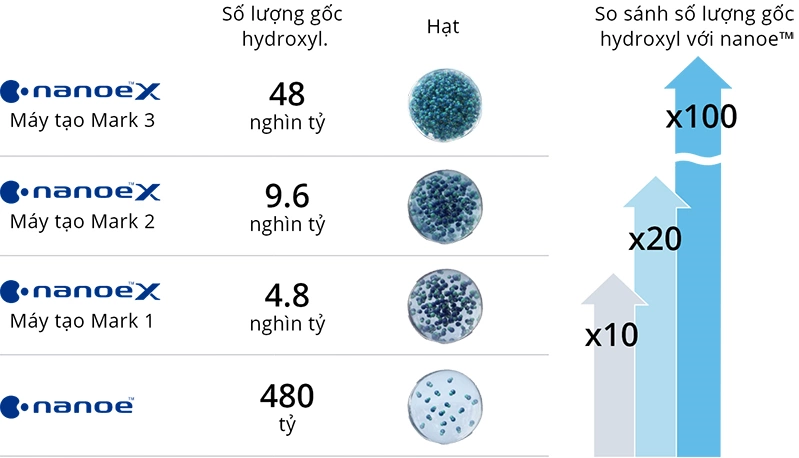 |
nanoe X technology has been researched and improved by Panasonic for over 20 years. Photo: Panasonic. |
nanoe X technology has been researched and improved by Panasonic for over 20 years. Photo: Panasonic.
Currently, Panasonic integrates nanoe™ X generation 3 into its residential and commercial air conditioners. This technology can operate concurrently with cooling mode or independently, helping to proactively maintain air quality in enclosed spaces.
This approach highlights a new trend in environmental protection: instead of merely treating visible signs of mold, many solutions now focus on controlling harmful agents directly in the air. Proactive indoor air quality control has become an essential aspect of modern living standards, ensuring family health is protected within daily living spaces.
Quang Anh