


According to Reuters on 19/1, experts believe Ottawa's new policy opens opportunities for many automakers, but Tesla will be the first to benefit due to its existing advantages in manufacturing and distribution networks.
Previously, under an agreement announced on 16/1, Canada permitted the import of up to 49,000 vehicles annually from China at a most-favored-nation tariff of 6.1%, replacing the previous 100%. Canadian Prime Minister Mark Carney stated this quota could increase to 70,000 units within the next five years.
While many Chinese automakers are eager to seize this opportunity to expand exports, Tesla already holds an advantage. Its Shanghai factory, which produces over half of all global Tesla vehicles, began exporting the Model Y to Canada three years ago.
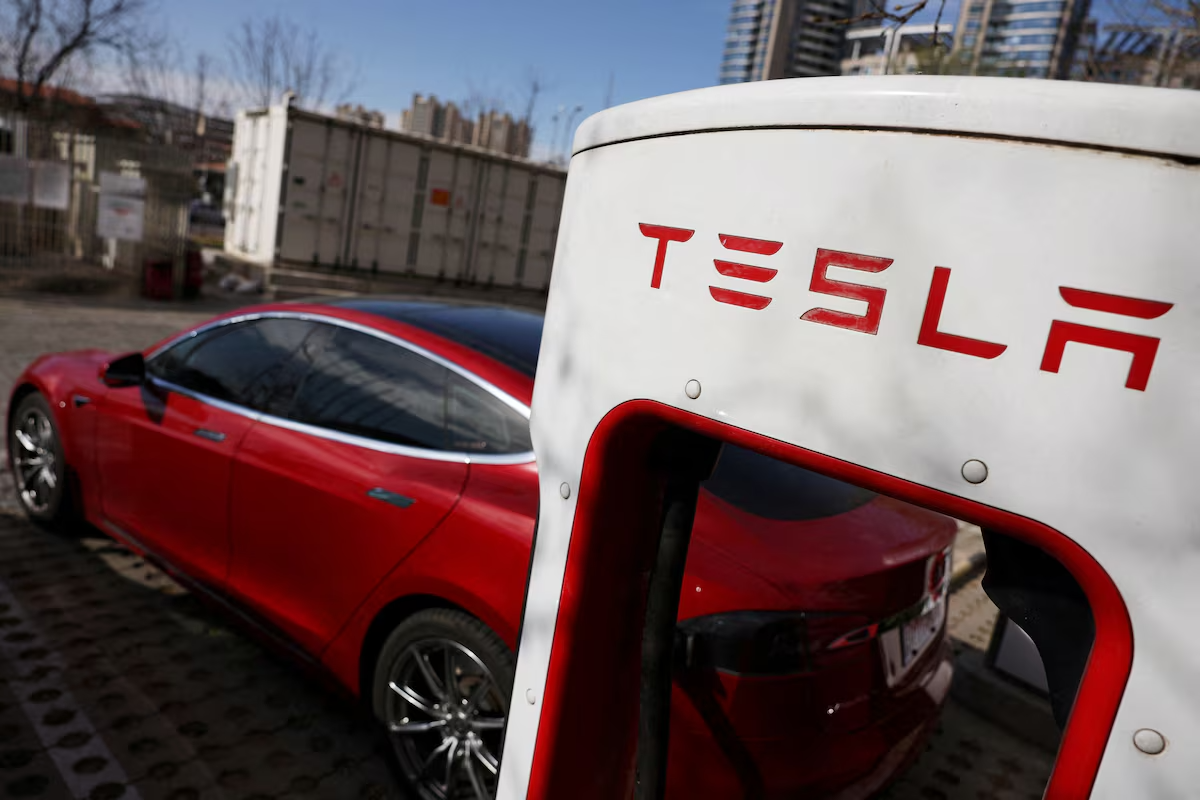 |
A Tesla vehicle at their Supercharger station in Beijing, China, 24/3/2025. *Reuters*
In 2023, Tesla's exports from Shanghai to Canada boosted the volume of vehicles imported from China through Vancouver port by 460%, reaching over 44,000 units. This flow was interrupted in 2024 when the 100% tariff was imposed, forcing the American EV manufacturer to shift imports from its German factory.
However, the new quota mechanism will allow the company to immediately resume this route. "The Canada-China agreement will enable Tesla to quickly resume export operations," stated Sam Fiorani, Vice President of AutoForecast Solutions research firm.
Regarding its sales network, Tesla currently operates 39 stores in Canada, whereas Chinese competitors like BYD and Nio have no retail presence. BYD only has an electric bus assembly plant in Ontario.
The American EV maker also benefits from easier marketing due to its streamlined product range of four core models, unlike the more extensive offerings from Chinese rivals. "Providing a few models with a simple production line allows the company the flexibility to sell vehicles produced in any country or market to achieve the best cost efficiency," said Yale Zhang, CEO of Shanghai-based consulting firm AutoForesight.
However, the agreement includes a significant clause regarding pricing. Specifically, half of the 49,000-vehicle quota is allocated for budget-friendly models priced under 35,000 CAD (approximately over 25,000 USD). Tesla's vehicle prices exceed this threshold.
Additionally, other brands that exported "made in China" vehicles to Canada before the tariff imposition included Volvo and Polestar, both owned by China's Geely Group.
Speaking to Bloomberg, a Geely spokesperson indicated that the group's brands would experience varying impacts. However, overall, the tariff changes represent a positive development. Representatives from Tesla and Polestar declined to comment.
John Zeng, head of China market forecasting at GlobalData, a market analysis firm, noted that the EV quota could also offer Chinese automakers an opportunity to explore the market, given Canada's substantial Chinese diaspora.
Officials from the Trump administration criticized the agreement to import Chinese vehicles, suggesting Canada would "regret" the decision. The Biden administration previously quadrupled tariffs on Chinese electric vehicles, raising them to 100% in 2024 to block their export to the United States.
Bao Bao (*Reuters, Bloomberg*)


