


"South Korea has not honored its agreement with the US", Trump wrote on the Truth Social social media platform on 26/1. "Because the South Korean National Assembly has not approved our historic trade agreement, despite it being within their authority, I have decided to increase import tariffs on automobiles, timber, pharmaceuticals, and all other reciprocal tariffs applied to South Korean goods, from 15% to 25%". Trump did not specify when these changes would take effect.
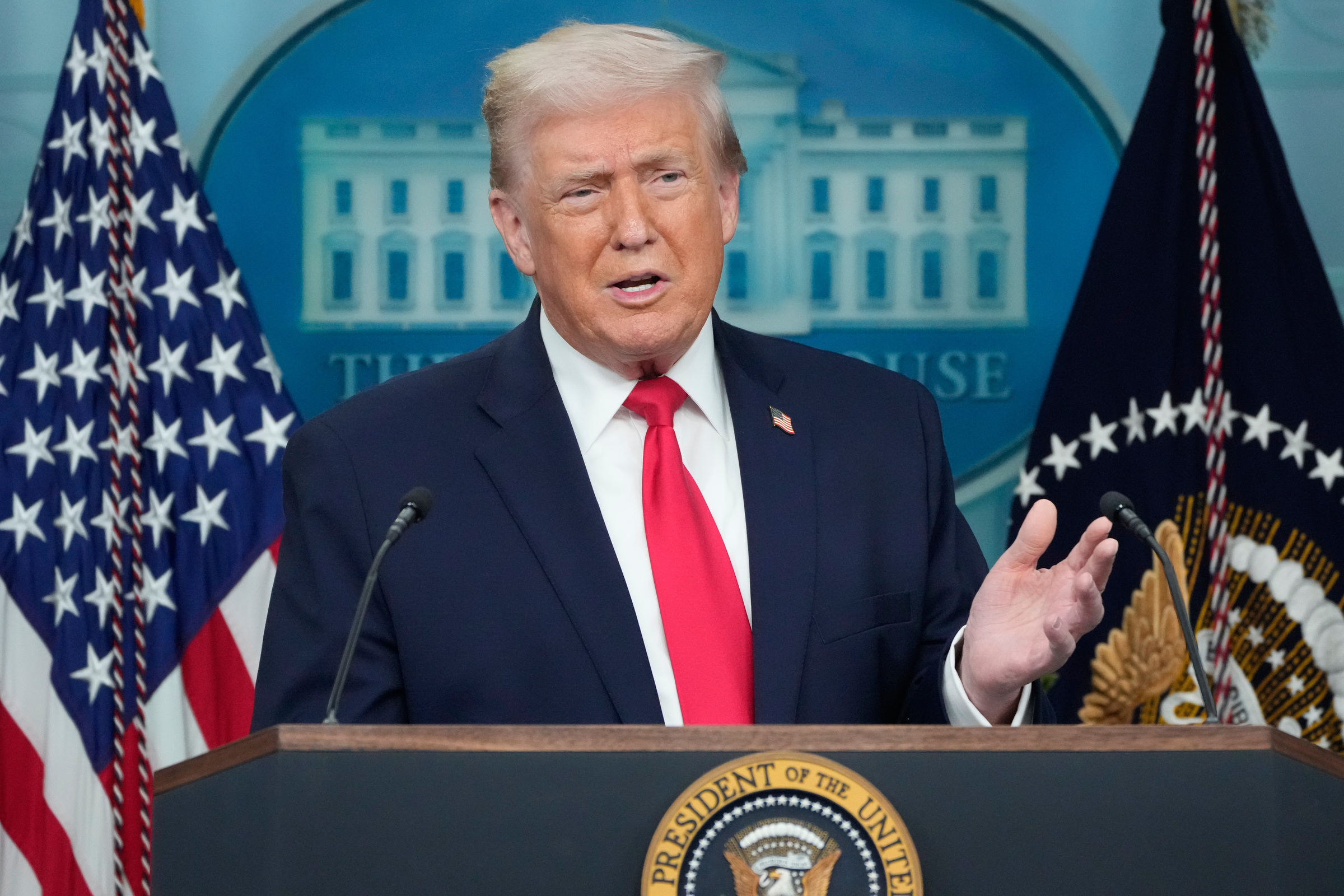 |
President Donald Trump speaks at the White House on 20/1. *Photo: AP*
Last year, the US and South Korea reached a trade agreement. Under this accord, Washington committed to reducing tariffs on South Korean automobiles and automobile components imported into the US from 25% to 15%, matching the rate for Japan. Additionally, South Korea pledged to invest USD 350 billion in strategic sectors within the US. This included Seoul allocating USD 200 billion in cash, disbursed in phases with an annual ceiling of USD 20 billion, aimed at maintaining the won's stability.
However, earlier this month, the South Korean Finance Minister stated that the USD 350 billion investment plan could not commence in the first half of 2026 due to the weakening won. Allowing substantial capital outflows is creating difficulties for South Korean officials, especially as the won's value has dropped to its lowest point since the 2007-2009 global financial crisis.
Josh Lipsky, Director of the Atlantic Council's GeoEconomics Center, stated that Trump's move indicates impatience with Seoul's progress in approving the trade agreement framework.
"This is just another reminder that the market was mistaken in believing we would enter a period of import tariff stability in 2026. Many say, 'He won't actually do it', which is sometimes true, but sometimes it is not. And the volatility itself comes at a cost", Lipsky said.
By Ha Thu (Reuters)


