


On 21/1, US President Donald Trump met with global business leaders from various sectors, including financial services, cryptocurrency, and consulting, at the World Economic Forum (WEF) in Davos, Switzerland. During the discussion, he continued to praise the US economy, stating that the country was "doing very well" in just one year, with strong investment inflows and a favorable business environment.
He emphasized that his policies had brought significant benefits to the business community. "I meet the biggest business people, and I say 'Congratulations to you'. They say 'For what?'. I say 'Because your wealth has doubled since I became president'. And they say 'Even more than that'", Trump recounted.
He stated he had helped "a few people in this room become very wealthy". "I don't even have to ask 'How are you doing?'. It seems everyone is making a lot of money", the US president said.
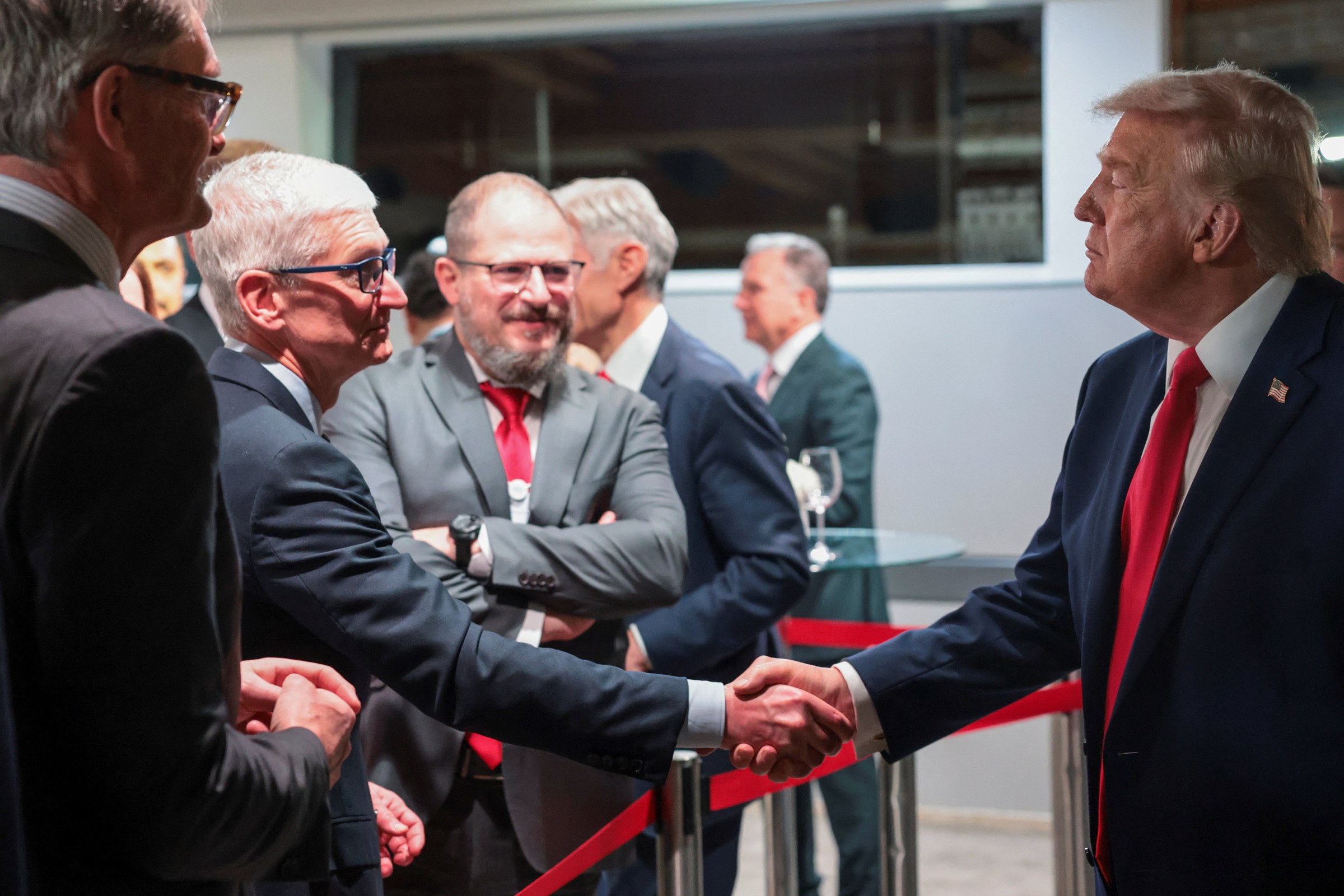 |
US President Donald Trump shakes hands with Apple CEO Tim Cook at WEF Davos on 21/1. Photo: *Reuters*. |
PBS reported that CEOs from Apple, Visa, Cisco, Salesforce, JPMorgan Chase, and Amazon were invited to this meeting. Last year, Apple repeatedly announced increased domestic manufacturing investments to mitigate the impact of import tariffs, totaling 600 billion USD.
In 11/2025, Japanese automaker Toyota also announced an additional 10 billion USD investment in electric vehicle battery production in the US. These two companies were mentioned by Trump in his speech.
The US president asserted the country is "the most attractive nation in the world, excellent for investment". He stated that his administration had created "a platform" for CEOs to leverage their capabilities, helping them earn "a lot of money" and expand operations in the US. This included a policy allowing businesses to deduct 100% of investment costs in the first year for factories, instead of depreciating them gradually over 40 years.
Trump also praised import tariff policies, claiming they could help the US generate "600 billion USD" or more. Import tariffs are a cornerstone of President Trump's second term foreign policy agenda. To date, the country has imposed import tariffs on most trading partners, ranging from 10% to 50%. They have also applied specific tariffs to various industries, such as aluminum, steel, wood, automobiles, and auto parts.
However, these tariffs are currently under legal review by the US Supreme Court. Analysts expect a ruling to be announced early this year.
*By Ha Thu (Source: PBS, Reuters)*


