The announcement was made during a White House meeting, attended by treasury secretary Scott Bessent, agriculture secretary Brooke Rollins, and members of the US Congress. Representatives of corn, cotton, sorghum, soybean, rice, wheat, potato farmers, and livestock ranchers were also present.
"This plan provides much-needed stability for farmers, helping them continue to lower food prices for American families," he said.
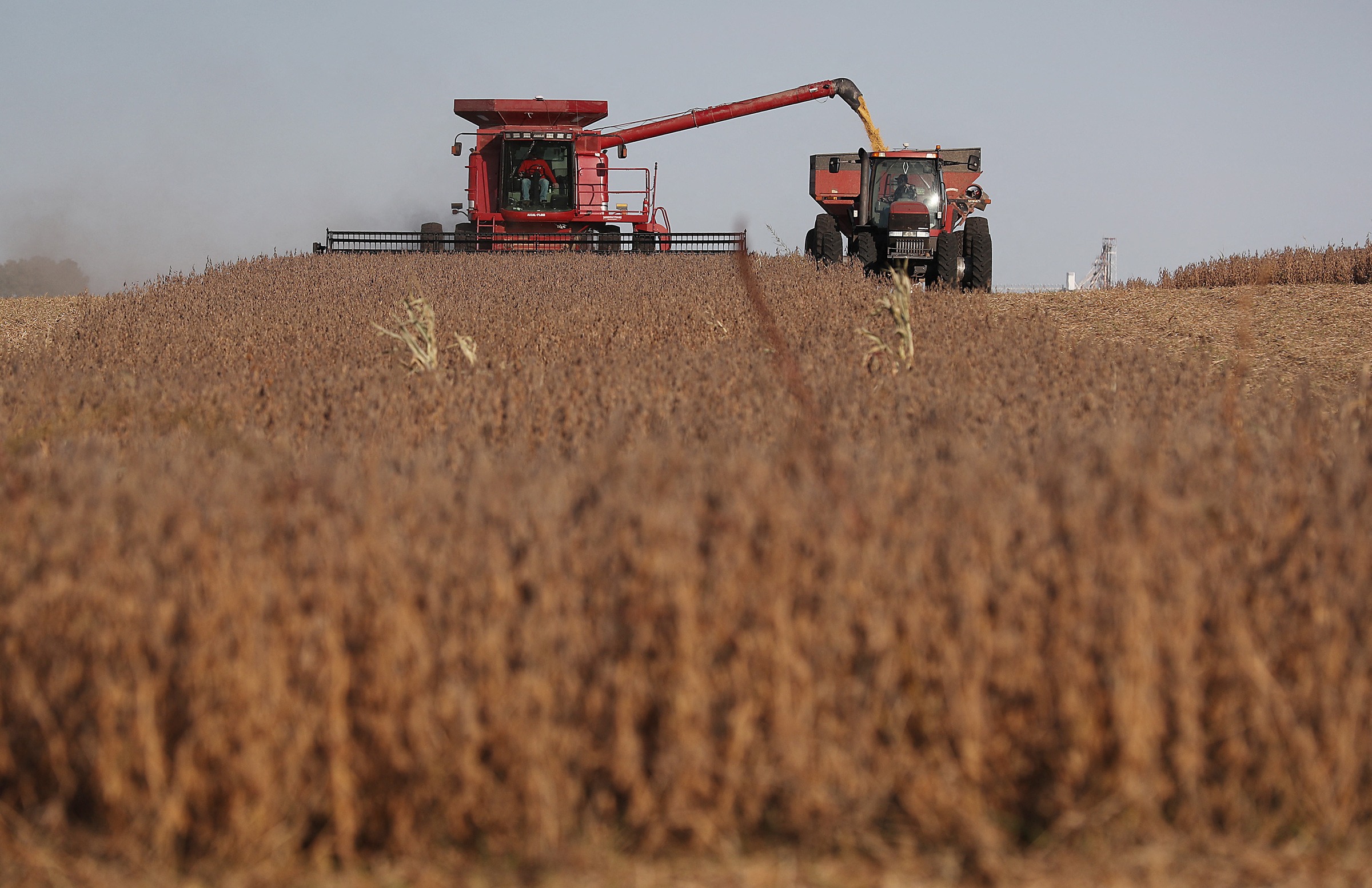 |
Farmers harvesting soybeans in a field in Rippey, Iowa, in october 2019. Photo: AFP.
The aid package aims to stabilize farmers and bolster Trump's loyal voter base. This group continues to support the US president, despite suffering billions of US dollars in revenue losses from trade tensions with China. Previously, farmers and Republican lawmakers in agricultural states had requested support for purchasing seeds, fertilizers, and other expenses for the next crop season.
Rollins stated that USD 11 billion would be disbursed by february 28. The remaining funds will be allocated later.
Bessent described the payments as a "liquidity bridge during an adjustment period" for farmers, until they see benefits from Trump's policies. This expenditure is offset by import tariffs.
However, Democratic senator Amy Klobuchar, a member of the Senate agriculture committee, argued that Trump's trade policies themselves are harming farmers. "The simplest way to provide certainty for farmers is to end the import tariffs," she said.
In october, the US government was expected to announce a USD 15 billion aid package. However, Rollins stated that a 43-day government shutdown delayed the plan.
This year, US farmers face high costs due to rising input prices, such as seeds and fertilizers. Soybean farmers, according to the American Soybean Association, anticipate their third consecutive year of losses.
At the White House, the US president affirmed he would provide further support to farmers, including eliminating environmental regulations on agricultural machinery to reduce equipment costs. He also stated he had asked Chinese president Xi Jinping to increase purchases of US soybeans.
During his first term, Trump provided USD 23 billion to US farmers affected by trade policies. This year, the group is expected to receive USD 40 billion.
By Ha Thu (Reuters)