Nearly 200 nations agreed to limit the global temperature increase to 1,5 degrees C above pre-industrial levels in the 2015 Paris Climate Agreement. Exceeding this threshold would lead to extreme phenomena like melting ice, ecosystem degradation, and rising sea levels, posing severe risks to humanity and the planet.
However, in a report on 2/9, the United Nations Environment Program (UNEP) stated that Earth's temperature risks exceeding this threshold between 2026 and 2030, driven by the burning of coal, oil, and gas. Humanity has consequently lost the opportunity to prevent the worst global warming disasters.
UNEP's report outlined two scenarios: In the most optimistic one, global temperatures would peak at 1,8 degrees C (3,2 degrees F) by mid-century, provided nations pursue ambitious climate targets. Following this peak, temperatures would gradually decrease below 1,5 degrees C by 2100. Conversely, if governments maintain current policies, the temperature increase would surpass 2,6 degrees C (4,7 degrees F).
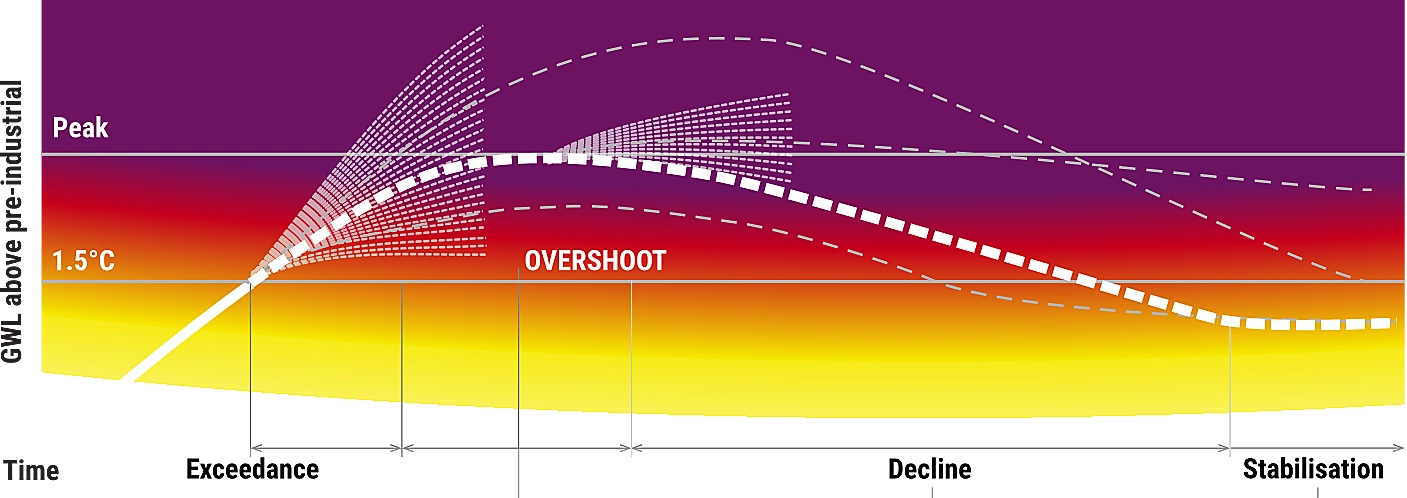 |
Best-case scenario (bold line) according to the United Nations report. Source: UNEP |
This implies that even under the most favorable scenario, humanity and the planet will still face natural disasters, rising sea levels, and the melting of ice and glaciers for many decades.
The report also warned that periods of exceeding the temperature threshold would see increased illness and deaths from climate change and extreme weather events. Famine and thirst would accompany this, stemming from declining food production and water scarcity, leading to economic damage and the endangerment of numerous species.
Citing recent flash floods on the Nepal - Trung Quoc border, Richard Betts, a climate scientist at the University of Exeter, UK, and co-author of the report, predicted that the world would witness many more similar events.
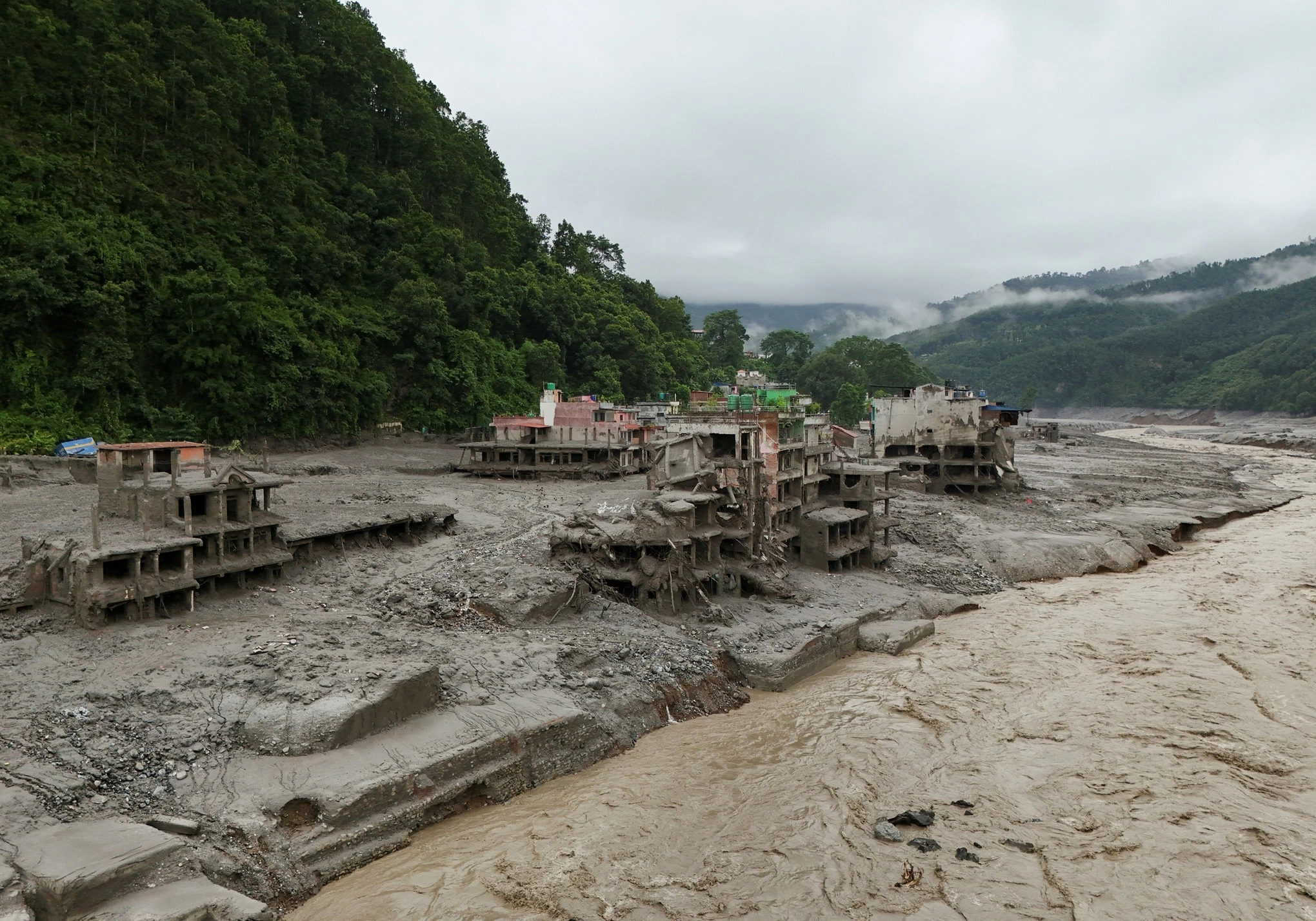 |
Mud covers homes after a flash flood in Trishuli, Nuwakot district, Nepal on 27/8. Photo: Reuters |
UNEP also warned of "tipping points" that could trigger irreversible consequences and a cascade of impacts, such as melting ice in West Antarctica and Greenland, and the loss of the Amazon rainforest. The report stated, "Some areas will no longer be insurable, or even habitable."
Scientists noted that traditional methods, such as planting trees to absorb carbon dioxide (CO2), could only reduce global temperatures by one-tenth of a degree Celsius, even with maximum effort.
Given this grim reality, the United Nations urged policymakers to "prepare and orient for a future" where temperatures surpass safe limits, and subsequently adjust strategies to lower global temperatures. Nations must cease using fossil fuels and develop methods for removing carbon dioxide (CO2) from industrial production.
Rob Jackson, a climate scientist at Stanford University, likened humanity's rising emissions to a "runaway train," suggesting the United Nations' scenario is unfeasible given the rapid halt and reversal it demands. Bill Hare, CEO of Climate Analytics, commented that while UNEP effectively described the "hole humanity has dug for itself," it failed to outline a viable escape from the current situation.
Bao Bao (according to AP, UNEP)