In an 11/2025 announcement, UPS' return logistics unit began piloting two new features with several retailers, including the fashion brand Everlane.
The first feature scores and assesses risk for each return request, based on customer behavior and shopping patterns. Cases categorized as high-risk – determined by timing, frequency, or other unusual factors – are flagged for review before a refund is issued.
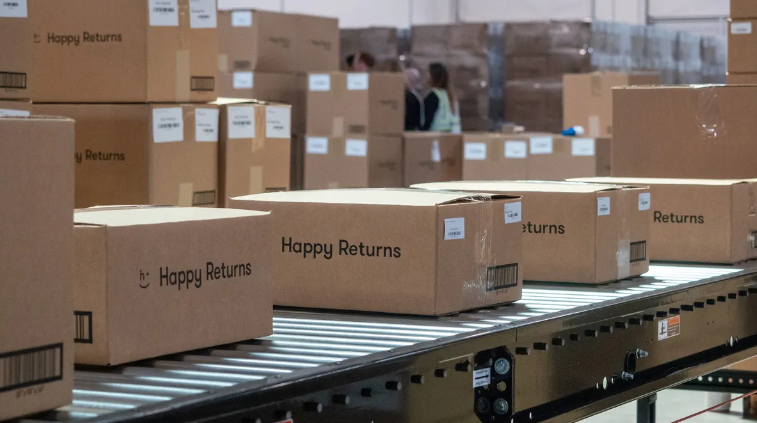 |
Returned items are prepared for shipment at a Happy Returns center. Photo: Happy Returns
The second feature, named Return Vision, uses AI to inspect high-risk returns by comparing the returned product with its original image in the retailer's online catalog. This aims to determine if the two products match.
According to David Sobie, co-founder and CEO of Happy Returns, this process adds a layer of protection against "return swapping," where buyers intentionally send back a similar but cheaper product to receive a refund. "For example, I buy a very expensive black dress, but return a cheap black dress. For busy return processing staff, it is very difficult to spot subtle details like different stitching," he said.
A 2025 report by Happy Returns and the National Retail Federation (NRF) estimates that about 9% of all returns are fraudulent, with product swapping on the rise.
The Return Vision software, deployed at Happy Returns' processing centers, can detect other errors difficult to identify with the naked eye, such as straps that are too wide, missing logos, or incorrect tags. The inspection results form the basis for deciding whether to issue a refund.
According to Juan Hernandez-Campos, the company's chief operating officer, integrating AI helps re-validate human decisions and provides visual evidence for retailers if they need to explain why a refund was denied to a customer.
To avoid merchandise backlogs in warehouses, the company stated that flagged orders are inspected within one day of arrival at the center. Happy Returns reported that fewer than 1% of returns from Return Bar locations are subject to review, but each prevented case saves retailers an average of 218 USD in losses.
Following the post-holiday return peak, the unit expects to expand Return Vision's deployment in 2026. Sobie noted that the larger the data, the more accurate the AI and machine learning models become, enhancing fraud prevention effectiveness for the entire system.
UPS' Happy Returns is a returns logistics platform founded in 2015 in the US. It specializes in providing fast and convenient return processing solutions for retailers. The service is known for its Return Bar model, which allows consumers to return items directly without packaging or printing labels. In 2023, UPS acquired Happy Returns and integrated it into the group's logistics ecosystem to increase reverse logistics processing capacity. The platform currently serves many major retail brands, focusing on optimizing costs, refund speed, and reducing return fraud.