This significant housing deficit is highlighted in the housing chapter of the President's annual Economic Report, prepared by the Council of Economic Advisers.
The report indicates that the US would have an additional 10 million homes if "construction and the growth of single-family housing supply had continued along historical trends, instead of sharply declining" after the 2008 global financial crisis. This crisis largely stemmed from a wave of defaults in the real estate market, severely impacting housing development for years.
Adding to the challenge, an analysis reveals that home prices have surged 82% since 2000, while US residents' incomes have increased by only 12%. This widening gap went largely unnoticed for a long time due to historically low mortgage interest rates. However, interest rates began to climb after Covid-19, making homeownership a primary concern for voters under 40. The average 30-year fixed-rate mortgage interest rate has risen to 6,37%, up from below 6% before the Iran conflict, according to Freddie Mac.
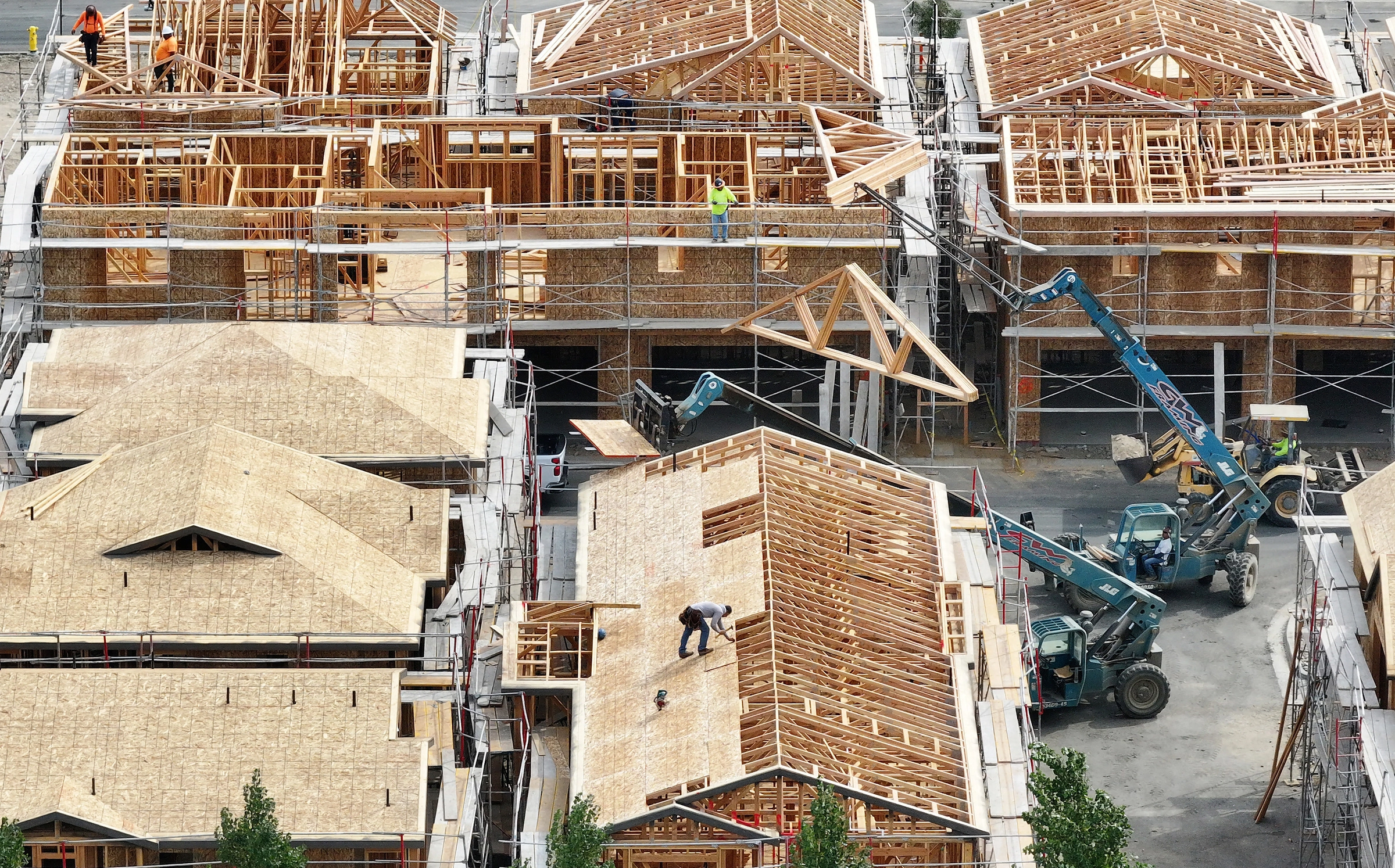 |
Home construction in Fontana, California, on 17/9/2025. Photo: AFP |
Regulatory burdens further exacerbate the housing crisis, with the White House stating that various regulations add over 100.000 USD to the construction cost of each home. These include changes in building standards over the past decade, compliance costs, and planning approvals. Additionally, green housing standards introduced under the administration of Joe Biden contribute to these rising costs. A 2021 analysis by the National Association of Home Builders suggests these could increase the price of a new home by up to 31.000 USD.
In response to these challenges, President Donald Trump signed two executive orders in March, directing federal agencies to reduce regulatory burdens in the housing sector and make it easier for small banks to provide mortgage loans. According to officials from AP, Trump may also consider tying federal funding for states and local governments to a reduction in certain housing development regulations, aiming to incentivize more construction.
Despite these efforts, the current market situation remains challenging. Data from the National Association of Realtors (NAR) indicates that existing home sales in March fell to a nine-month low, attributed to scarce supply and growing concerns in the labor market. In total, only 3,98 million units were sold in March, a 3,6% decrease compared to February. Reflecting this pessimistic outlook, NAR simultaneously lowered its 2026 home sales growth forecast to 4%, down from 14%. Daniel Vielhaber, an economist at Nationwide, commented, "In the short term, there are almost no signs that home sales will quickly recover."
Anh Ky (according to AP, Reuters)