China's General Administration of Customs released its March trade data on 14/4. According to the report, import value increased by 27,8% year-on-year, reaching nearly 270 billion USD. This pace exceeded forecasts and marked the strongest increase since 11/2021.
The report extends China's accelerating import trend this year, driven by improving domestic demand, increased commodity demand, and companies replenishing inventories. In the first two months of the year, the country's imports rose by nearly 20%.
This is an optimistic sign for China's goal of boosting consumption. For many years, economists have urged the country to shift its growth model from reliance on investment and exports to a consumption-driven breakthrough. In its five-year plan released last month, Beijing also pledged to significantly increase household consumption.
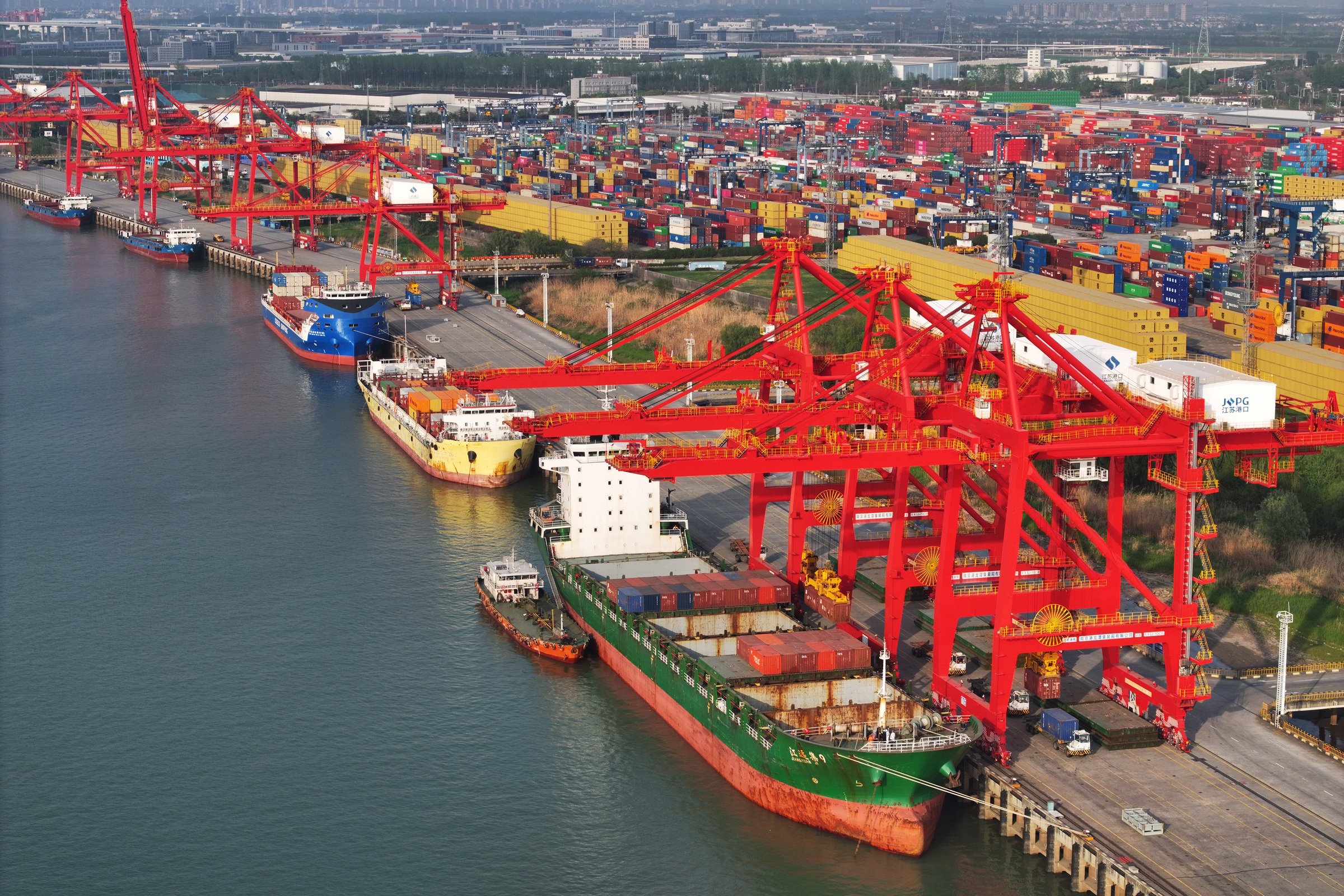 |
Container port in Nanjing (Jiangsu, China) in 4/2025. Reuters
Meanwhile, exports in March rose just 2,5% year-on-year, reaching 321 billion USD. This activity was primarily affected by the conflict in the Middle East.
Over the past month, conflicts involving Iran, the United States, and Israel have nearly blockaded the Strait of Hormuz, threatening global energy supplies and disrupting sea shipping routes. Brent crude prices currently remain above 90 USD per barrel, a sharp increase from around 60 USD before the conflict erupted.
Rising fuel and insurance costs have driven up freight rates. Detours around the Cape of Good Hope have also reduced shipping capacity. Disruptions to petrochemical and fertilizer supplies also increase risks for industrial and agricultural production.
Lu Daliang, spokesperson for China's General Administration of Customs, stated that the Middle East conflict has led to a prolonged sharp rise in fuel prices, significantly increasing oil transportation costs. This upward trend has now spread to global supply chains, driving up manufacturing and logistics costs for goods worldwide, thereby putting pressure on global commodity trade.
"Our data indicates that in March, China's imports and exports with the Middle East shifted from growth to decline. We hope all parties will act to de-escalate the situation as soon as possible, restoring peace and stability in this strait and the Middle East," he said.
Ha Thu (according to *SCMP*, *CNBC*)