German shipbuilder Meyer Werft introduced plans for the world's first fully battery-powered cruise ship at the Seatrade Cruise Global exhibition, held from 13-16/4 in Miami, Florida, United States. This annual event is the largest in the cruise industry.
Meyer Werft, a company with over 200 years of shipbuilding experience, named the battery-powered vessel "Vision". The ship will measure about 275 meters (902 feet) in length, have a gross tonnage of 82,000 tons, and accommodate nearly 1,900 passengers. The manufacturer announced that orders are open this year, with the first ship expected for delivery in 2031. They anticipate Vision will redefine sustainable tourism by achieving up to a 95% reduction in emissions.
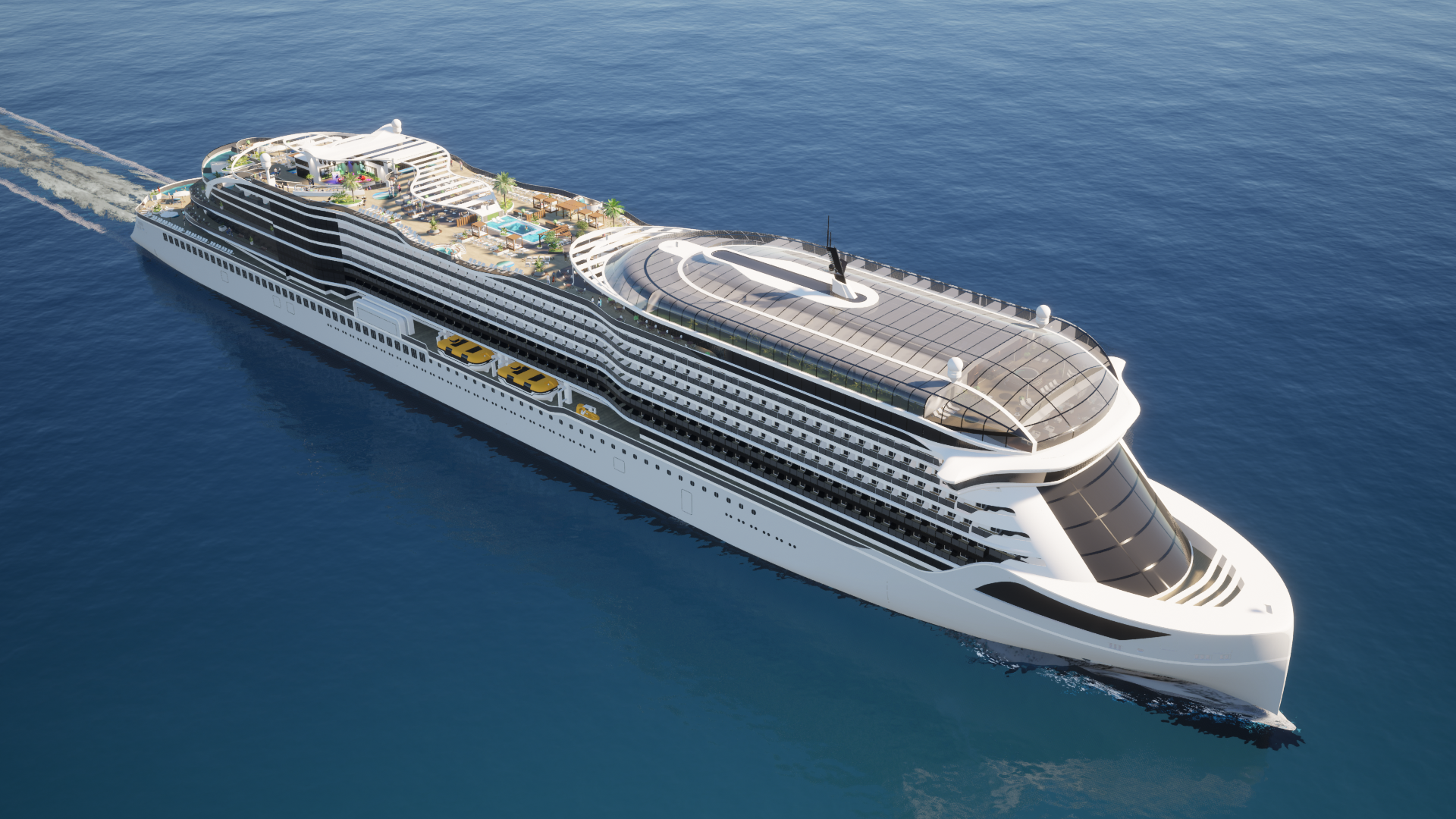 |
The Vision battery-powered ship model. *Source: Meyer Werft* |
Operating hotel systems and amenities like swimming pools demands a substantial amount of energy from cruise ships. Consequently, Vision will rely on a large-scale energy storage system to meet its power needs. Thomas Weigend, Sales Director at Meyer Werft, confirmed that their ship will use batteries from Corvus Energy, a Norwegian energy company.
While specific battery capacity details were not disclosed, a company representative stated that the ship can cover most typical European cruise routes. An example given was the journey from Barcelona, Spain, to Civitavecchia, near Rome, Italy, which spans approximately 804-885 kilometers. The ship will recharge from shore power stations at major ports. By 2030, about 100 ports are expected to have integrated charging facilities. Meyer Werft representatives also noted the option to add generator systems for extended voyages.
Cruise ships, which combine a vessel and a hotel, contribute significantly to pollution, often surpassing airplanes. According to the International Council on Clean Transportation (ICCT), a passenger on a 7-day, 2,000-mile tour around Seattle on an oil or liquefied natural gas (LNG) powered ship would emit 1.5-1.9 tons of CO2. This figure is 2.5-3 times higher than tourism by gasoline car and hotel stay, and double the emissions from air travel.
Both the maritime and cruise industries aim for net zero emissions by 2050. However, fuel innovation currently lags behind shipbuilding advancements. For instance, dual-fuel ships capable of running on synthetic ammonia or methanol are already available. Still, the production of green hydrogen, a crucial input for these fuels, faces delays. According to Maritime Executive magazine, an estimated 9 trillion USD will be needed to produce green hydrogen over the next 25 years.
Despite these challenges, the cruise industry is actively working to improve fuels and reduce emissions. Three years ago, Norway's Hurtigruten launched the Sea Zero project, an emission-free vessel with a passenger capacity one-fourth that of Vision. This ship, equipped with three massive solar electric sails and a 60 MWh battery, is expected to be launched in 2030.
Bao Bao (according to Interesting Engineering, Marine Insight)