Vietnam's seafood exports to Japan are recovering, with recent customs data showing an 11% increase in turnover over 11 months compared to the same period. November alone saw a 9% rise, reaching 161 million USD. This growth reflects renewed demand in Japan and solidifies Vietnam's position in a market known for stringent quality control.
Changes in the export product structure are driving this growth. Shrimp, a key export, continues to see increases in both volume and value, indicating stable Japanese consumer demand for high-standard products. Squid and octopus also maintain strong growth. Notably, pangasius and basa, traditionally less common in Japan, experienced significant growth, with export values rising by nearly 70%.
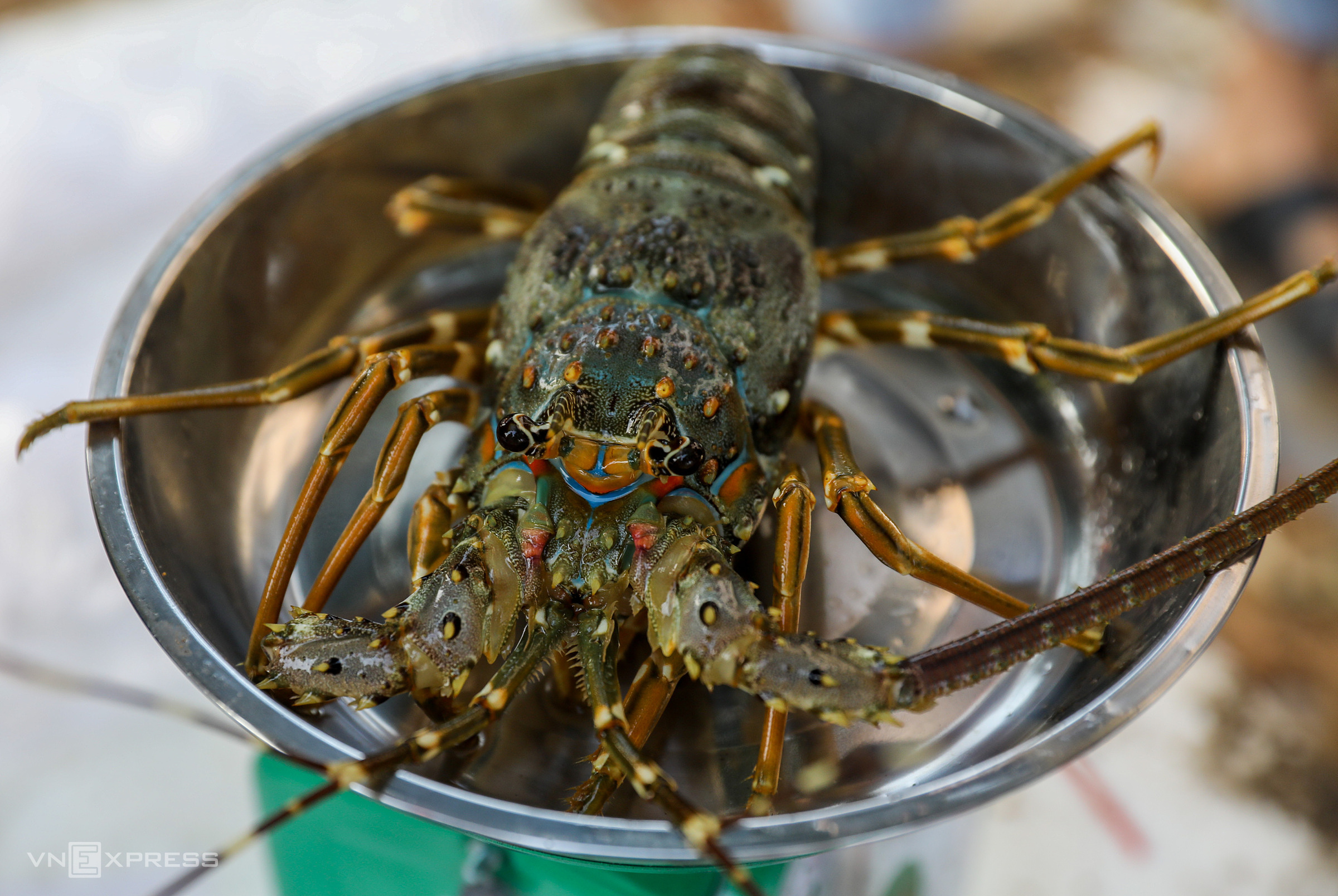 |
Lobster sold in Ho Chi Minh City. Photo: Quynh Tran |
Beyond increased volume, Vietnam also benefits from favorable export prices to Japan. Import prices there show less volatility compared to markets such as the US or China, which often experience significant impacts from inflation, logistics, and policy shifts. This price stability enables businesses to maintain production plans, mitigate risks, and foster long-term investment in product quality and processing.
Japan Customs reports that Vietnam is the country's third largest seafood supplier, contributing 7,4% of its total imports. Conversely, Japan ranks among the top three markets for Vietnamese seafood, accounting for approximately 15% of the industry's total turnover. This significant market share is maintained despite intense competition from Thailand, Indonesia, and China.
This growth trajectory is projected to continue into 2026. With the year-end marking a seasonal peak in Japanese seafood demand, experts anticipate that 2025 export turnover could exceed the 2022 record of 1,7 billion USD. Furthermore, the CPTPP and VJEPA agreements continue to offer tax and procedural benefits, enabling businesses to integrate more deeply into Japan's supply chains.
Nevertheless, the Vietnam Association of Seafood Exporters and Producers (VASEP) emphasizes that Vietnamese businesses must strictly comply with Japan's consistently detailed standards for food safety, environmental protection, and traceability. Adherence to these requirements is crucial for expanding market share, especially as Japanese consumers increasingly prioritize sustainability and transparency.
Across the entire industry, Vietnam's seafood exports have also seen strong growth. VASEP reports that in the first 11 months, total turnover exceeded 10,5 billion USD, marking a 14,6% increase, with shrimp, pangasius, and tuna all showing robust recovery. This momentum suggests the seafood industry could achieve 11,2-11,3 billion USD in 2025, further elevating Vietnam's standing in the global seafood market.
Thi Ha