Vietnam Airlines implemented the update concurrently at its three technical centers: Noi Bai, Da Nang, and Tan Son Nhat. The airline completed the process ahead of schedule and returned aircraft to service immediately after inspection, thanks to adjusted operational plans and efficient personnel allocation.
Vietjet also completed updates for its 69 aircraft by 3:00 AM on 30/11, four hours ahead of the deadline. The airline's flight schedule remained largely unaffected due to strong coordination between its domestic and international technical teams.
Bamboo Airways and Vietravel Airlines, the other carriers, confirmed that their Airbus A320/A321 fleets had been reviewed, and no aircraft required the software update mandated by Airbus and the European Union Aviation Safety Agency (EASA).
Airlines reported a smooth software update process, with no technical issues or operational disruptions.
Uong Viet Dung, Director of the Civil Aviation Authority of Vietnam (CAAV), commended the airlines for their swift response to the bug fix and their completion of all required technical steps.
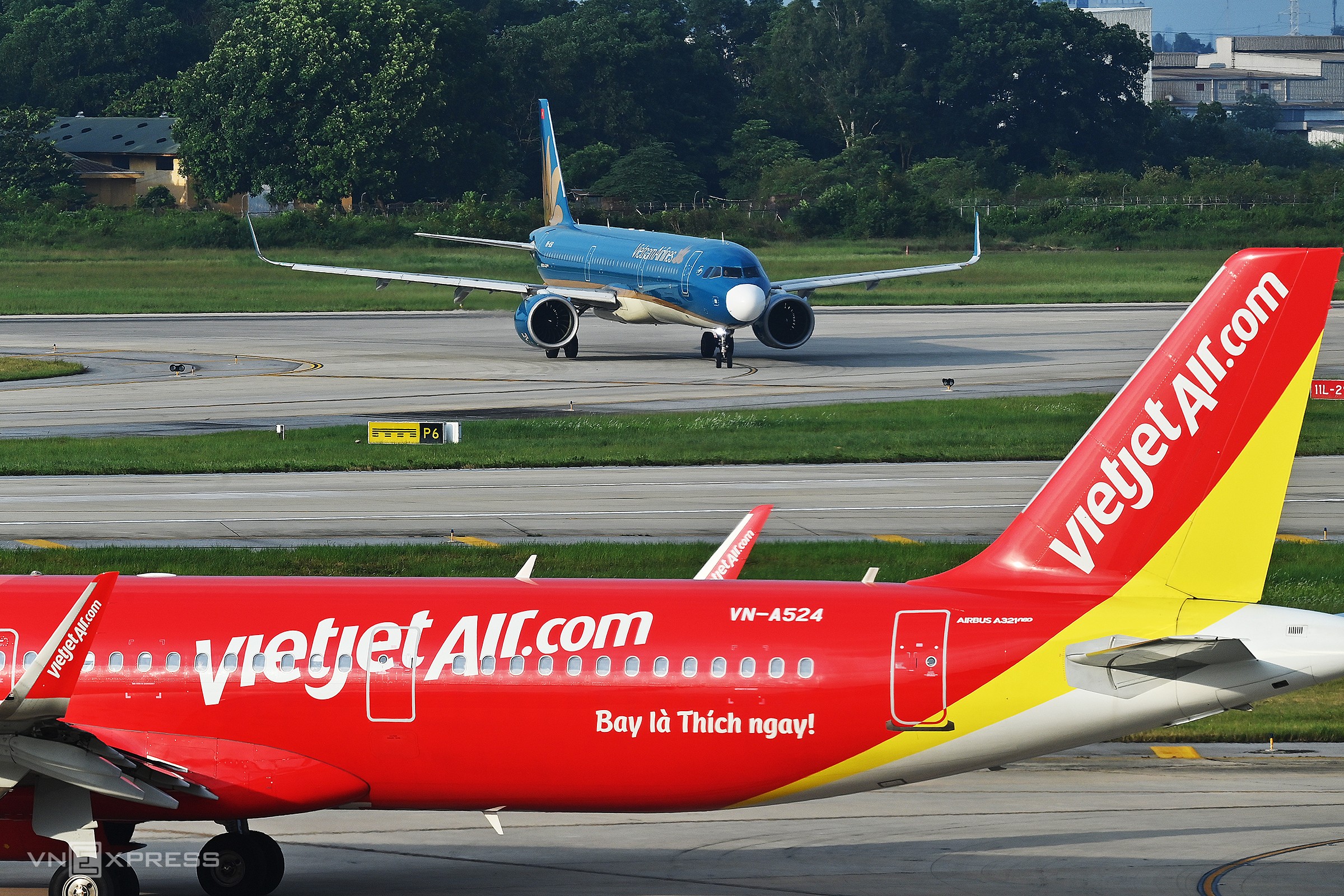 |
Aircraft at Noi Bai International Airport. Photo: Giang Huy |
On the evening of 28/11, Airbus issued a recall for 6,000 A320 family aircraft to implement a software update for the ELAC flight control system, which governs altitude and flight direction. Concurrently, EASA mandated that all A319, A320, and A321 aircraft complete this update by 6:59 on 30/11, Vietnam time.
The Civil Aviation Authority convened an emergency meeting with airlines that same night to coordinate a response plan, aiming to minimize any impact on flight operations.
Vietnam currently has 14 commercial and specialized airlines operating 254 aircraft. The national fleet is projected to grow to approximately 400 aircraft by 2030, serving 52 domestic and 211 international routes.
Thi Ha