Vietnam's aviation sector is preparing for substantial new expenditures, with projected costs of up to 496 million USD for carbon credits over the next decade. During a technical meeting on CORSIA, organized by the United Nations Development Programme (UNDP) on 27/3, experts revealed that Vietnam has registered to participate in the first voluntary phase of this mechanism starting in 2026. This move is considered essential for the domestic aviation industry to adapt to increasingly stringent global environmental standards.
The financial burden stems from Vietnam's commitment to the Carbon Offsetting and Reduction Scheme for International Aviation (CORSIA), an international greenhouse gas emission mitigation and offsetting mechanism established by the International Civil Aviation Organization (ICAO) since 2021. CORSIA mandates airlines to offset CO2 emissions exceeding their 2019 baseline by purchasing carbon credits on the international market. While the 2024-2026 period is voluntary, participation becomes mandatory from 2027 onwards for countries with international aviation operations, including Vietnam.
The total emission offsetting requirement for Vietnam's aviation sector during the 2026-2035 period is estimated at 10,7-15,4 million carbon credits. According to Dang Hong Hanh, head of the carbon market expert group (PoA Carbon), with carbon credit prices ranging from several tens to nearly 100 USD per unit, compliance costs could reach 345-496 million USD. Hanh stated, "This presents significant financial pressure for airlines during their recovery phase."
These increased costs are expected to be partially passed on to consumers. Dang Hong Hanh indicated that air ticket prices could rise by an additional 0,7-2,2 USD per passenger in the initial phase. Nguyen Le Khanh Linh, a technical expert (PoA Carbon), noted that this increase could reach up to 5 USD per ticket in later stages, depending on carbon market developments. Although the increase per ticket may not be substantial, experts believe this could impact price-sensitive customer groups, especially amid intensifying regional tourism competition.
Airlines are already planning for these requirements. For instance, with its plans to expand its international flight network, Vietnam Airlines estimates it will need approximately 478.000 carbon credits this year. This number is projected to increase to 1,5 million by 2035, as its international route network doubles. To meet these requirements, the airline plans to purchase credits on the international market or generate its own by directly investing in emission reduction projects.
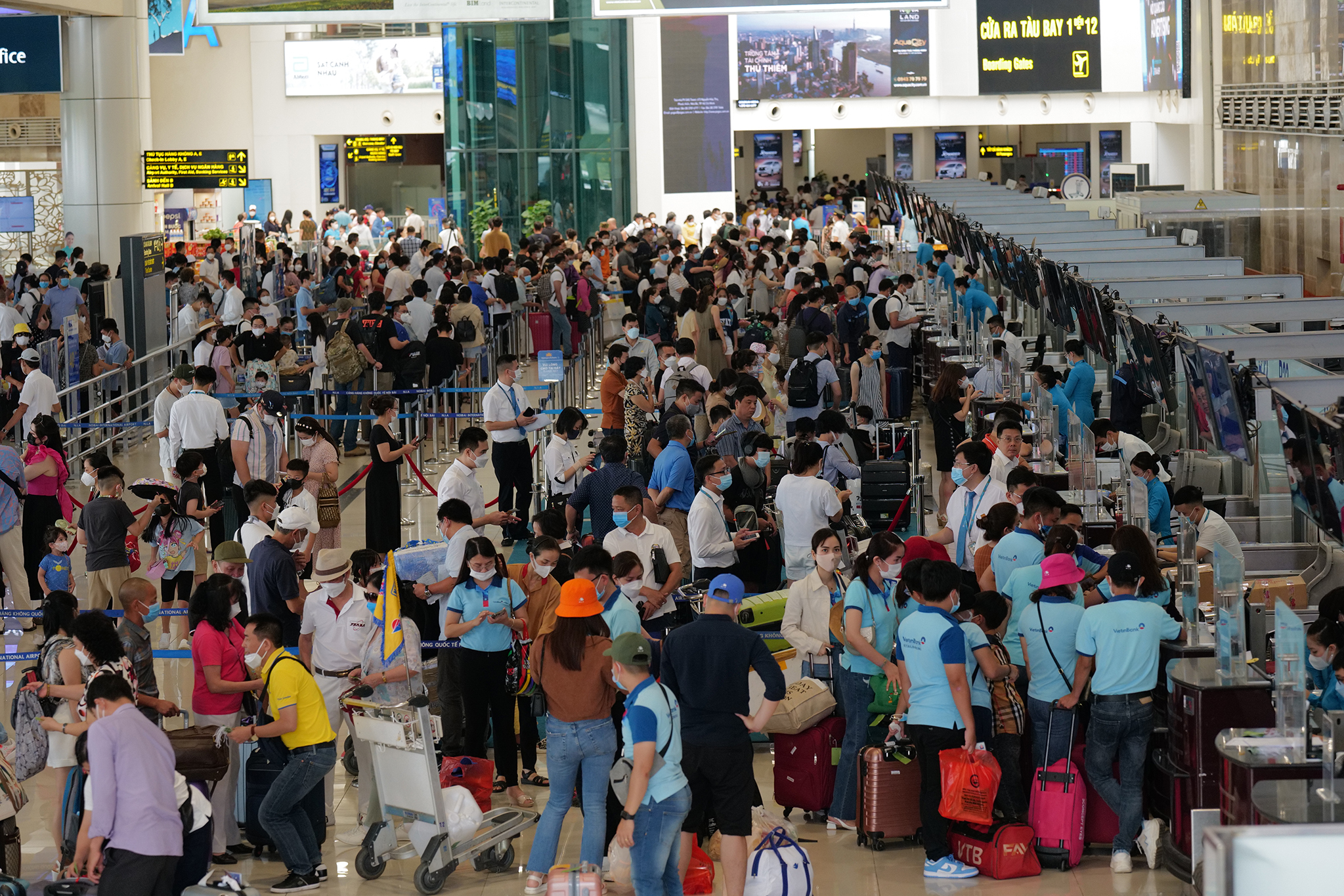 |
Noi Bai Airport. Photo: Ngoc Thanh. |
Beyond purchasing carbon credits, airlines are also considering technical solutions to reduce emissions. Among these, using sustainable aviation fuel (SAF) can cut emissions by up to 80% over the fuel's lifecycle. However, Dang Hong Hanh highlighted that SAF is currently 3-4 times more expensive than traditional fuel, and global supply is limited, making widespread implementation unfeasible. Therefore, in the initial years, purchasing carbon credits remains the primary solution for airlines to meet CORSIA requirements.
The domestic legal framework presents another challenge. Hanh noted that Vietnam has not yet fully developed regulations on international carbon credit transfers, the Letter of Approval (LoA) issuance process, and corresponding adjustment mechanisms. This exposes businesses to the risk of international non-recognition of their credits, potentially leading to repurchase obligations or sanctions.
Gia Chinh