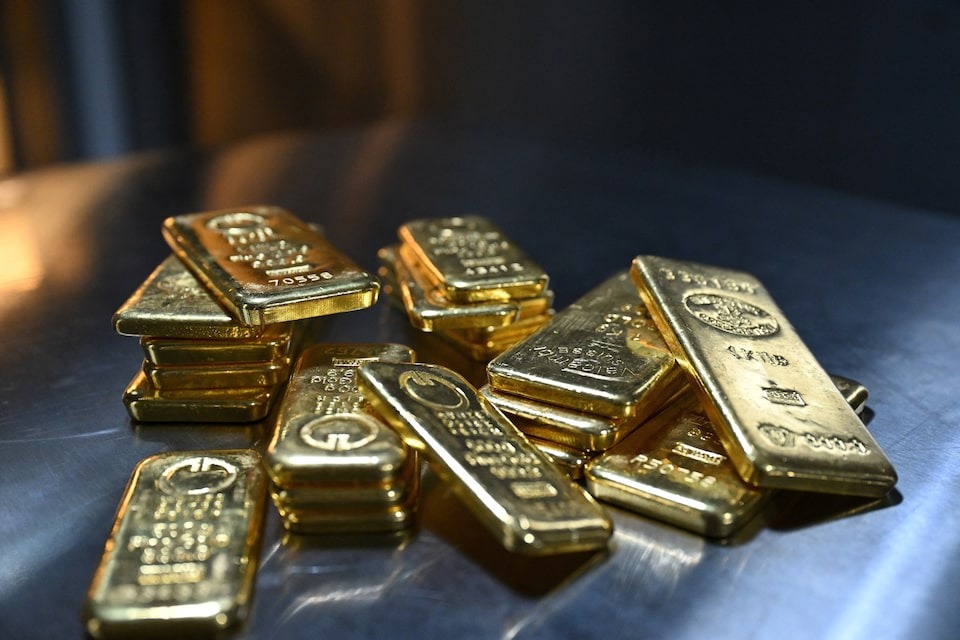
World spot gold prices surged by 94 USD to 5,278 USD per ounce at the close of trading on 27/2, reaching their highest level since 30/1. This significant rise was primarily fueled by escalating geopolitical tensions between the US and Iran, coupled with a decline in US government bond yields.
Market strategist Phillip Streible of Blue Line Futures noted, "Geopolitical concerns remain significant. The possibility of military intervention this weekend remains high. Therefore, investors have bought gold as a safe haven."
Mirroring the global trend, domestic gold prices also increased this morning. Saigon Jewelry Company (SJC) saw its buying and selling price for gold bars rise by 3 million dong, reaching 184 - 187 million dong per tael.
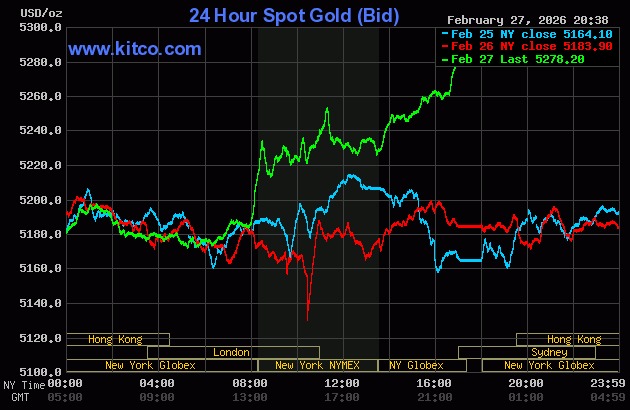 |
World gold prices rose sharply on 27/2. *Chart: Kitco* |
Geopolitical concerns deepened despite reports of progress in US-Iran negotiations. A representative from Oman, the mediating nation, stated that the US and Iran made progress in discussions on 26/2. However, these negotiations concluded without a breakthrough to fully alleviate the threat of a US attack on Iran. Amidst these tensions, the US Embassy in Jerusalem authorized non-essential personnel and their families to leave Israel, citing security risks.
Further supporting gold's appeal, the yield on 10-year US Treasury bonds fell to a three-month low on 27/2. This decline made gold, a non-yielding asset, more attractive to investors seeking stable value.
The precious metal recorded a gain of nearly 8% in February, marking its seventh consecutive month of rising prices. This sustained upward trajectory underscores gold's growing demand as an investment.
Looking ahead, Streible suggested that gold's next target could be 5,450 USD, with significant support around 5,120 USD. This optimistic outlook is partly driven by inflation concerns: latest data revealed that the US producer price index (PPI) rose faster than anticipated in January, suggesting a likely acceleration of inflation in the coming months.
The market is currently pricing in a 42% probability that the US Federal Reserve (Fed) will cut interest rates by an additional 25 basis points in June.
Global demand dynamics also played a role, particularly from China, currently the world's leading gold buyer. In the physical market, China's gold imports via Hong Kong increased by nearly 70% in January compared to December, indicating robust purchasing activity.
While gold led the gains, other precious metals also saw movement: silver prices rose by over 6% to 93,6 USD, and platinum increased by 3,5% to 2,361 USD. Conversely, palladium experienced a slight decrease, settling at 1,771 USD per ounce.
By Ha Thu (according to Reuters, Kitco)