For about a week now, young linh fish have begun appearing in markets across Dong Thap province, though in limited quantities. Ms. Tran Thi Phuong, a trader at Thong Linh market in Ba Sao commune, reported purchasing just over 2 kg of linh fish daily, a decrease from previous years. She cleans the fish immediately to maintain freshness and sells them at lower prices than before due to reduced demand.
Ms. Phuong explained, "This year, fewer fish are caught, but prices remain average due to slow sales. This type of fish spoils and loses its flavor by the end of the market day, so we must sell it quickly." Other traders at the market similarly offer a few kilograms of linh fish alongside other catches common during the flood season, such as ca chen, ca trach, ro, and sac dong.
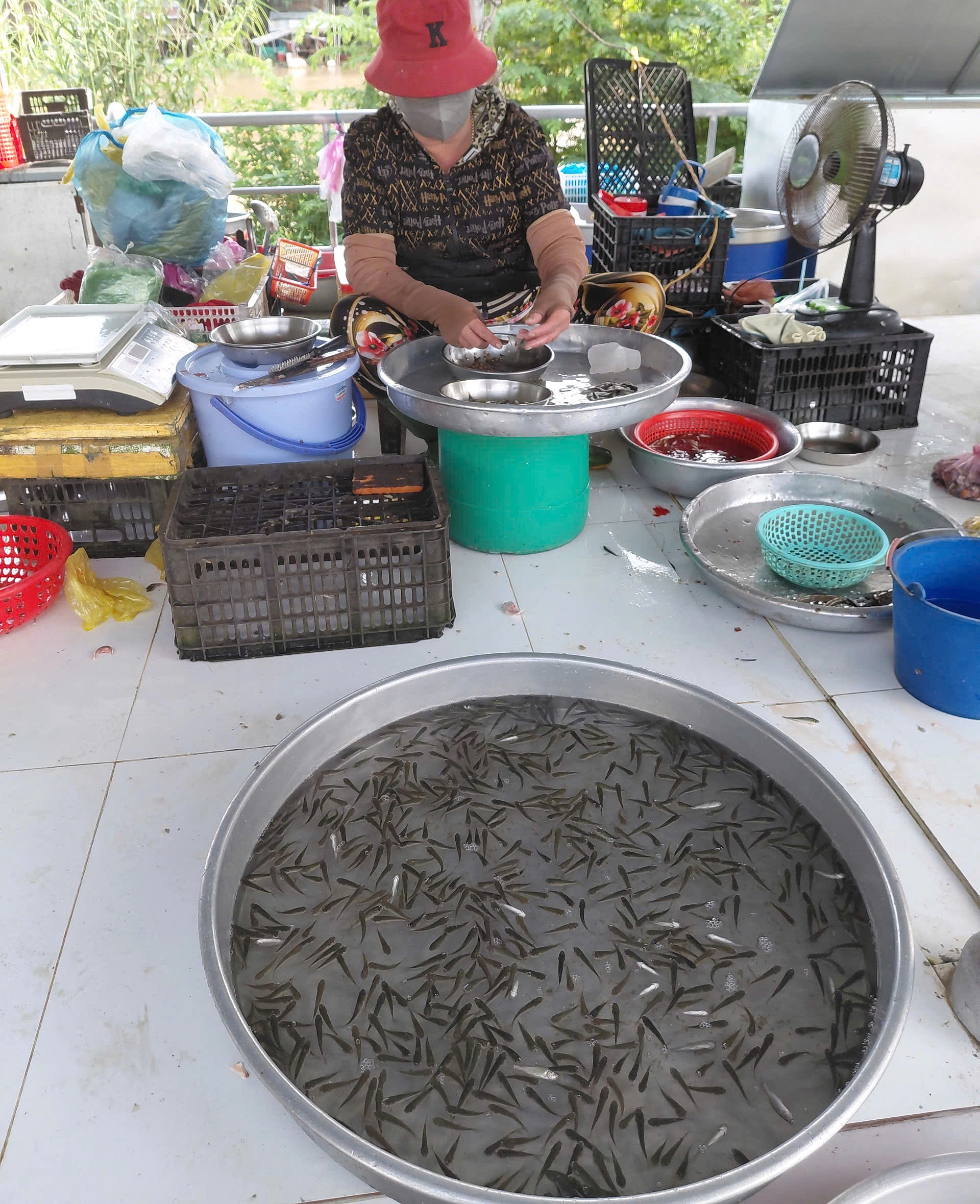 |
Thong Linh market traders clean linh fish for buyers. *Photo: Ngoc Tai* |
At central markets like Cao Lanh, cleaned young linh fish are available for 220,000 and 240,000 dong per kg. Traders typically stock only a few kilograms, requiring advance orders for larger quantities. Young linh fish currently come from two sources: wild-caught and farmed. It is almost difficult to distinguish between the two types in terms of quality.
According to a trader specializing in buying river fish, farmed young linh fish are still considered better quality than ca troi, which is sometimes passed off as linh fish. This imitation fish has hard bones and a square head; when young, it closely resembles linh fish, leading some to misrepresent its origin for higher prices. "Customers need to research carefully to distinguish this fake linh fish," the trader advised. "Recently, naturally farmed young linh fish have also become common, which has led to a decrease in the prevalence of the fake variety."
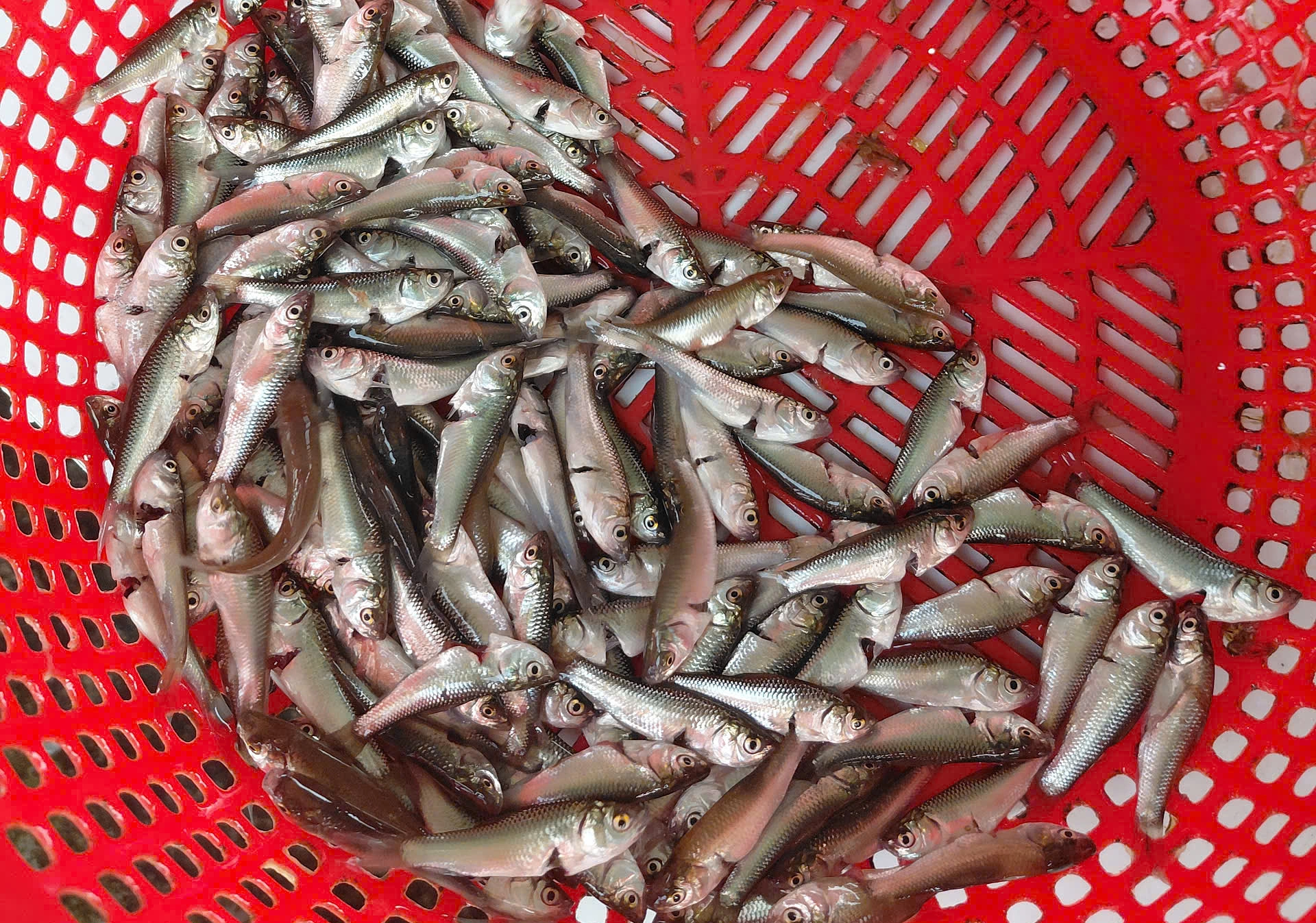 |
Young linh fish after cleaning. *Photo: Ngoc Tai* |
Young linh fish is a culinary specialty of the flood season in the Mekong Delta (mien Tay). When young, the fish has soft bones and is fatty, often used in sour soup, braised dishes, or fried with batter. The flood season is a distinctive feature of the Mekong Delta region, typically occurring between August and November. During this period, water from the upper Mekong overflows into rivers and canals, flooding harvested rice fields.
These floodwaters not only bring alluvial deposits to enrich agricultural fields but also provide abundant natural resources, including linh fish, field crabs, eels, water lilies (bong sung), and dien dien flowers (bong dien dien). For residents of the Mekong Delta, this season is a crucial time to earn a living during periods of agricultural downtime.
Ngoc Tai