For Lu Qijun, a typical evening once involved placing her phone on her son's desk, activating the front camera, and launching a specific application. If her son slouches, a calm voice from the phone prompts him to correct his posture. Should he fidget with his pen or work slowly, the voice immediately reminds him to focus. This isn't Lu's voice, but Dola, an AI chatbot developed by ByteDance. This technology is widely adopted, with approximately 172 million people in China using the application monthly to supervise or tutor their children, according to data from QuestMobile. For parents like Lu, Dola offers both convenience and a practical economic solution.
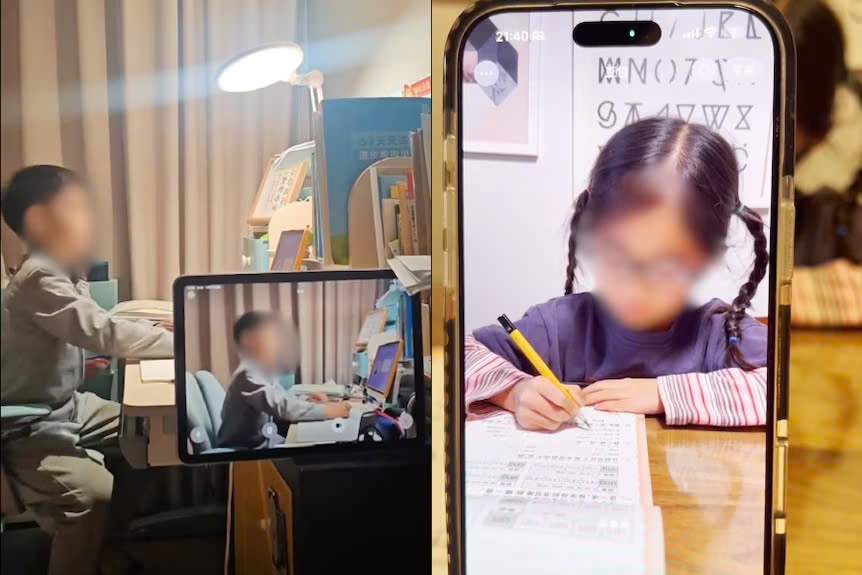 |
172 million Chinese parents are using AI monthly to monitor children's homework. Photo: ABC News.
The widespread adoption of AI tutors reflects significant pressures on Chinese families. Amidst slower economic growth, many urban middle-class families are re-evaluating education costs, making private tutors a luxury. This situation is compounded by rising youth unemployment, sometimes referred to as "rotten-tail kids" (a term for young people facing unemployment despite having a formal education), which forces parents to reconsider their investment in education. Additionally, in China, parents are typically expected to oversee homework and extra-class assignments, often communicating progress to teachers via group chats. For many working families, these demands create considerable stress, particularly for parents born under the one-child policy who balance caring for elderly parents, managing work pressures, and raising children.
AI solutions like Dola offer multiple benefits. Lu shared that Dola "helps me keep an eye on my son and saves costs". The application allows parents to customize learning materials to their child's specific needs. The AI not only checks homework but also thoroughly explains errors and provides similar exercises to reinforce knowledge. This frees up parental time; Lu noted, "Now I can relax, read a book, or reply to messages while my son studies". Beyond practical assistance, AI also helps mitigate family conflicts. Primary school parent Wu Yuting recalled frequently losing her temper while tutoring her two children each evening. "The children are better behaved when studying with AI. They told me I talk too much", Wu explained, appreciating the AI's patience and calm tone, qualities often difficult for stressed parents to maintain after a long workday.
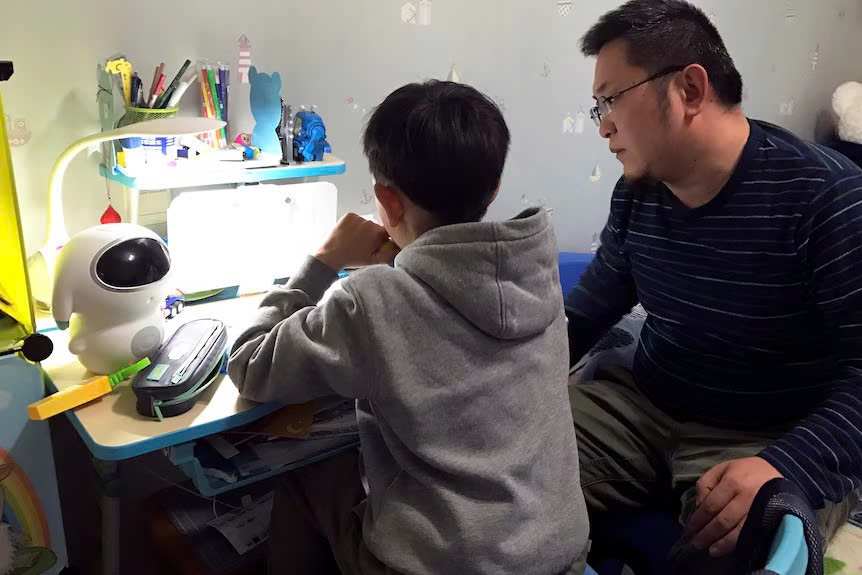 |
Some parents say AI tutors help them avoid conflict from talking with their children. Photo: Reuters.
Despite the immediate benefits, experts caution parents to establish clear boundaries. Doctor Qi Jing from RMIT University, Australia, suggested that AI's "excessive sweetness" and patience might deprive children of necessary conflicts crucial for brain development. She added that AI lacks real-world contextual understanding, making it unable to fully replace parents or teachers. "Actions like fidgeting with a pen or pausing briefly do not necessarily mean a child is distracted; they can be part of their thinking process", Qi stated.
Jeannie Paterson, Director of the Centre for AI and Digital Ethics at the University of Melbourne, further warned that excessive interaction with AI could hinder children's social skill development. It might also lead them to mistakenly believe technology is an entity with emotions. Paterson emphasized, "AI is not a friend. It can support tasks but will never know how to care for or love a child".
For parents like Lu, technology remains a tool. Lu has limited her son's use of the application after observing he became distracted by too many reminders. "I only use it when I am too busy... If I have time, I still prefer to sit with my son. I also do not want him to become emotionally dependent and view it as a companion", Lu explained, highlighting the importance of human interaction and emotional connection in a child's development.
By Khanh Linh (According to ABC News, Island Times)