According to the British Council, "soft infrastructure" in the creative sector refers to non-physical elements crucial for long-term development. These include data, specialized knowledge, human capacity, and mechanisms for connecting policymakers, creative professionals, and regional organizations. To build this foundation, the British Council focuses on data generation, research, and policy dialogue.
Over two decades, the organization has implemented various activities to strengthen Vietnam's soft infrastructure. In 2005, as part of the "Creative UK" program, the British Council sent experts to work with the Ministry of Culture, Sports and Tourism, sharing experience in creative industry development. From 2008 to 2016, the Creative Economy Project focused on human resource training and supporting new creative startup models.
Between 2018 and 2021, the "Vietnam Creative Cultural Space" project expanded into policy and community connectivity. By 2025, over 300 creative spaces nationwide were documented in the "Creative Vision 2025" report. This marks the third report on creative spaces conducted by the British Council over the past 10 years, establishing one of the first data sources for this sector in Vietnam.
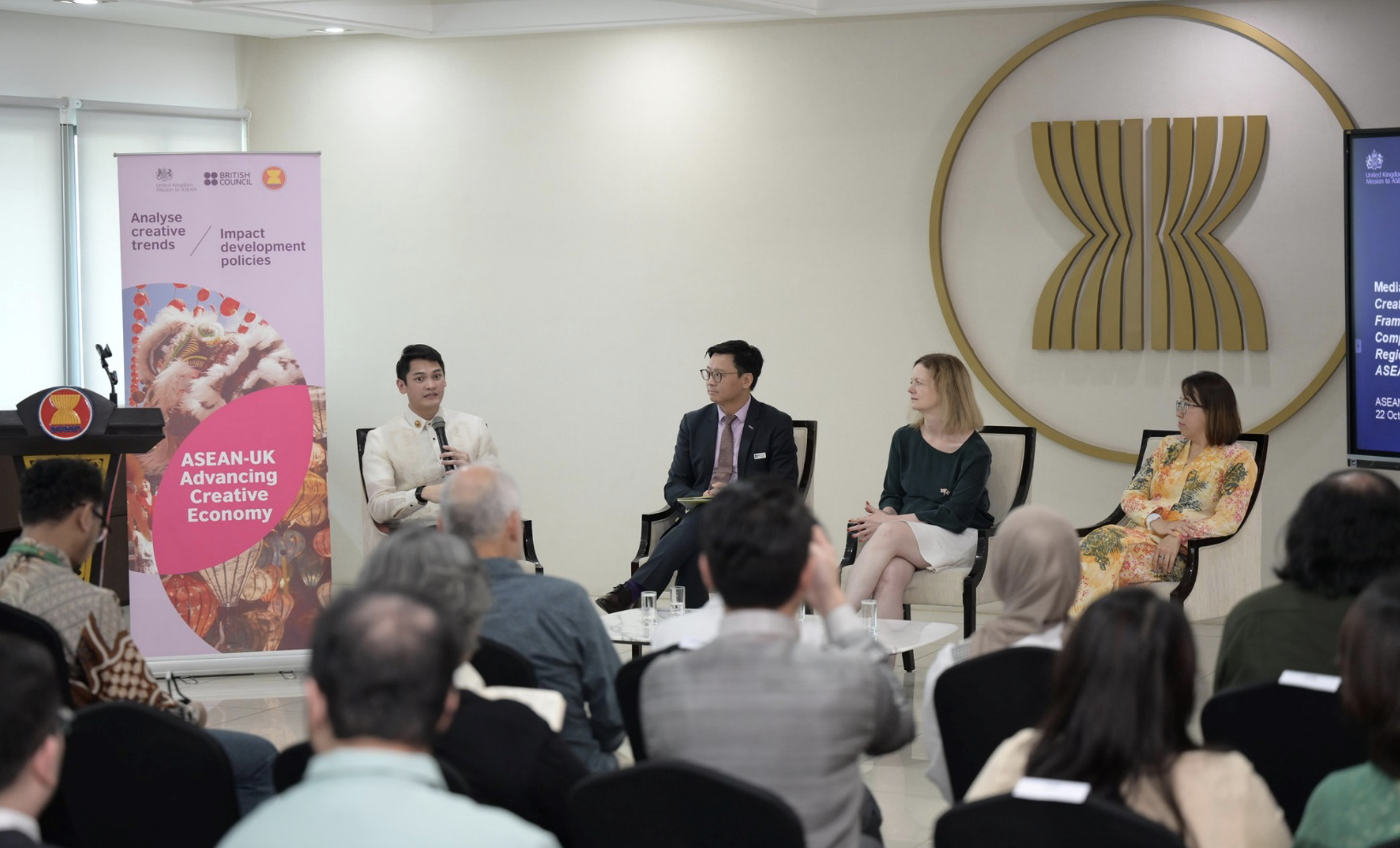 |
Presentation of the ASEAN Creative Economy Perception Survey Results in Jakarta, Indonesia, on 22/10/2025. Photo: British Council |
Regionally, the British Council implements the ASEAN - UK Creative Economy Promotion Initiative (ACE). Numerous studies under this initiative aim to build a more effective creative ecosystem, such as "Festivals in Southeast Asia: Catalysts for the Creative Economy" (2022), "Arts and Technology in ASEAN" (2024), and the "ASEAN Creative Economy Perception Survey" (2025).
Another important component is the "Creative Economy Policy Training" program. Here, participants from ASEAN countries acquire practical knowledge and tools for policy formulation. Participants report that the course provides a comprehensive overview of creativity's role in economic development, while also fostering professional networking opportunities among nations.
In 2025, the British Council and its ASEAN partners organized three major events to promote cooperation: an ASEAN - UK workshop on building a sustainable framework for the creative economy in Kuala Lumpur (February), a policy training program in Hanoi (June), and the release of survey results in Jakarta (October). These activities represent further steps in forming a common data and knowledge infrastructure for the entire region.
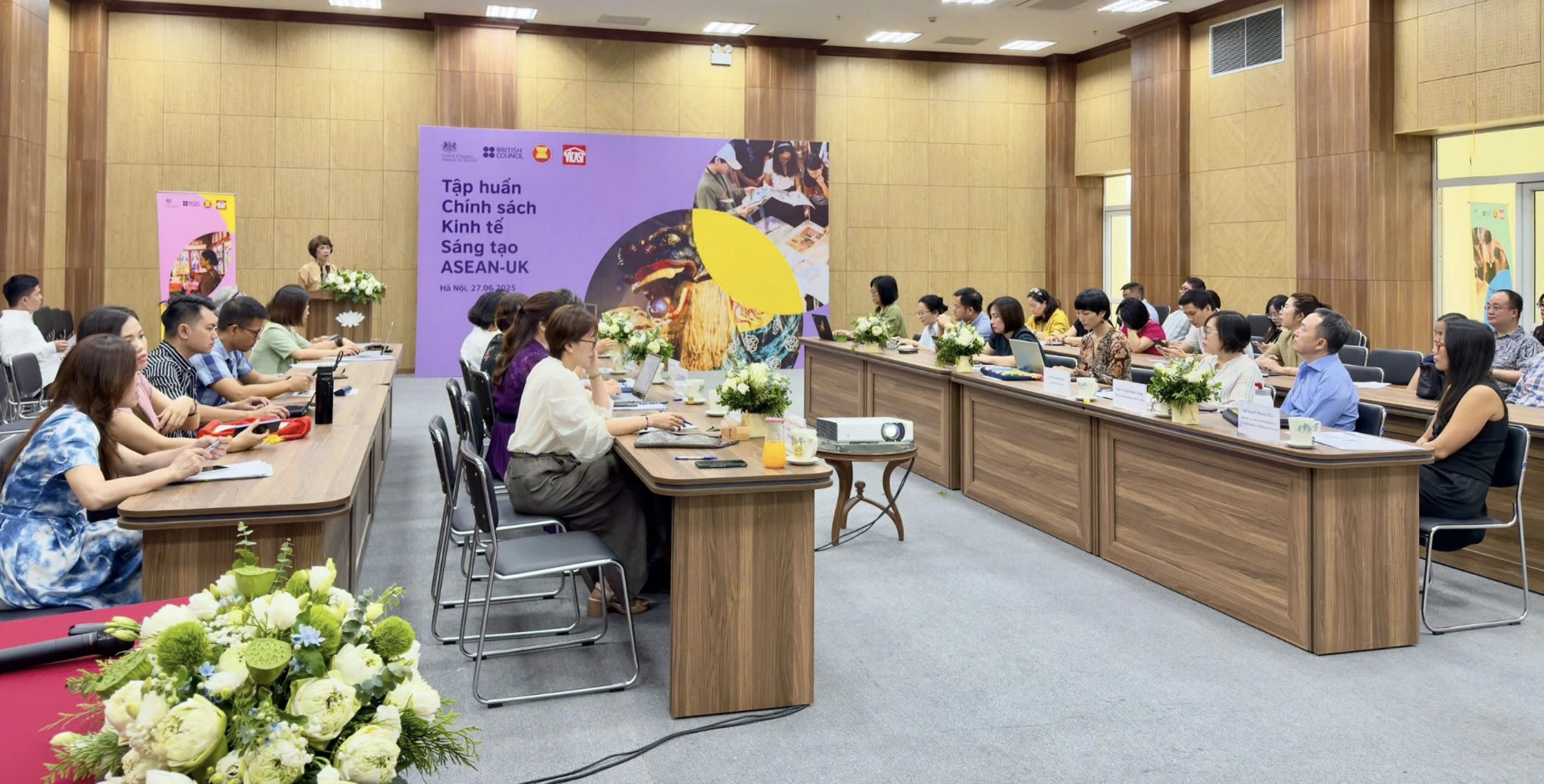 |
Summary of the ASEAN - UK Creative Economy Policy Training Program in Hanoi, 27/6/2025. Photo: British Council |
James Shipton, Director of the British Council in Vietnam, stated that the organization's strategy in Vietnam and ASEAN prioritizes co-creative collaboration. This involves joint research, training, and data sharing, rather than imposing existing models.
"After over two decades, these initiatives have helped lay the foundation for the domestic creative economy's soft infrastructure, providing a basis for deeper integration with the global creative network", James Shipton said.
To broaden the impact of this strategy regionally, the British Council continues to conduct research and surveys to establish a shared database among ASEAN nations. Most recently, the British Council, alongside the UK Mission to ASEAN and the ASEAN Secretariat, carried out the "ASEAN Creative Economy Perception Survey".
The results indicate that most people in the region are unfamiliar with the concept of a "creative economy", but 60% of respondents believe the sector is experiencing strong growth. Recorded challenges include low public awareness, high production costs, varying consumption levels, limited creative skills and intellectual property management, and difficulty accessing international markets. Half of creative professionals consider the lack of coordination among ASEAN countries to be the biggest obstacle.
In Vietnam, the survey notes that the nation benefits from a young, dynamic, and diverse creative workforce. However, industry data, creative business capacity, and regional connectivity remain insufficient to translate this potential into sustainable development.
According to the implementing unit, the survey results highlight an urgent need for regional cooperation and data-sharing mechanisms. These mechanisms would enable ASEAN nations to collectively address limitations and leverage strengths. In this context, the British Council expects its "soft infrastructure building" strategy to pave the way for a more connected and sustainable creative ecosystem. "With a foundation of co-creative collaboration, Vietnam is seen as an important link in the ASEAN creative network", a representative from the unit stated. This involves long-term investment in knowledge, data, and people to contribute to economic growth and global cultural exchange.
The British Council is the United Kingdom's international organization for cultural relations and educational opportunities. Established in 1934, it has been present in Vietnam since 1993. Each year, the organization connects thousands of students, lecturers, policymakers, and researchers through programs for teaching capacity development, research collaboration, academic exchange, and international scholarships. In 2024-2025 alone, the unit's activities reached 600 million people.
Thai Anh