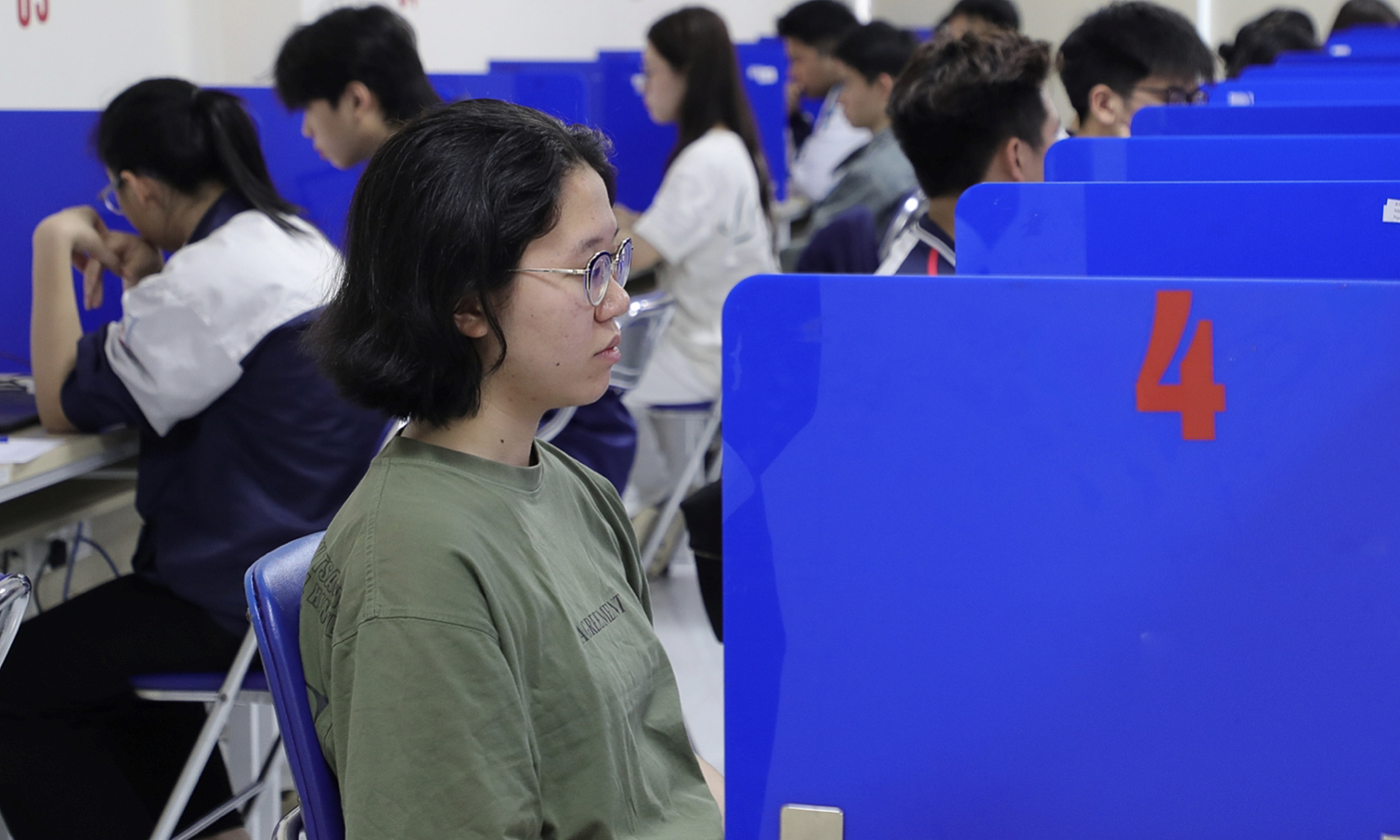
When college entrance exam results were announced last summer, Lin Gangming was surprised to learn his scores were high enough for admission to top universities. However, the young man from Guangdong chose a different path: studying electronic information engineering technology at Shenzhen Polytechnic University, a public vocational school in the province.
Lin was drawn to the school's practical teaching approach. Already passionate about designing unmanned aerial vehicles, his resolve strengthened after visiting a technology institute there, where he saw "robots everywhere" and students operating advanced equipment firsthand. Lin's story is no longer rare in Chinese media, reflecting a growing trend.
Vocational higher education, once overlooked, is becoming increasingly appealing. With a surplus of graduates in traditional fields, these programs, while also offering bachelor's degrees, focus heavily on practical skills. This approach resonates with students' desire for a stable career path in a competitive job market.
According to Chinadaily, many high-scoring test-takers are now pursuing vocational education from college level upwards, causing admission thresholds for these institutions to soar. In 2024, Shunde Polytechnic admitted 1,275 students, with over 1,180 of them having scores higher than the general university cutoff. Shenzhen Polytechnic University, dubbed the "Little Tsinghua" of vocational schools, saw its admission score for physics reach 617 points, surpassing many prestigious, heavily invested universities.
Professor Gerard Postiglione of the University of Hong Kong noted that China is striving to integrate, rather than separate, academic and technical elements in higher education. He believes this shift is inevitable given the wave of economic diversification and rapid technological development. The number of vocational universities in China has surged, from 15 pilot institutions in 2019 to over 100 schools currently. Last month, the government proposed building 8 more new institutions.
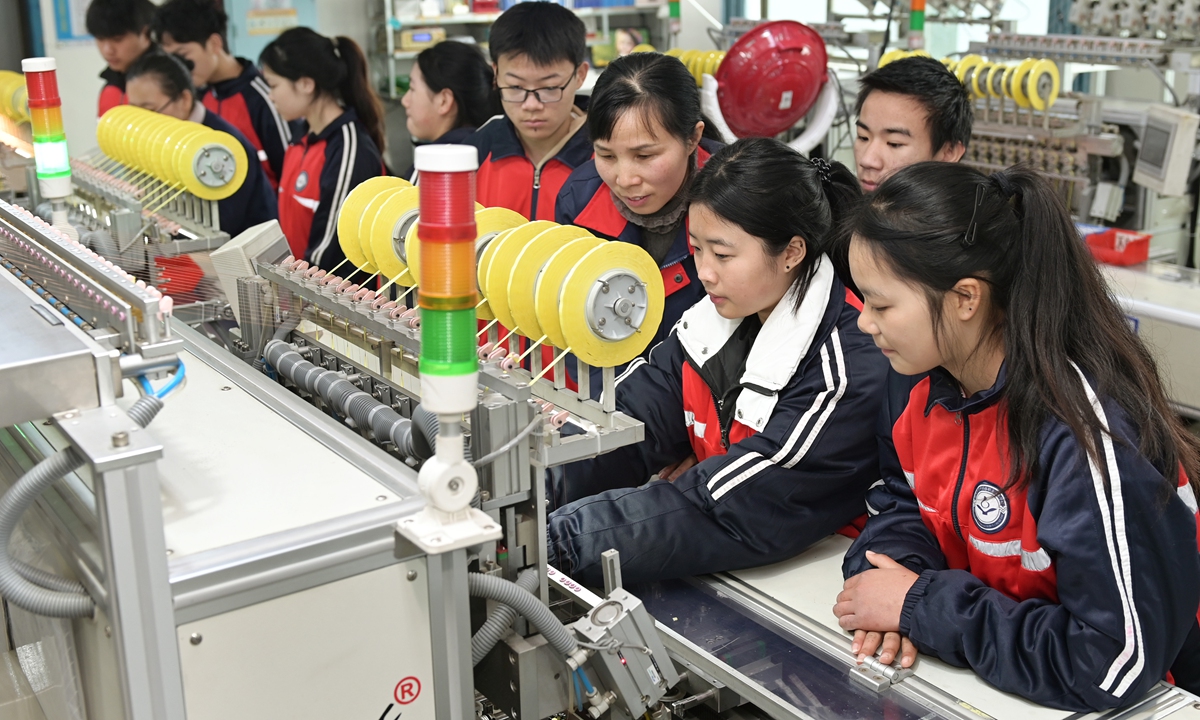 |
Vocational school students intern at an electronics manufacturing company in Hunan province, China. Photo: *Global Times* |
This change is yielding positive results. Government data shows the average employment rate for graduates from these programs reached 87.1%, approximately 4.5% higher than the average for traditional university graduates. On February 12, China's Ministry of Education urged vocational schools to add training programs for emerging industries such as the low-carbon economy, artificial intelligence (AI), and urban innovation.
Despite rapid development, this education system still faces numerous obstacles. Some graduates feel disappointed when employers continue to favor traditional degrees and consider vocational university degrees "second-class". Additionally, experts warn about an imbalance in the curriculum. Scott Rozelle, Director of the Center for Economy and Institutions in China at Stanford University, US, stated that enhancing proficiency in mathematics, science, computer science, and languages remains a key factor. "Schools should not only focus on training one skill," he remarked. "No one knows for sure if that skill will still exist in 10 years."
In recent years, youth unemployment in China has remained high as the number of graduates continuously reaches new peaks. As of December, approximately 16.5% of young people aged 16 to 24, excluding students, were jobless, while a persistent shortage of skilled labor continues to challenge the economy.