Zhao Wei, the university's Vice President, announced this change earlier this month. He explained that advancements in technology, particularly real-time translation tools, now enable effective communication between individuals even without a shared language.
In place of traditional English instruction, the university will offer cross-cultural skills classes. These new courses aim to help students gain a deeper understanding of both Chinese and Western cultures. The pilot curriculum for this program is set to begin this year.
Wei emphasized that business negotiations and cultural exchanges demand human qualities that "AI cannot teach," such as human judgment, empathy, and etiquette. Students will need these skills to communicate confidently and facilitate successful business interactions.
This move comes amid a lively debate among Chinese universities about how to reform English language teaching in the era of AI. At a seminar late last month, leaders from several institutions suggested that students born after 2000 already possess strong language foundations. They proposed that universities should shift from merely teaching language skills to a four-dimensional model, encompassing: language proficiency, intercultural communication skills, critical thinking, and AI literacy.
In recent years, several Chinese universities have significantly reduced the number of credits for general English courses, with some even dropping mandatory foreign language certificate requirements. According to the Ministry of Education, foreign language programs were among the most affected, with over 12,000 university programs halted or eliminated between 2021 and 2025.
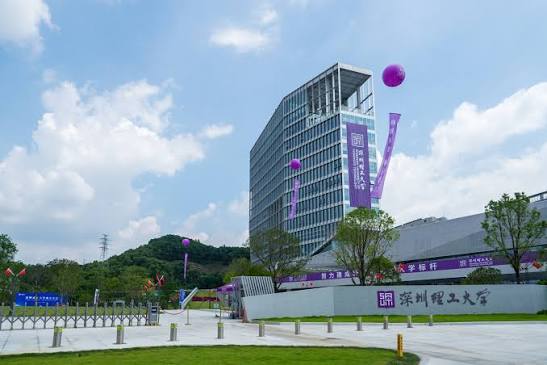 |
Shenzhen University of Advanced Technology, China. Photo: University website. |
Experts suggest that this shift does not indicate educators are underestimating the importance of English, especially as China continues to rise as a global power in innovation and research. Instead, they interpret this development as a reflection of improved English proficiency among Chinese students and the necessity for universities to adapt to evolving educational needs.
Khanh Linh (According to SCMP, Asiae)