At the opening ceremony for the 2026-2027 academic year at Dong Thap University on the morning of 5/9, Phan Van Thang, Permanent Deputy Secretary of the Provincial Party Committee, underscored the critical need for educational reform and training aligned with practical demands. He emphasized strengthening cooperation among training institutions, businesses, and research institutes.
According to Thang, Dong Thap is moving towards smart, ecological agriculture with high added value, alongside industries and services capable of adopting new technologies. To meet these demands, the province must cultivate a generation of Dong Thap residents with knowledge, skills, resilience, strong character, and a drive to excel. The province identifies high-quality human resources, science and technology, innovation, and digital transformation as strategic drivers and breakthroughs. Specifically, by 2030, Dong Thap aims for at least 82,5% of its workforce to be trained, with 43,5% or more holding degrees or certificates.
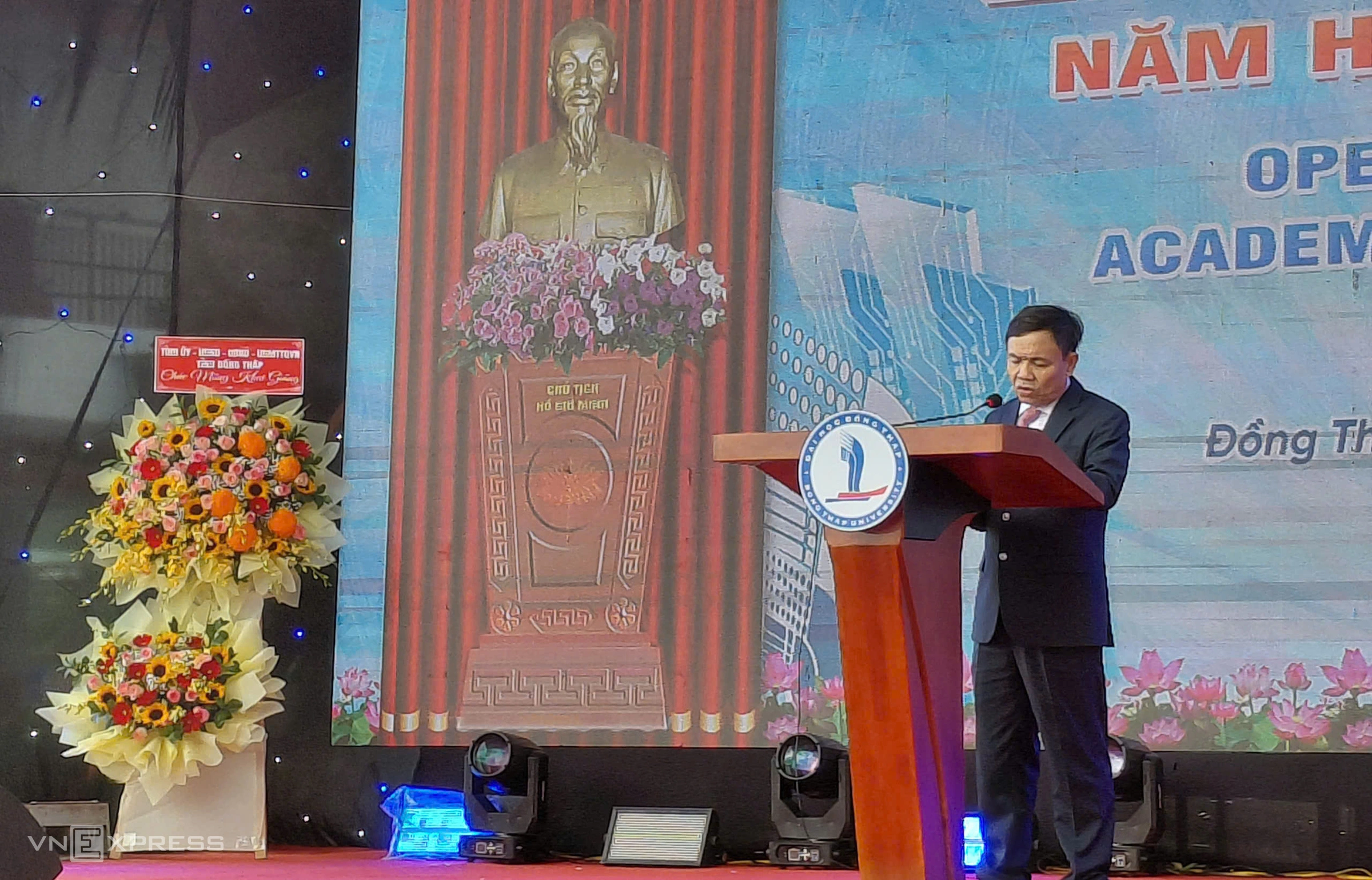 |
Phan Van Thang, Permanent Deputy Secretary of the Dong Thap Provincial Party Committee, speaking at the opening ceremony. *Photo: Ngoc Tai* |
In response to these new development requirements, Dong Thap University has been designated by the province as a key institution for training high-quality human resources, particularly in specialized science and technology fields. It is also set to become a hub for startups and the transfer and application of scientific and technological research to serve socio-economic development.
Thang urged all levels of government to translate this policy into practical mechanisms and coordination programs. He also called for strengthening connections between the university and various agencies, local authorities, businesses, and the community. The province needs to proactively commission research and collaborate on the transfer and application of solutions in education and agriculture. "Training must be linked to human resource needs", Thang stated, urging the expansion of internship and experiential learning opportunities for students, alongside support for research and startups to generate practical results and products for the province and the Mekong Delta region.
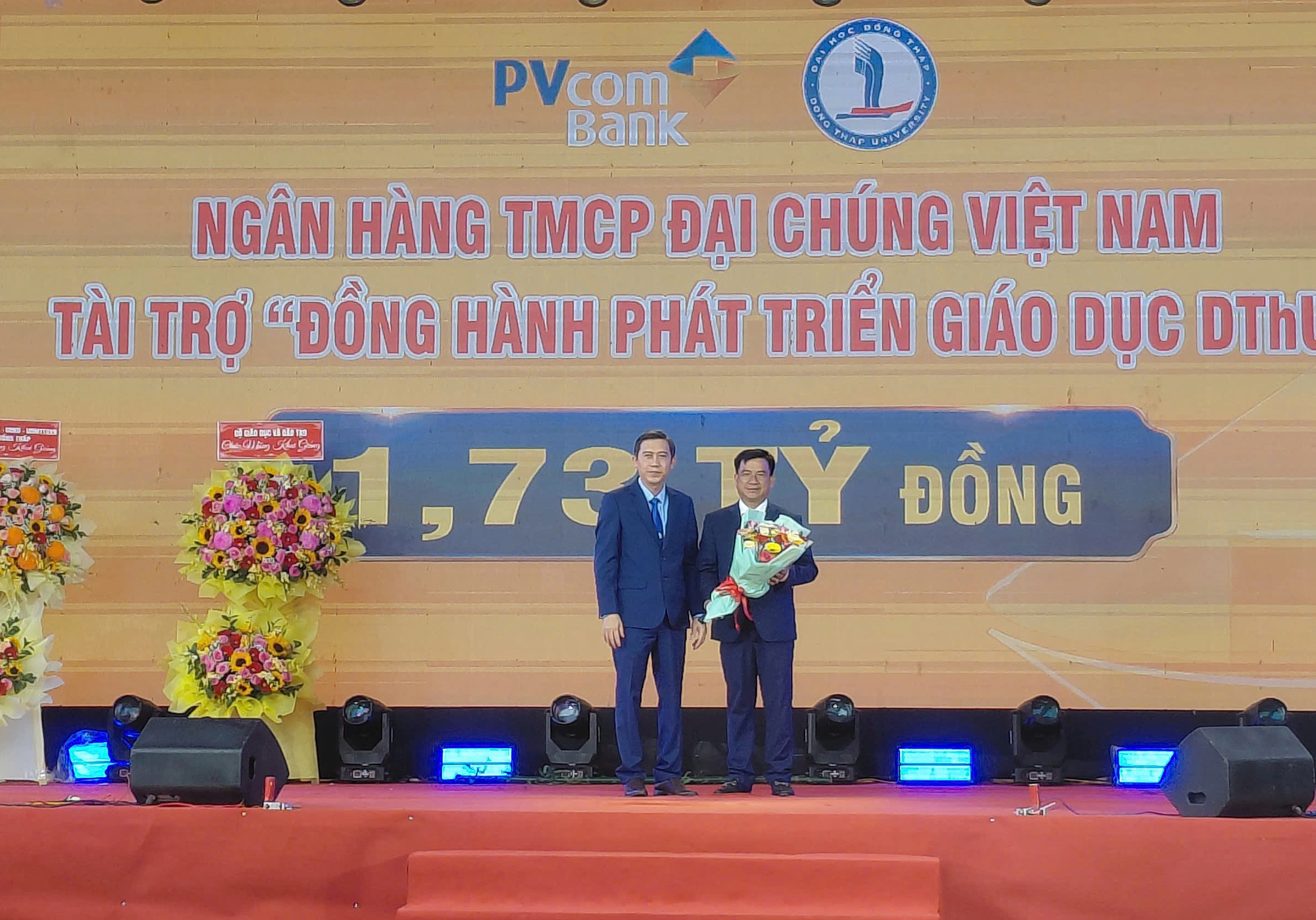 |
Doctor Truong Tan Dat, Rector of Dong Thap University (left), presents flowers to a sponsor. *Photo: Ngoc Tai* |
Provincial leaders urged Dong Thap University to continue innovating, accelerate scientific research and technology transfer, prioritizing fields aligned with the development needs of the province and the Mekong Delta region. Additionally, the university was encouraged to promote digital transformation, apply artificial intelligence, and develop training, research, internship, and startup programs aligned with practical needs. Research environments should foster collaboration among faculty, scientists, and students to address specific local challenges.
With over 50 years of building and developing its teacher training tradition, and over 20 years operating as a multidisciplinary university, Dong Thap University currently offers three doctoral programs, 21 master's programs, and 58 undergraduate programs, serving nearly 20,000 full-time students. The faculty boasts 100% postgraduate qualifications, including one professor, 22 associate professors, and 217 doctoral degree holders. The employment rate for students within 12 months of graduation exceeds 90%. The university also collaborates with over 60 international organizations and universities.
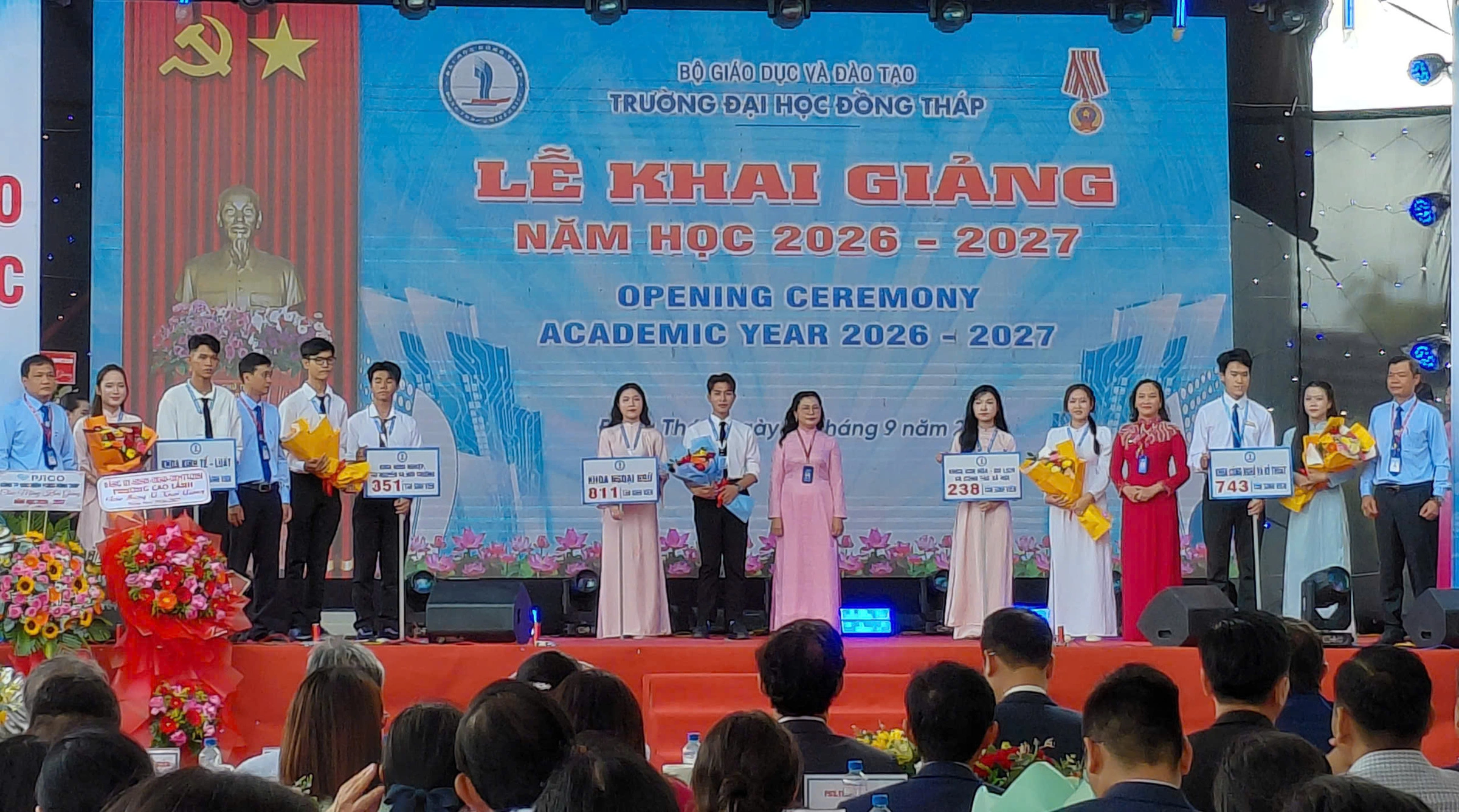 |
The opening ceremony at Dong Thap University for the 2026 academic year. *Photo: Ngoc Tai* |
For the new academic year, the university will continue to uphold its motto, "Knowledge Creation - Community Service," placing learners at the center, quality as the foundation, faculty as the core resource, and innovation as the driver for development. Doctor Truong Tan Dat, Rector of Dong Thap University, stated that the university will continue to promote genuine digital transformation, enhance the quality of training, scientific research, and community service, fostering a professional, humane, safe, and inspiring academic environment. According to Rector Dat, a university's standing is not solely defined by its size or achievements, but more importantly by the quality of its learners, the value of the knowledge it generates, its capacity for innovation, and its practical contributions to the community, the region, and the nation.
Ngoc Tai