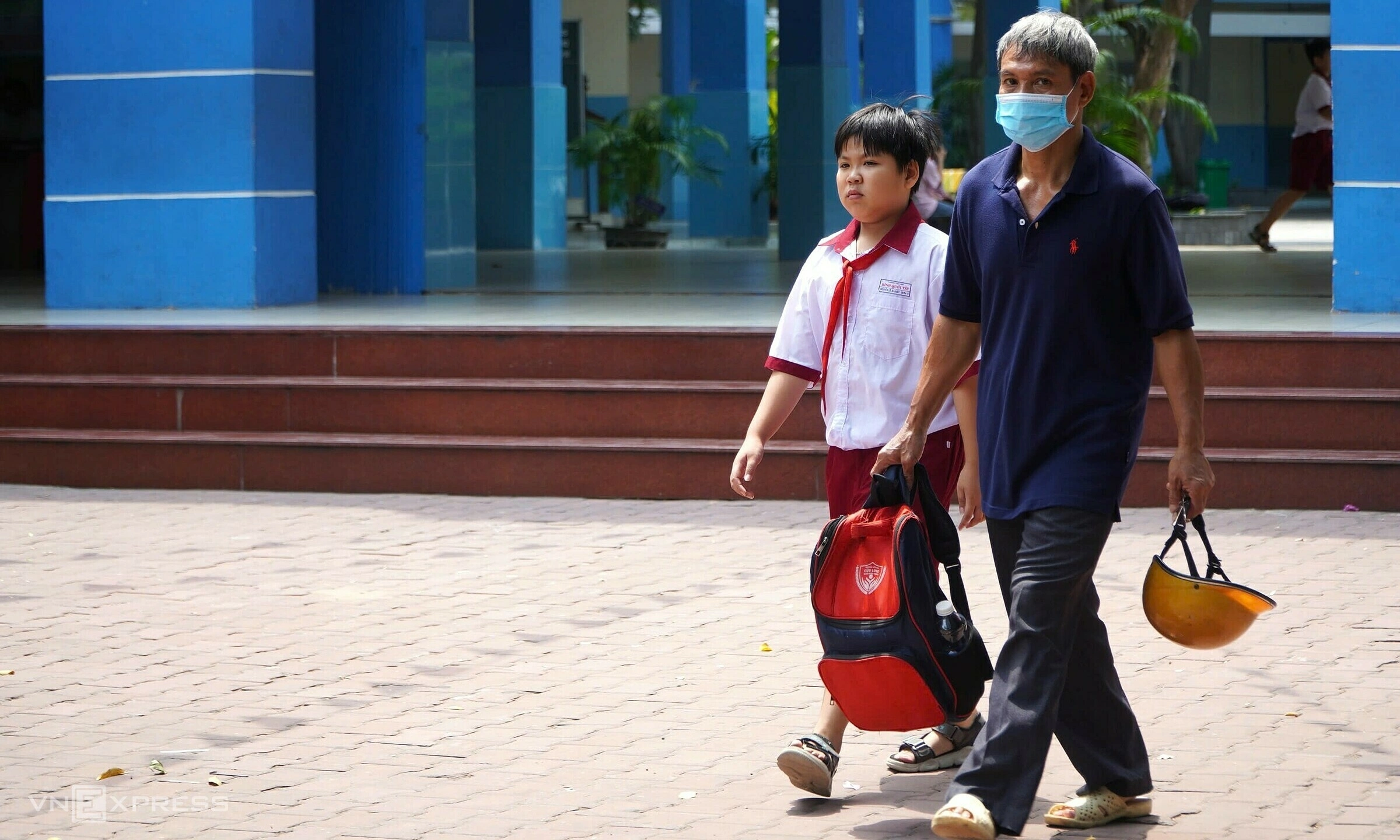
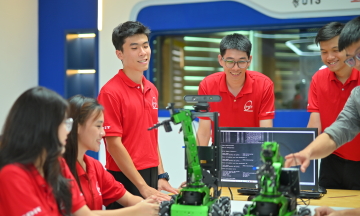
The German Academic Exchange Service (DAAD) and Hanoi University of Science and Technology co-hosted a seminar titled "Funding & Networking for Your Academic Future" on 10/4.
Felix Wagenfeld, Director of the DAAD office in Hanoi, stated that the agency offers five types of scholarships available to postgraduate students, including master's students, doctoral candidates, and early-career researchers.
Among these, research grants are specifically designed for recent doctoral graduates who obtained their degrees within the last four years. More experienced researchers are eligible to apply for the GROW program.
Detailed eligibility criteria for each scholarship type are available on the DAAD website. Applicants are typically required to have strong academic records, such as graduating with honors, proficiency in English (ideally IELTS 6,5), and a compelling study plan or research proposal.
Beyond government scholarships, international students can also seek funding from academic organizations including the Alexander von Humboldt Foundation, DFG, Max Planck Institute, Helmholtz Association, and Leibniz Association.
| Scholarship | Value | Duration |
| master's in STEM fields | 992 euro/month | full program duration |
| full-time doctoral study in Germany or co-supervised by a Vietnamese professor | 1.400 euro/month | full duration of stay in Germany |
| DAAD-Hanoi University of Science and Technology doctoral exchange | up to 2.150 euro/month | two weeks - three months |
| research grants (for doctoral and postdoctoral levels) | 1.400 euro/month | 2-12 months (doctoral candidates), 2-6 months (postdoctoral researchers) |
| GROW | 1.400 - 2.150 euro/month | 1-6 months |
A DAAD representative highlighted Germany's extensive research network as a significant advantage for researchers. In addition to 420 universities, the country boasts 1,000 public research institutes and 29,000 research companies. In 2023, Germany invested 130 billion euro in research, equivalent to 3,1% of its GDP, surpassing any other European nation. Germany also produces the most doctoral graduates in the EU and ranks 5th globally for patent applications, focusing on artificial intelligence, quantum technology, microelectronics, biotechnology, transport, and climate-neutral energy.
Associate Professor Doctor Nguyen Dac Trung, Head of Cooperation and Connection at Hanoi University of Science and Technology, observed that German research institutions offer high-quality, practical research methods and habits with strong applicability. They are also willing to share opportunities for international students to learn and practice core technologies, an advantage not commonly found in many other environments.
Official information channels for studying in Germany
Germany currently hosts 2,9 million students, with international students accounting for 16%. For the 2024-2025 academic year, 420,000 international students are expected to arrive in Germany, marking the highest number to date and making the nation one of the most sought-after destinations outside the United States, Canada, Australia, and the United Kingdom. An estimated 7,000 Vietnamese students are currently pursuing university-level or higher education in Germany, according to DAAD.
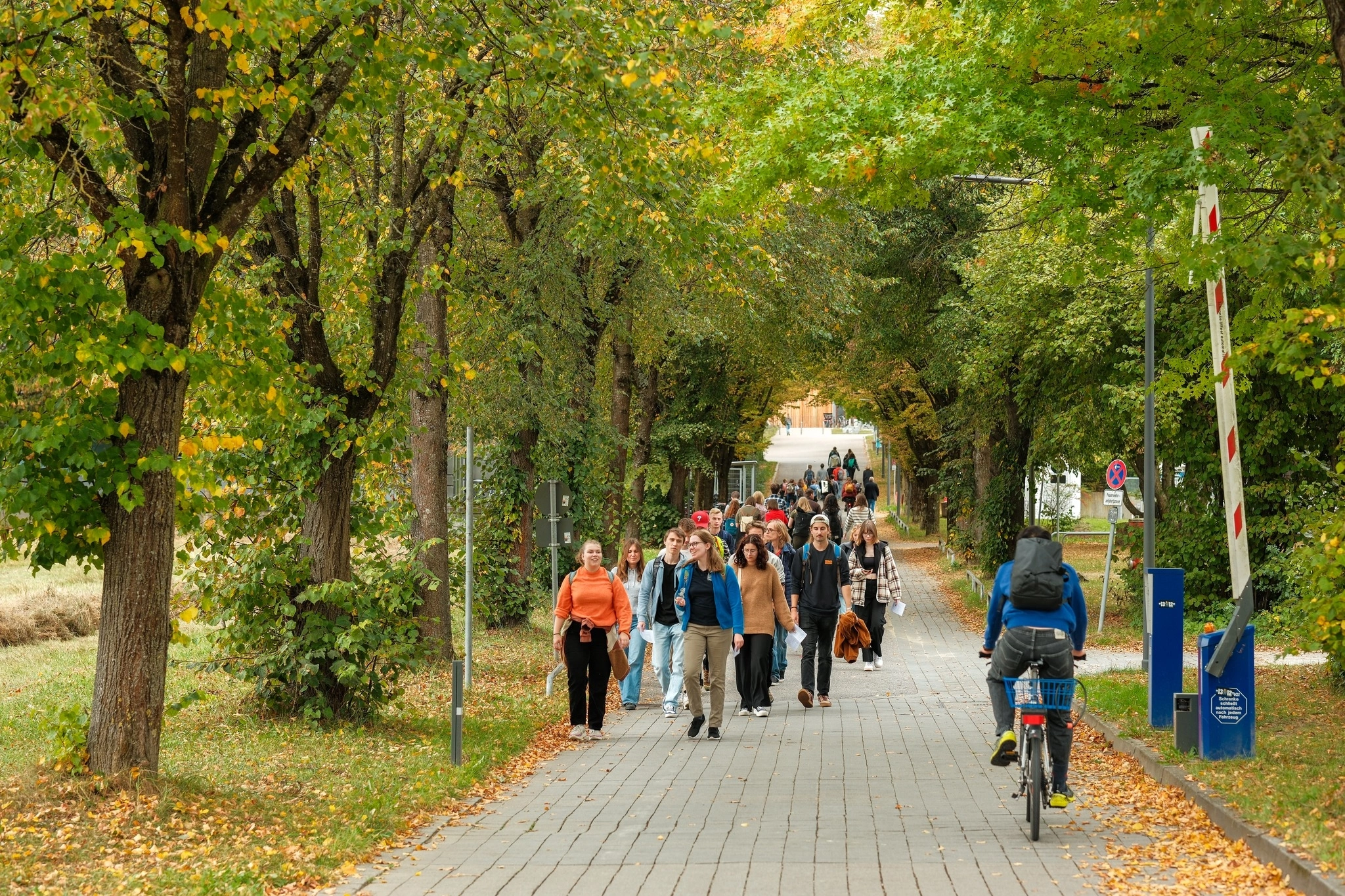 |
Campus of the Technical University of Munich (TUM), Germany. Photo: University Fanpage |
Khanh Linh