The university designs comprehensive scholarship programs, evaluating candidates through projects, activities, and individual development orientations. It also offers specific programs for different regions to help students access higher education and bridge the education gap. Beyond tuition support, some scholarship categories include opportunities for practical experience, industry connections, and an application-oriented learning environment.
According to a university representative, scholarships address financial challenges while enabling learners to develop skills in a rapidly changing labor market. The "Searching for Digital Era Talents of Vietnam" - Professor Nguyen Van Dao Scholarship, is designed as a human development investment model to nurture young talent capable of adapting and working in a global environment.
Students participating in the program can receive 50% to 100% tuition support for the entire course. Additionally, they gain access to resources for academic, technological, and entrepreneurial projects; receive expert advice; and engage in the technology and artificial intelligence ecosystem, research and development activities, and international internship opportunities.
Mai Xuan Hieu, a 12th-grade student at FPT Quy Nhon High School, is one of the applicants for the program. He stated that his family has used most of their savings to invest in his education over the past three years. Therefore, the scholarship is crucial for him to continue his university plans. Hieu particularly appreciates FPTU's experience-rich environment, which prioritizes early exposure to real-world business settings for students. He plans to major in multimedia communications and hopes to demonstrate his capabilities through his studies.
"This scholarship is my only hope right now to ensure my parents' sacrifices are not in vain", Hieu said.
 |
Hieu and his mother on graduation photo day at FPT Quy Nhon High School. *Photo: Provided by interviewee* |
Many other candidates also view scholarships as an opportunity to access an experience-rich educational environment. Huynh Nguyen Anh Phuong, a student at Ly Tu Trong High School for the Gifted (Can Tho), applied to seek personal development opportunities. She applied for multiple scholarship categories and has outstanding academic achievements, including a third national prize in the Science and Engineering competition and a second national prize in the Young Informatics competition.
In addition to scholarships, regional tuition fee support policies are also implemented to reduce financial barriers. In 2026, the university will apply a 30% tuition fee reduction for the entire course for students from Region 1, which includes ethnic minority areas, mountainous regions, border areas, and islands.
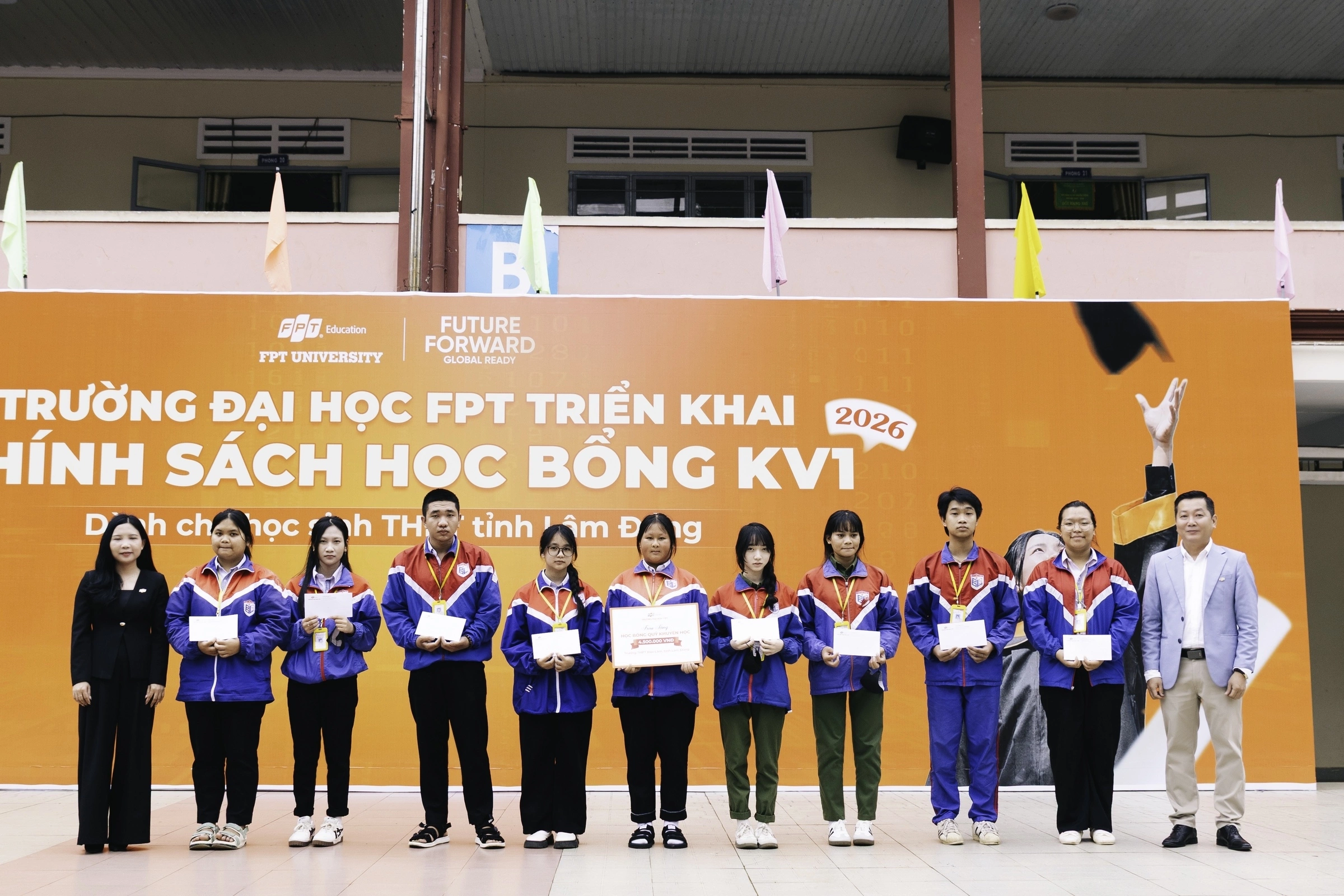 |
FPT University awards scholarships to students. *Photo: FPT University* |
Furthermore, students enrolled at the Da Nang and Can Tho campuses receive a 30% tuition fee reduction for the entire course. The Quy Nhon campus offers a 50% reduction. If a candidate qualifies for multiple support categories, policies can be applied concurrently according to regulations, significantly lowering study costs.
Luong Thi Anh Thu, a student at Hung Vuong High School (formerly Binh Phuoc), shared that tuition support helped her consider majors based on her abilities rather than solely on financial conditions. Similarly, Nguyen Van Hieu, a student at Buon Don High School (Dak Lak), also stated that the tuition reduction made him more confident in choosing a university environment.
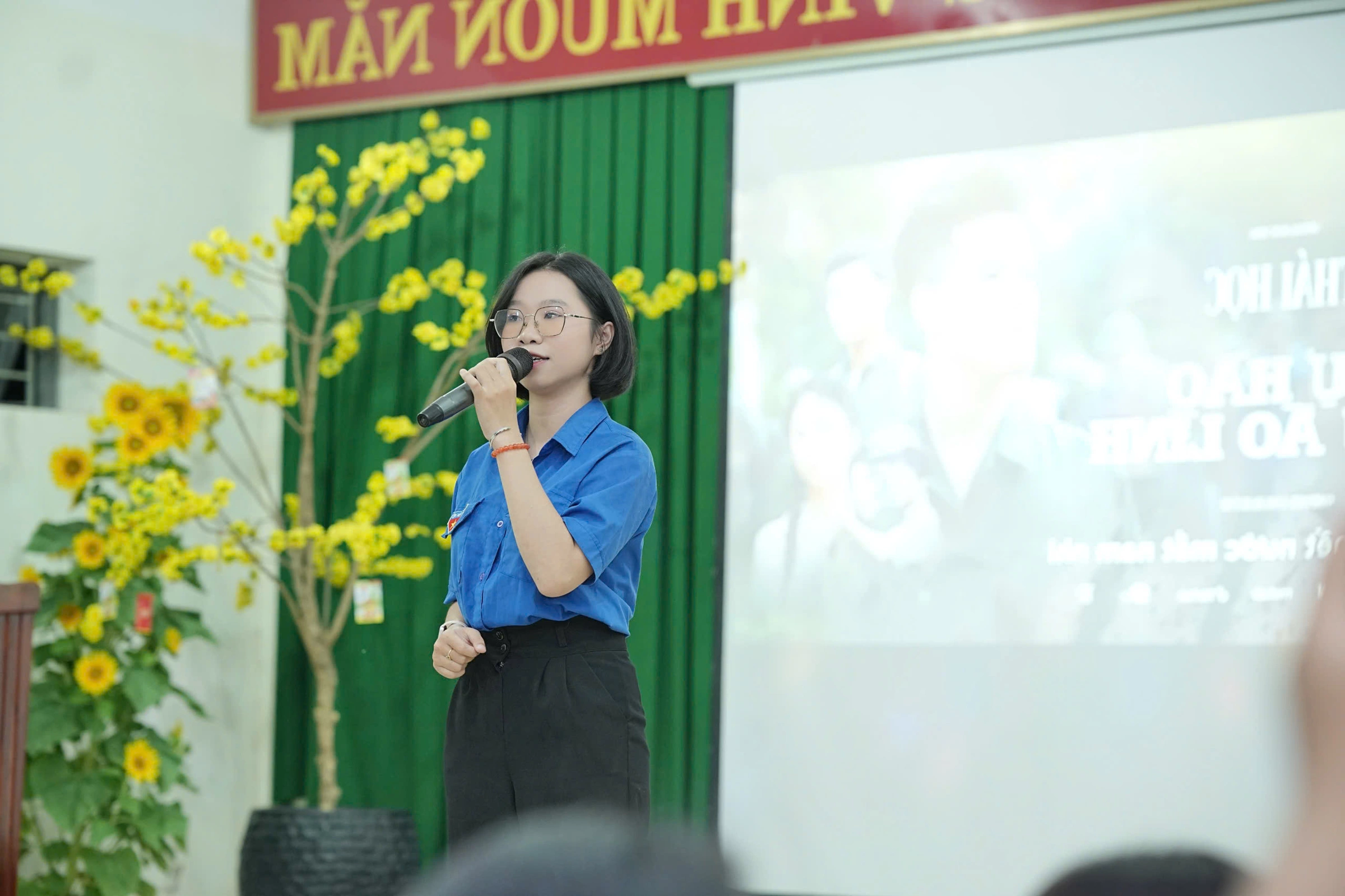 |
Student Luong Thi Anh Thu. *Photo: Provided by interviewee* |
According to FPT University, these policies are implemented directly at many high schools to provide students with early access to information and a stronger basis for their choices. Amid rising education and living costs, the university views scholarships and financial aid as solutions to help bridge the opportunity gap among different student groups.
"Expanding the scope of scholarships and tuition fee incentives aims to enable more students from diverse regions to access a quality educational environment", a university representative emphasized.
Accordingly, scholarships and tuition fee incentive policies not only provide financial support but also aim to create motivation and long-term development opportunities for learners. The university expects these policies to help sustain academic motivation and broaden access to higher education for students.
Thien Minh