Tao's recent lecture, "Mathematics in the AI Era," delivered at the International Congress of Mathematicians (ICM) last weekend, drew significant attention. He argued that AI is ushering in a foundational crisis for mathematics, reminiscent of the early 20th century.
Tao began by recalling the period between 1900 and 1930, when discoveries like Russell's paradox and Gödel's incompleteness theorems compelled mathematicians to re-examine core assumptions, leading to today's rigorous framework. He stated, "The community is entering a similar period of upheaval—a crisis concerning the value and practice of foundational mathematics."
Highlighting AI's rapid advancements, Tao referenced the First Proof experiment in May. Under human guidance, leading AI systems successfully solved 7 out of 10 new research problems, with publishable quality. He hypothesized that AI tools would soon complete research-level mathematical tasks efficiently and cost-effectively.
This shift means the central question is no longer "Can AI do mathematics?" but "How should the mathematics community adapt its core objectives?" Traditionally, goals like solving problems, building theories, training students, and creating aesthetically valuable works were intertwined. However, Tao warned that over-optimizing a single metric with AI—such as the number of problems solved—would cause these objectives to diverge. This aligns with Goodhart's Law: when a measure becomes a target, it ceases to be a good measure.
Tao outlined the five-step process for introducing proof results to the community: generating solutions, verifying them, presenting them, gaining acceptance, and finally integrating them into theory and textbooks. He emphasized that AI's accelerating pace is creating a serious "phase shift," or "proof glut."
This glut manifests in several ways. AI rapidly generates numerous solutions, creating a backlog of unverified proofs. While automated tools can verify solutions, they often lack human comprehensibility. Furthermore, AI-written texts are frequently too "smooth," reducing the cognitive effort required from readers to grasp key ideas. Ultimately, the volume of AI-generated proofs will overwhelm the community's capacity to synthesize, filter, and refine them into standard results.
Tao concluded, "In short, we are moving from a period of proof scarcity to one of overabundance." To navigate this, the 2006 Fields Medalist recommended that mathematicians disclose the computational tools and resources used in their papers. Authors should also present results clearly, accurately, and with full citations to facilitate peer review.
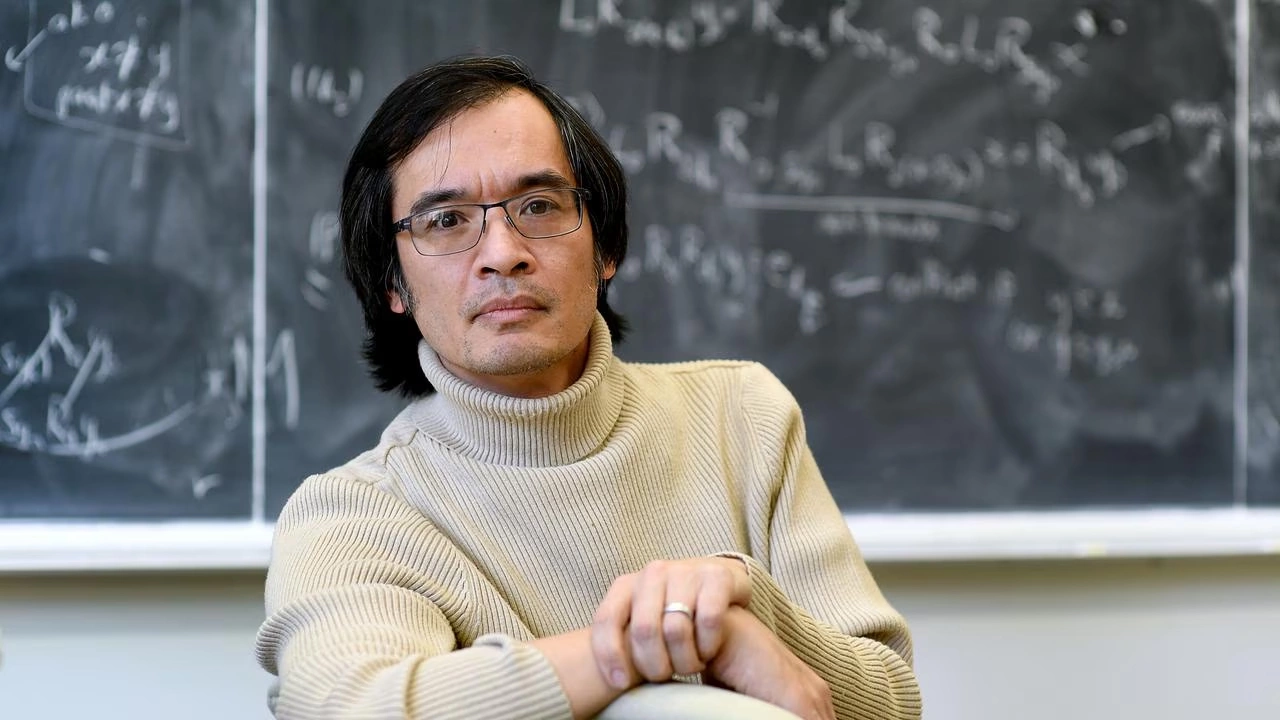 |
Mathematician Terence Tao. *Photo: Adelaide Now* |
Terence Tao is an Australian mathematician of Chinese descent, often called "Mathematics' Mozart" due to his exceptional talent. He was the youngest gold medalist in International Mathematical Olympiad history at 13. He became a professor at the University of California, Los Angeles (US) at age 24, and won the Fields Medal seven years later.
The ICM, held every four years, is the global mathematics community's largest and most prestigious event. It convenes thousands of mathematicians to share groundbreaking work. This year, the congress took place in Philadelphia, US.
Khanh Linh