"We are struggling," shared Mr. Tuan, head of the parent representatives board for an 8th-grade class in Hai Phong.
The 37-year-old father explained that before the school year, he and the parents' association met privately with the homeroom teacher. At that time, the circular regarding parents' association activities was still a draft. Mr. Tuan had "mentally prepared" by proposing to collect less than in previous years, reducing the fund from 1,3 million VND to 500,000 VND per semester.
The proposed plan was to be presented at a parent meeting in early October. However, on 30/9, the Ministry of Education and Training (MOET) officially issued Circular 81, which prohibits parents' associations from collecting funds, receiving, or managing donations. If activities require funding, parents can voluntarily contribute goods or services, or pay providers directly.
Mr. Tuan recounted that the meeting took place in a tense atmosphere. Many parents suggested still collecting the 500,000 VND class fund and operating until 15/11, when the circular would take effect, then "re-evaluate." Despite this, after consulting with teachers and other classes, he decided not to collect funds and returned money to those who had already paid.
"Other classes also have to follow suit; being different would only create complications," he said.
This was also the choice of Ms. Minh Anh, head of the parents' association for a 3rd-grade class in Hanoi, after the homeroom teacher clarified Circular 81. Previous contributions were 100,000 VND per semester for the school fund and 400,000 VND for the class fund. This year, the parent board is not collecting either amount.
This topic has sparked lively debate on forums over the past week. While some supported the new regulation, many expressed confusion, believing it could affect students' extracurricular activities.
According to Ms. Minh Anh, nearly all activities require funding, such as renting costumes, providing rewards for students competing in sports or arts, and organizing meals for holidays. This fund was sometimes also used to visit and encourage sick students.
"The material value is not significant; it mainly demonstrates companionship and cohesion within a group," Ms. Minh Anh explained.
Agreeing, Mr. Tuan stated that class funds were also used for awards to students, such as a 50,000 VND reward for those with good achievements at the end of the month.
"It's not much, but the children are very happy. Now that there's no fund, these expenses are gone, and the children will feel let down," he said.
He also found the new regulation to have unclear points. For instance, if an activity exceeds an individual's ability to pay, allowing them to pay directly to the provider, could multiple parents contribute together? If so, how would this differ from the parent board calling for and collecting money?
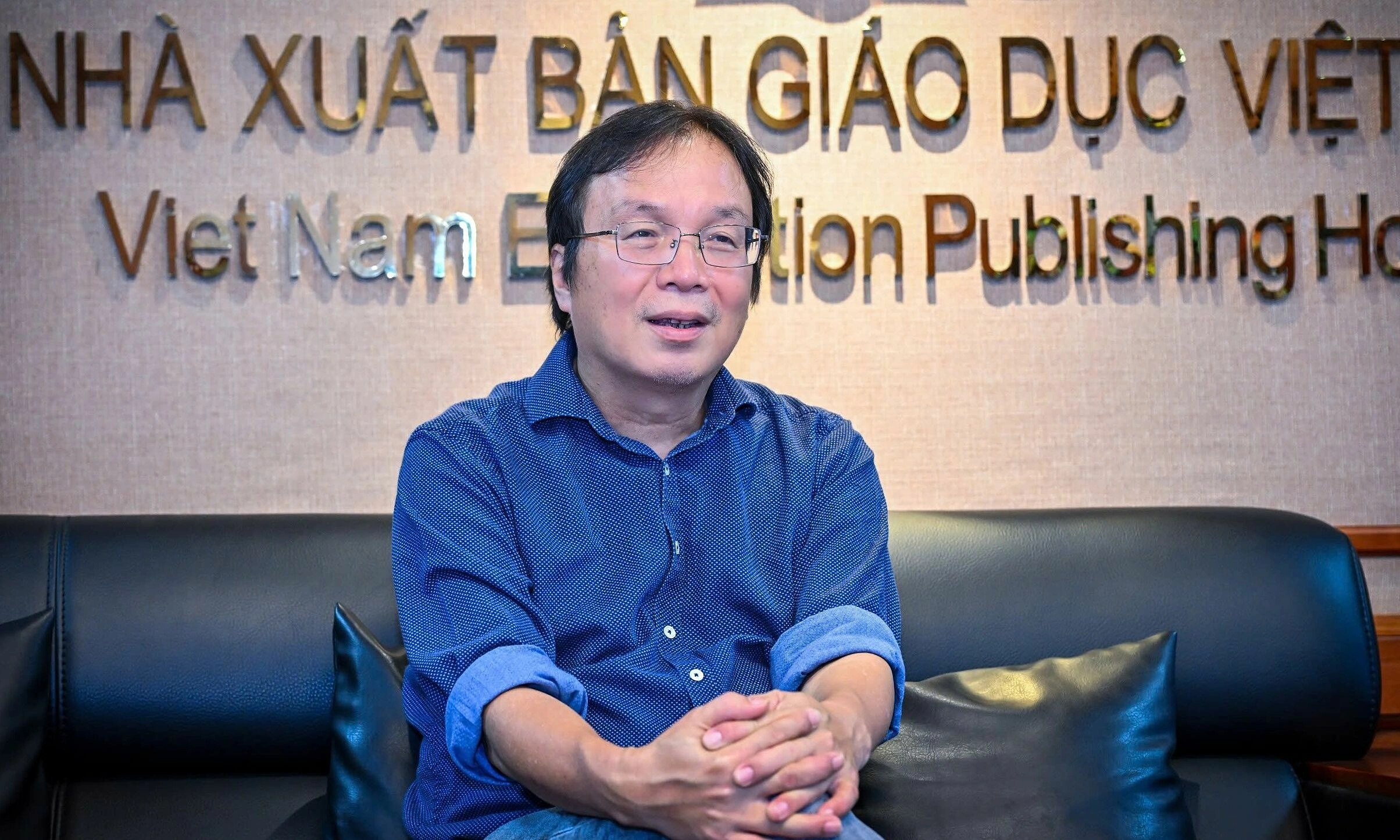
The confusion of parents' associations regarding the new regulation "is understandable," according to Mr. Nguyen Van Ngai, former Deputy Director of the Ho Chi Minh City Department of Education and Training. Mr. Ngai supports the spirit of Circular 81, as the new regulation is detailed and meticulous, creating "significant limits" on fundraising, contributions, and expenditures compared to current practices. According to the Ministry, the old regulations revealed many shortcomings, leading to inconsistent management of voluntary support and incidents of over-collection.
However, the concerns of parent boards are valid. He gave an example: motivating and rewarding students using only the school budget would be "very limited," while additional resources from parents would "be better."
Mr. Nguyen Hoang Chuong, former principal of Loc Phat High School in Lam Dong, believes society should not limit the role of parents' associations solely to soliciting and mobilizing money. They have many important tasks, such as representing parents to discuss and provide feedback to the school, and collaborating with the school administration to organize educational activities and boarding services.
Regarding contributions and support, Mr. Chuong noted that mobilization from parent boards is necessary in many cases. He recounted that in 2012, upon taking over a school in disarray, he decided to renovate facilities by deferring payment to the contractor for three years. During that time, the school used its own money while also receiving voluntary contributions from parents and community sources.
"The important thing is to ensure fundraising is for the right purpose, transparent, and affordable for parents. Principals must be honest and morally upright," Mr. Chuong emphasized.
Ms. Thuong, a parent of a 7th-grade student in Ho Chi Minh City, supports having a fund to maintain class activities, at least for photocopying materials, decorations, year-end parties, or equipping students with necessary items for their studies and activities at school.
"It's impractical for teachers to constantly message students for contributions whenever needed; it's fragmented, yet it's still parents' money," she said. "The ultimate goal is to ensure our children have the best possible learning environment."
 |
Parents await their children after graduation exams in Ho Chi Minh City, 6/2026. Photo illustration: Thanh Tung |
To adapt to the new regulations, Mr. Nguyen Van Ngai advised school administrations and homeroom teachers to fully inform parents' associations, rather than assigning blame only after violations occur. For funds already collected, he suggested they could still be used, provided they comply with regulations.
In the long term, Mr. Dinh Phu Cuong, principal of Phu Dinh Secondary School in Ho Chi Minh City, believes homeroom teachers and school administrations need to collaborate more closely with parents' associations, now that they can no longer collect funds.
He suggested that activities involving money "should be handled by the school." At the beginning of each school year, the school will agree with the parents' association on necessary activities. If classes need to purchase items, they must report to the principal for assessment of necessity.
"Even without collecting funds, school activities will still be organized normally, based on the budget or amounts authorized for collection by the local authorities," he said. He believes this approach not only limits violations but also helps parents understand the purpose of each activity. He trusts that if everything adheres to the spirit of voluntarism and agreement between parents and the school, the parent representatives board will remain effective.
While Mr. Tuan's class parent board has yet to find a suitable solution for when Circular 81 takes effect, Ms. Minh Anh plans to advance money for expenses if an activity needs to be organized, with parents in the class contributing to reimburse her. The specific contribution amount will not be fixed or as high as before.
"This approach will certainly make things difficult for me because it's time-consuming, and the amount reimbursed might not cover what I've advanced. But if we keep passing the buck, no one will act, or there will be no activities all year, and the students will be the most disadvantaged," she said.
Thanh Hang - Nguyen Quyen