Nghiem Tan Cuong, a 10th-grade student specializing in Mathematics at Hanoi - Amsterdam High School for the Gifted, diligently explored data analytics programs at universities in Singapore and Hong Kong (China) during a study abroad workshop organized by Summit Education Organization on the afternoon of 3/10 in Hanoi.
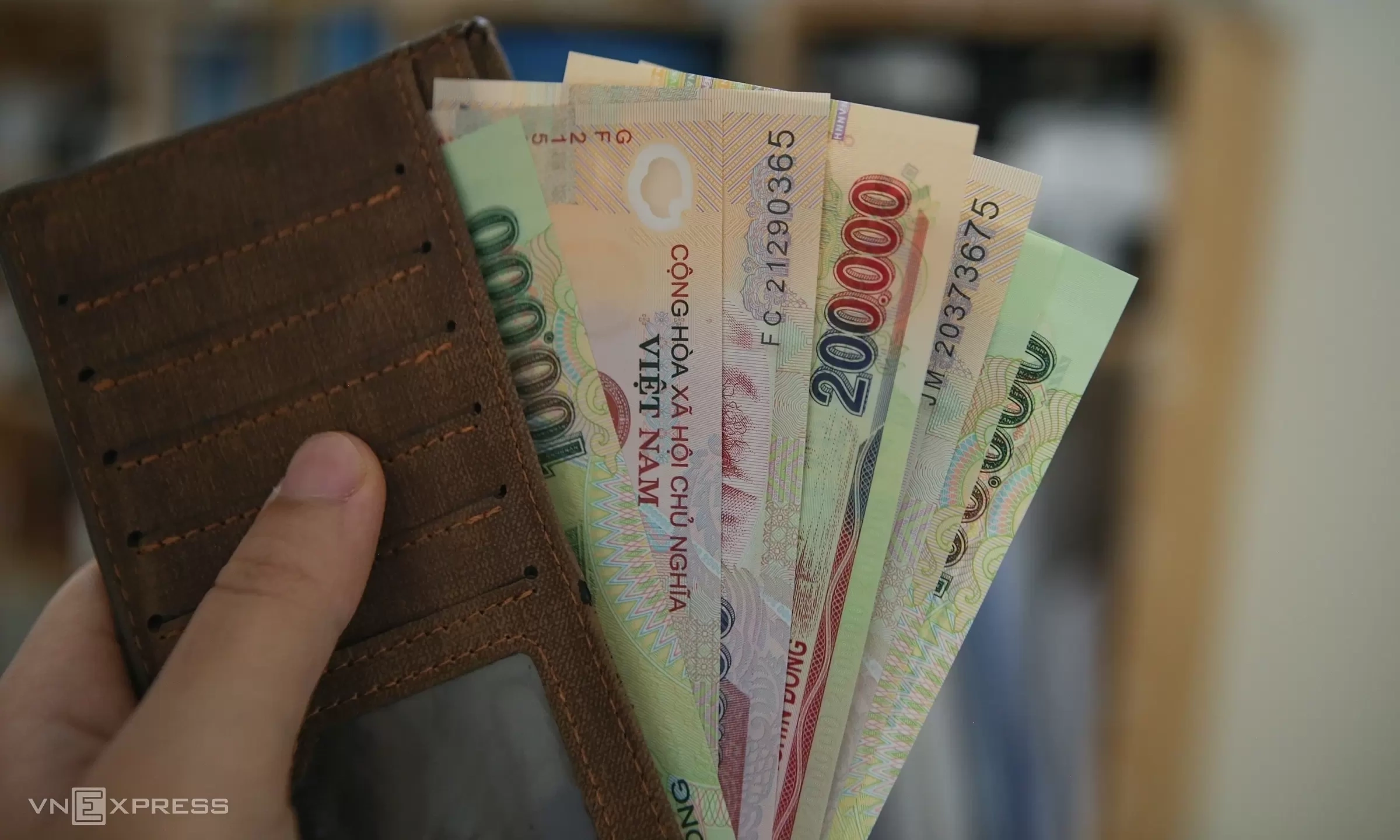
Cuong shared that the US was once on his list, but his family has since changed direction. The primary reason is the escalating tuition fees in the US, which range from 28,000 to 46,600 USD annually, not including living expenses. In contrast, his parents can afford around 300-400 million VND. Additionally, Cuong noted that the learning environment in Singapore and Hong Kong is modern and closer to Vietnam, helping to reduce travel costs.
Many students share Cuong's perspective. Throughout the event, the consultation desks for Asian universities were consistently crowded with students eager to inquire about admission requirements, tuition fees, and scholarship policies.
Tran Minh Trang, a 10th-grade student from Phan Huy Chu - Dong Da High School, also set aside her plans to study in the US and Europe, focusing instead on the University of Hong Kong (HKU) and National University of Singapore (NUS) for economics-related fields. According to Trang, the Asian environment is welcoming, offers quality education, and still allows for English usage.
"The application process for Asian universities is also somewhat more streamlined and simpler than in the US, primarily focusing on academic scores (GPA) and certifications," Trang observed.
This shift from the US to Asia in study abroad choices among Vietnamese students is increasingly evident, according to Le Dieu Linh, Deputy Director of Summit Education Organization.
She stated that previously, most families approaching the center aimed for study in the US. However, in the past one to two years, 30% to 40% of students have applied to institutions in Asia.
The University of Hong Kong (HKU) has also noted a similar trend, according to Vu Hai Truong, its admissions representative in Vietnam. Truong reported that in 2022, only one Vietnamese student applied to HKU; the following year, there were three, which then rose to 30 in 2024. This year, the number has increased tenfold to 300 applications, with 192 successful admissions.
Consultants and admissions experts attribute this shift to two main reasons.
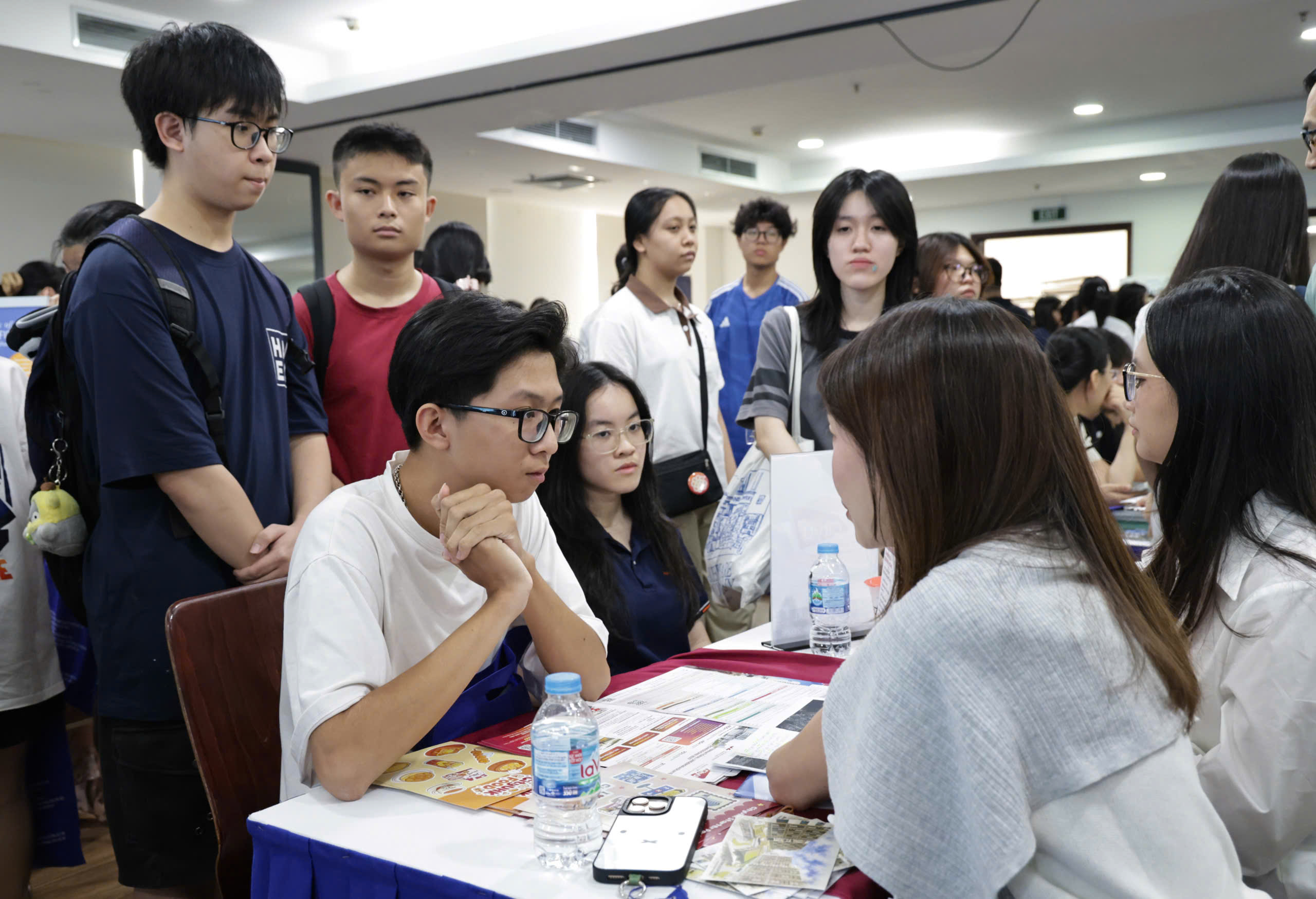 |
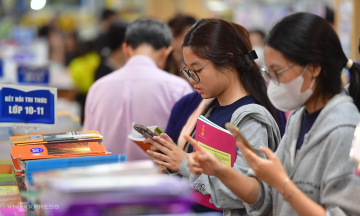
Students attend an international study abroad workshop, afternoon of 3/10 in Hanoi. Photo: Thanh Hang
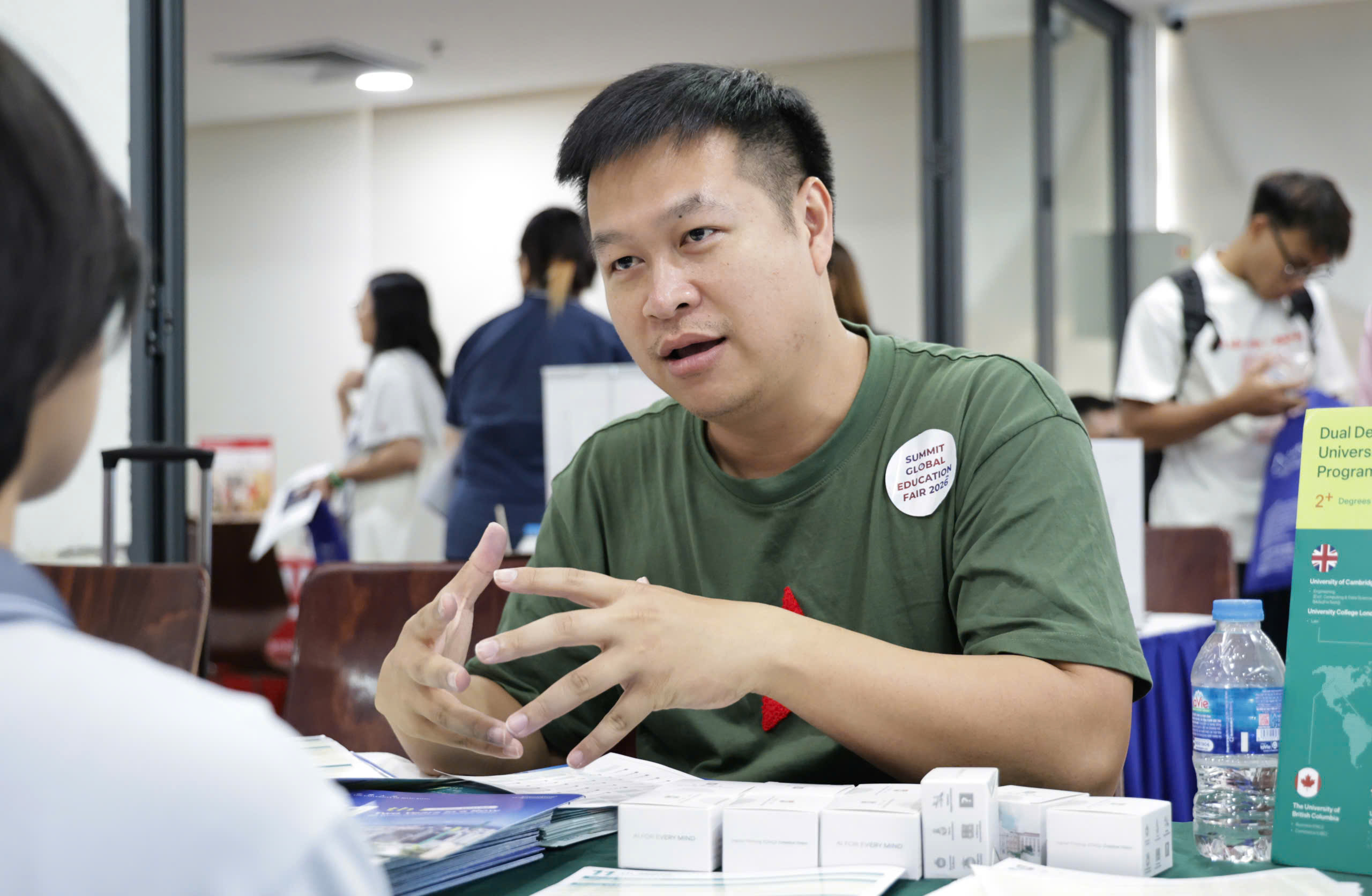 |
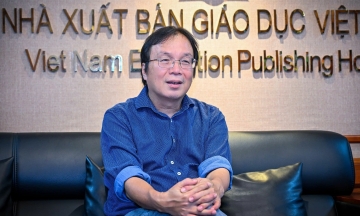
Vu Hai Truong, University of Hong Kong (China) admissions representative in Vietnam. Photo: Thanh Hang
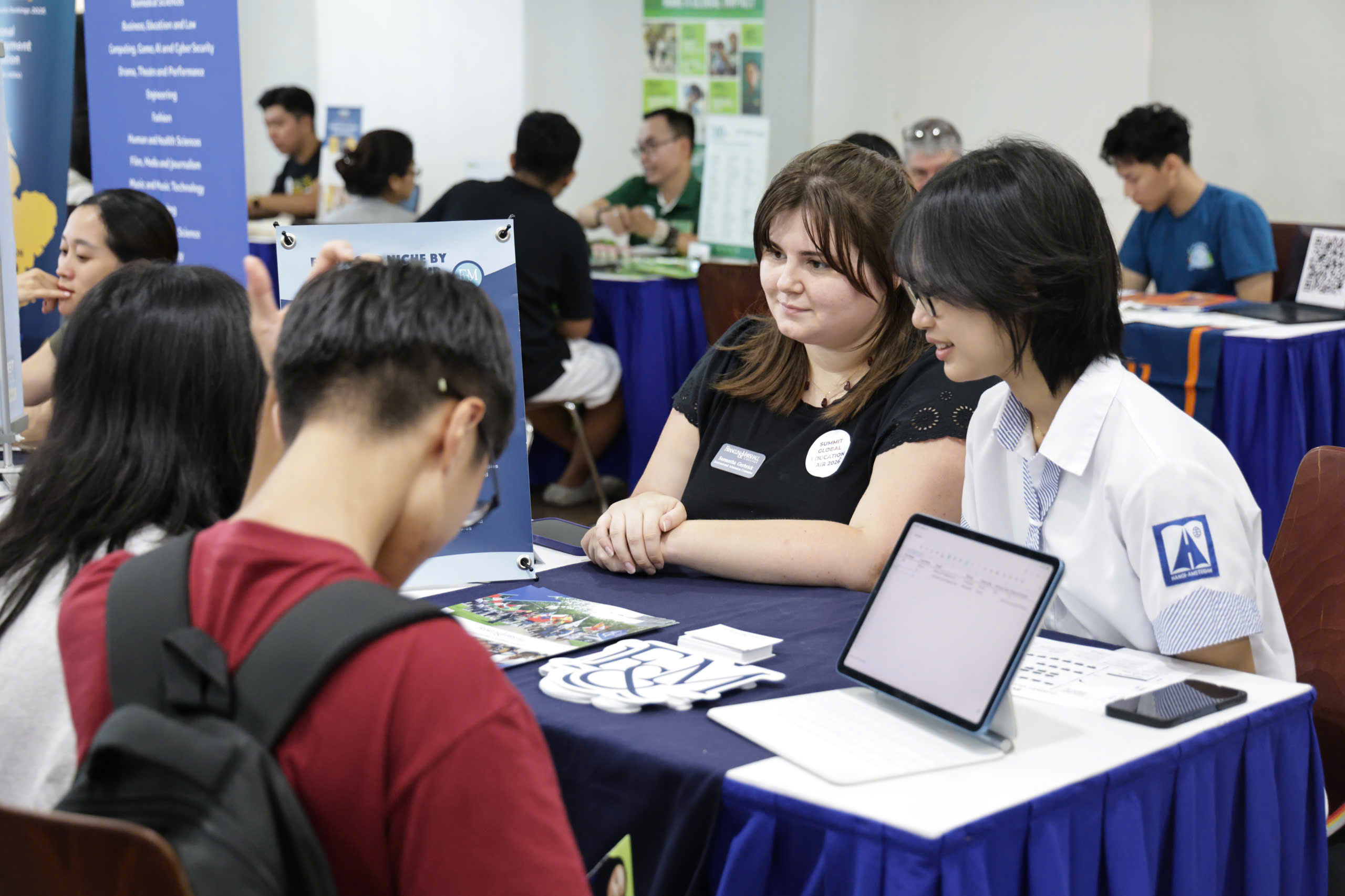 |
Students attend an international study abroad workshop, afternoon of 3/10 in Hanoi. Photo: Thanh Hang
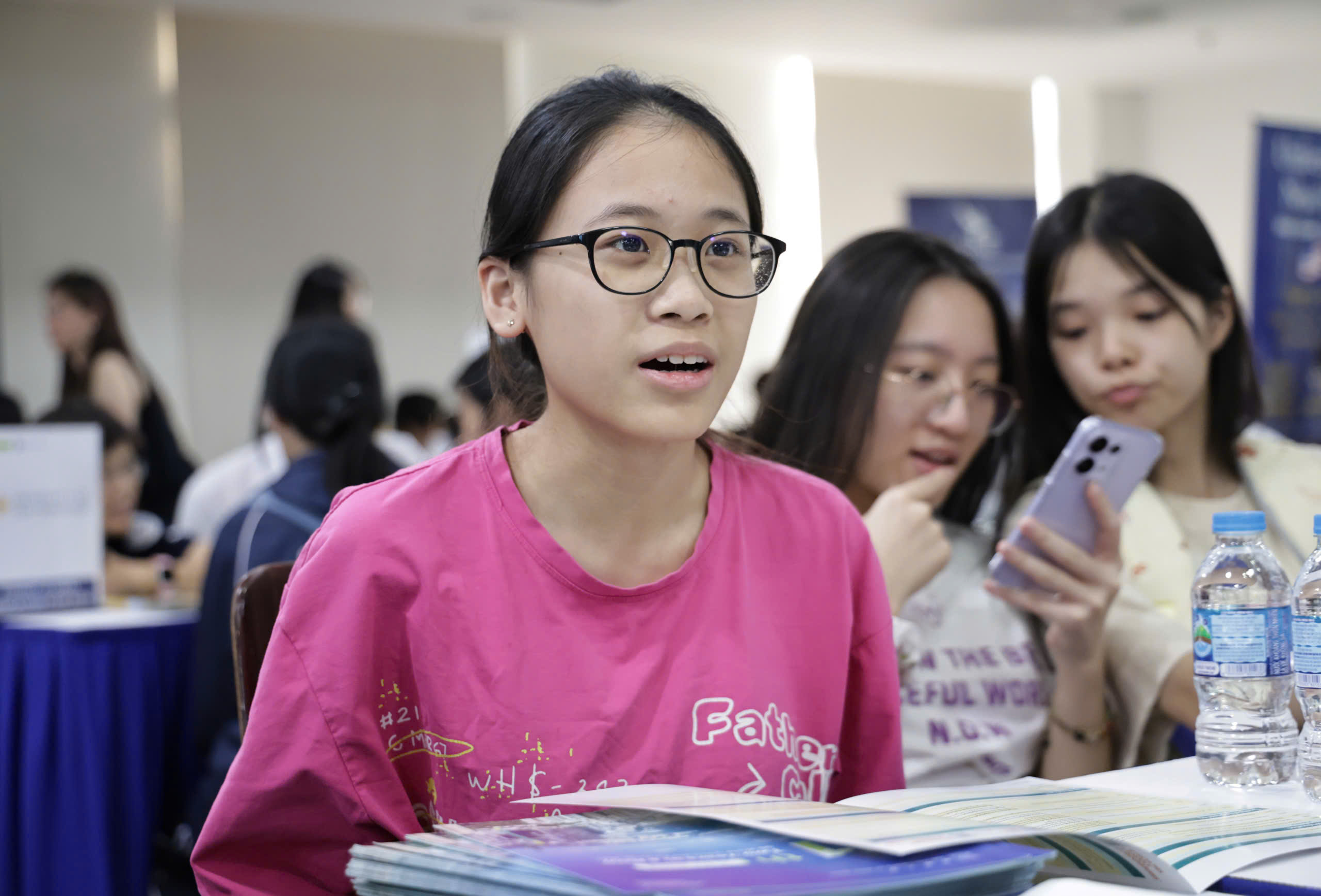 |
Students attend an international study abroad workshop, afternoon of 3/10 in Hanoi. Photo: Thanh Hang
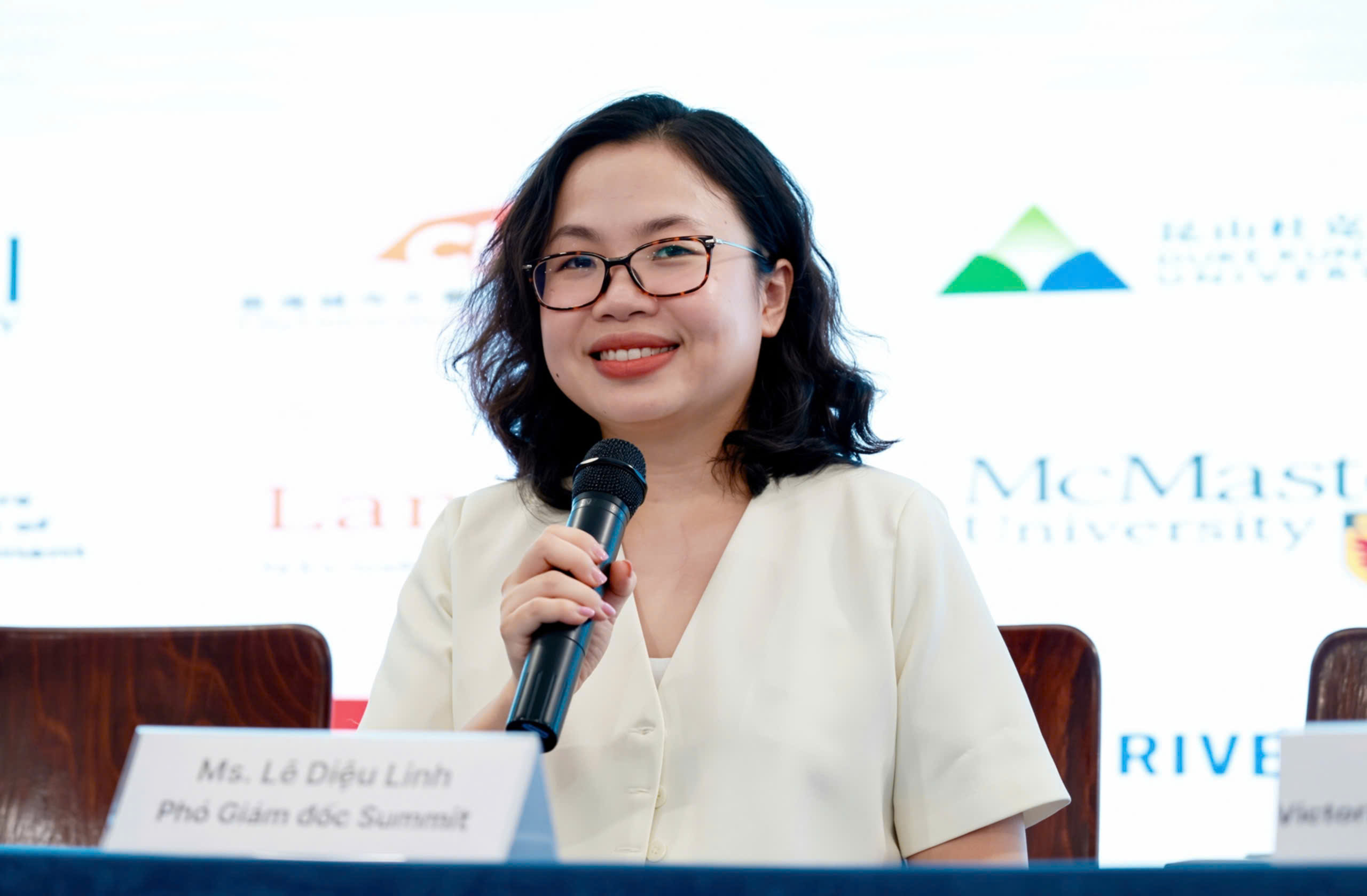 |
Le Dieu Linh, Deputy Director of Summit Education Organization, at the workshop. Photo: Thanh Hang
First, the cost of studying in the US is becoming increasingly expensive. US News data from 324 US universities shows that college costs have risen by about 40% over the past 20 years. For tuition alone, public universities saw an increase of up to 158%, averaging 28,000 USD per year; private universities increased by 132%, averaging 46,600 USD.
Second, the US has continuously tightened visa regulations and work opportunities for international students. For example, starting from late 8/2026, international students will be prohibited from undertaking internships if their study program does not mandate them, causing them to lose opportunities to gain experience and making it harder to compete after graduation. The H-1B work visa process has also shifted from a random lottery to a four-tier salary-based system (higher salaries have four times greater chances of selection than entry-level wages), while a proposed increase in sponsorship fees to 100,000 USD makes companies hesitant to recruit international personnel.
Conversely, many Asian universities help international students address these concerns. Vu Hai Truong believes that Hong Kong is considered "just Western enough," providing parents and students with a sense of security to access a modern learning environment without being too far from family.
According to the QS World University Rankings 2026, National University of Singapore ranks 8th, HKU 11th, and Nanyang Technological University (Singapore) holds the 12th position. A number of other universities in China, such as Tsinghua, Peking, and Fudan, outperform most Western institutions.
The costs at these universities are only half that of studying in the US; for instance, at HKU, it is approximately 25,000 USD per year. Students often secure jobs in their final year with an average salary of 4,300 USD per month and are permitted to stay for two years after graduation.
Another advantage of Asian universities is their "softer, simpler entry requirements," according to Nguyen Thuy Linh, an admissions representative for Singapore Management Institute. Compared to US universities, which demand strong essays, extracurricular activities, certifications, and achievements, Singaporean universities primarily require a GPA of 7,0 and an IELTS score of 6,0 or higher. Applicants seeking scholarships only need to focus on their essays.
These institutions also value the aptitude, studious spirit, and adaptability of Vietnamese students, leading them to offer incentive packages to attract talent.
At HKU, for example, Truong stated that the GPA admission threshold for Vietnamese students has been reduced from 8,0 to 7,0. HKU applies a principal's nomination scholarship program to eight high schools in Vietnam, including Hanoi - Amsterdam High School for the Gifted, Chu Van An High School for the Gifted, Nguyen Sieu (Hanoi), Le Hong Phong High School for the Gifted (Nam Dinh), Phan Boi Chau High School for the Gifted (Nghe An), Le Hong Phong High School for the Gifted (Ho Chi Minh City), and Tran Dai Nghia (Ho Chi Minh City). In contrast, Thailand has only four participating schools, while Laos and Cambodia have none.
Despite the expanding opportunities for studying in Asia, Le Dieu Linh advises students to thoroughly research their desired fields and careers before applying, rather than solely pursuing rankings. Nguyen Thuy Linh also reminds international students to hone their English speaking and writing skills to confidently integrate into the international environment.
Thanh Hang