From now until the end of 2027, students admitted to these 16 vocational programs will not need to submit bank account balance statements to apply for a D-2 visa (university study visa) if they achieve TOPIK 3 or higher in Korean proficiency. Previously, applicants needed to show at least 16-20 million won (approximately 280-355 million dong) in their accounts.
The maximum permitted part-time working hours for this group will also increase to 35 hours per week, a rise of five hours from the current limit.
The 16 pilot training programs are distributed across various provinces and cities. Gyeonggi province hosts the most, with six programs at: Gyeonggi University of Science and Technology, Daelim University, and Bucheon University. Busan follows with three programs, while other regions like North Jeolla, Daegu, Gyeongsang, Ulsan, and South Jeolla also participate.
The fields of study are diverse, ranging from automotive engineering and mechanical engineering to textile design, renewable energy, and smart agriculture.
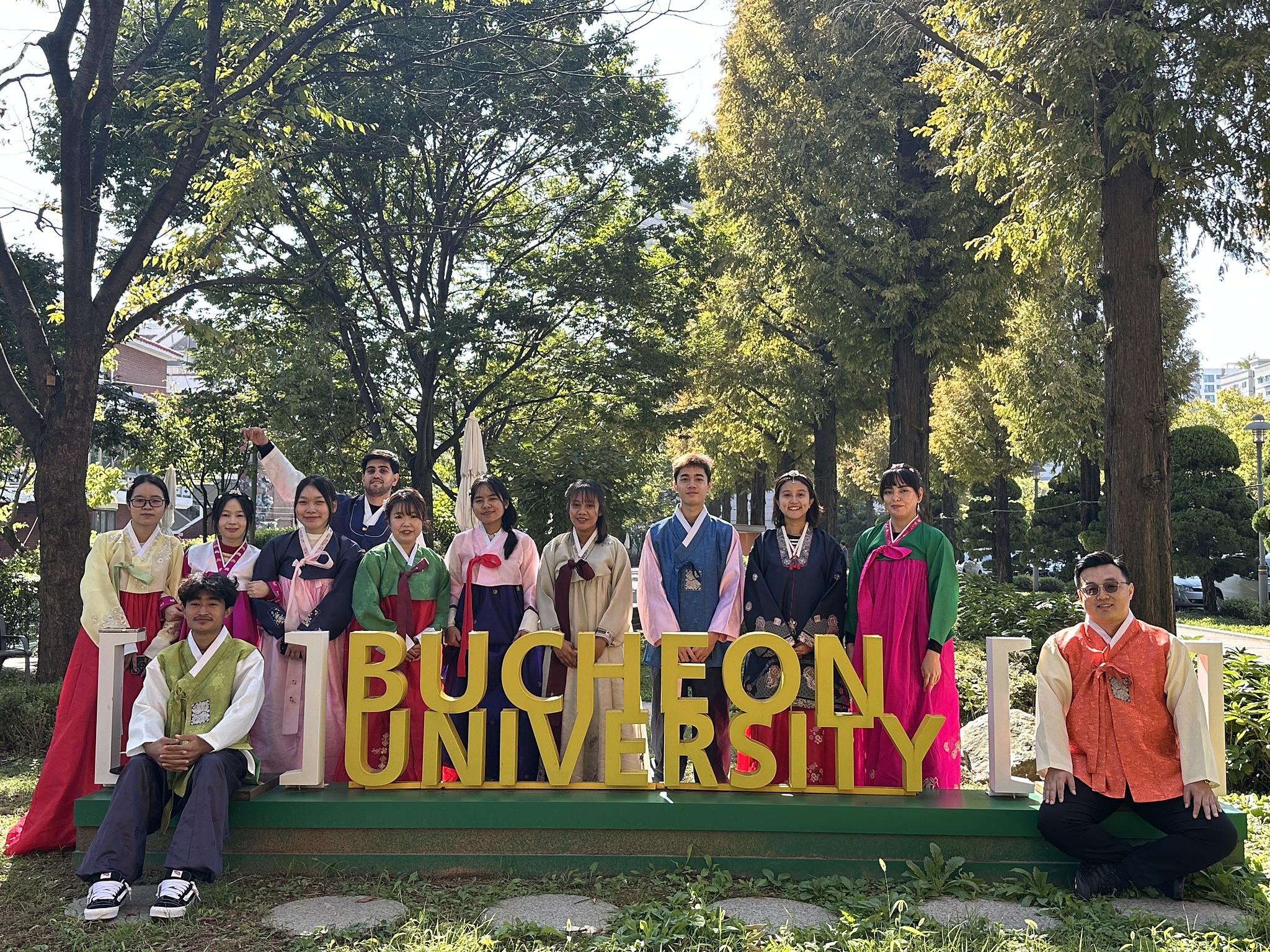 |
International students at Bucheon University, South Korea. Photo: Bucheon University, Insititute of International Affairs |
Additionally, the Ministry plans to introduce a new work visa, E-7-M (also known as the K-CORE visa), specifically for graduates of these 16 programs. To qualify, students must secure employment in their specialization with a minimum annual salary of 26 million won (approximately 460 million dong) and demonstrate Korean proficiency at KIIP level 4 or TOPIK 5.
Holders of the E-7-M visa who work for five years (or three years in areas designated as experiencing population decline) will have the opportunity to apply for an F-2 residency visa, opening a pathway to long-term settlement.
Minister of Justice Jung Sung-ho stated the program aims to both train skilled professionals fluent in Korean and address labor shortages and population decline in various regions.
Following the pilot period, the Ministry of Justice will evaluate the program's effectiveness to decide on expanding or officially implementing these regulations.
South Korea is an attractive study destination in Asia, having met its goal of 300,000 international students two years ahead of schedule. However, job opportunities present challenges for international students due to language barriers and complex visa application processes.
Khanh Linh