


On the afternoon of 21/1, 51 third and fourth-year students from the University of Information Technology (UIT), Vietnam National University, Ho Chi Minh City, arrived early at the VNG Corporation headquarters. They were preparing for their final project presentation for the Applied Game Programming Skills Development course. Some students were busy rehearsing and checking their presentations one last time.
"I never thought I would one day learn directly and present my final project to the head of a major enterprise," shared Cao Quan, a third-year student.
Quan noted that the distinct learning environment, from the classroom's acoustics and lighting to the seating arrangement, made him both excited and nervous compared to a typical classroom setting.
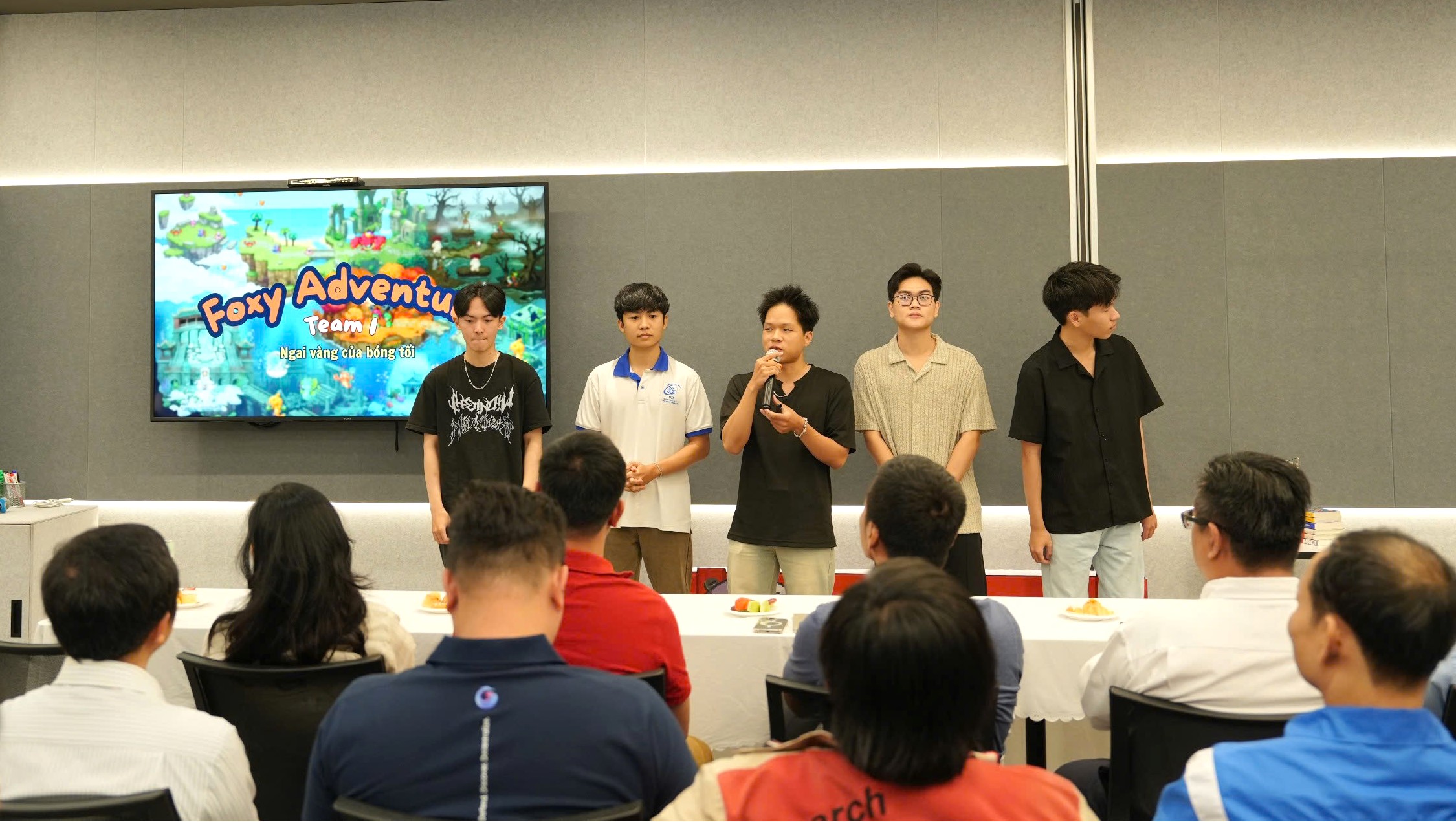 |
Students from the University of Information Technology present their course projects at the company, afternoon of 21/1. Photo: UIT
These students are the first participants in Vietnam National University, Ho Chi Minh City's "bringing the classroom into the enterprise" training model. The 51 students studied and practiced with 22 mentors from VNG and hai lecturers from UIT. This approach allowed students to engage with a real-world working environment, project deployment processes, and team collaboration methods for game development according to industry standards.
Ba outstanding game titles were selected for presentation to VNG Chairman Le Hong Minh, Associate Professor Doctor Nguyen Tan Tran Minh Khang — Vice Rector in charge of UIT — and department heads and lecturers from both entities.
The teams confidently presented their products, explaining their ideas, programming processes, character development, and effects, as well as lessons learned about technology and user experience.
"We gained exposure to a systematic and practical game development process. We acquired many hands-on experiences that are only shared here," said Phu Quy, a third-year student.
Observing the students' presentations, Le Hong Minh acknowledged their creative and distinctive perspectives, as well as their willingness to innovate. VNG plans to expand this training model in the future, gradually building a platform to support students in moving from product completion to commercialization.
"We believe that training is not just about imparting knowledge; it must also be linked to outcomes and the long-term development of the industry. This training model can foster the creative game industry in Ho Chi Minh City," Minh stated.
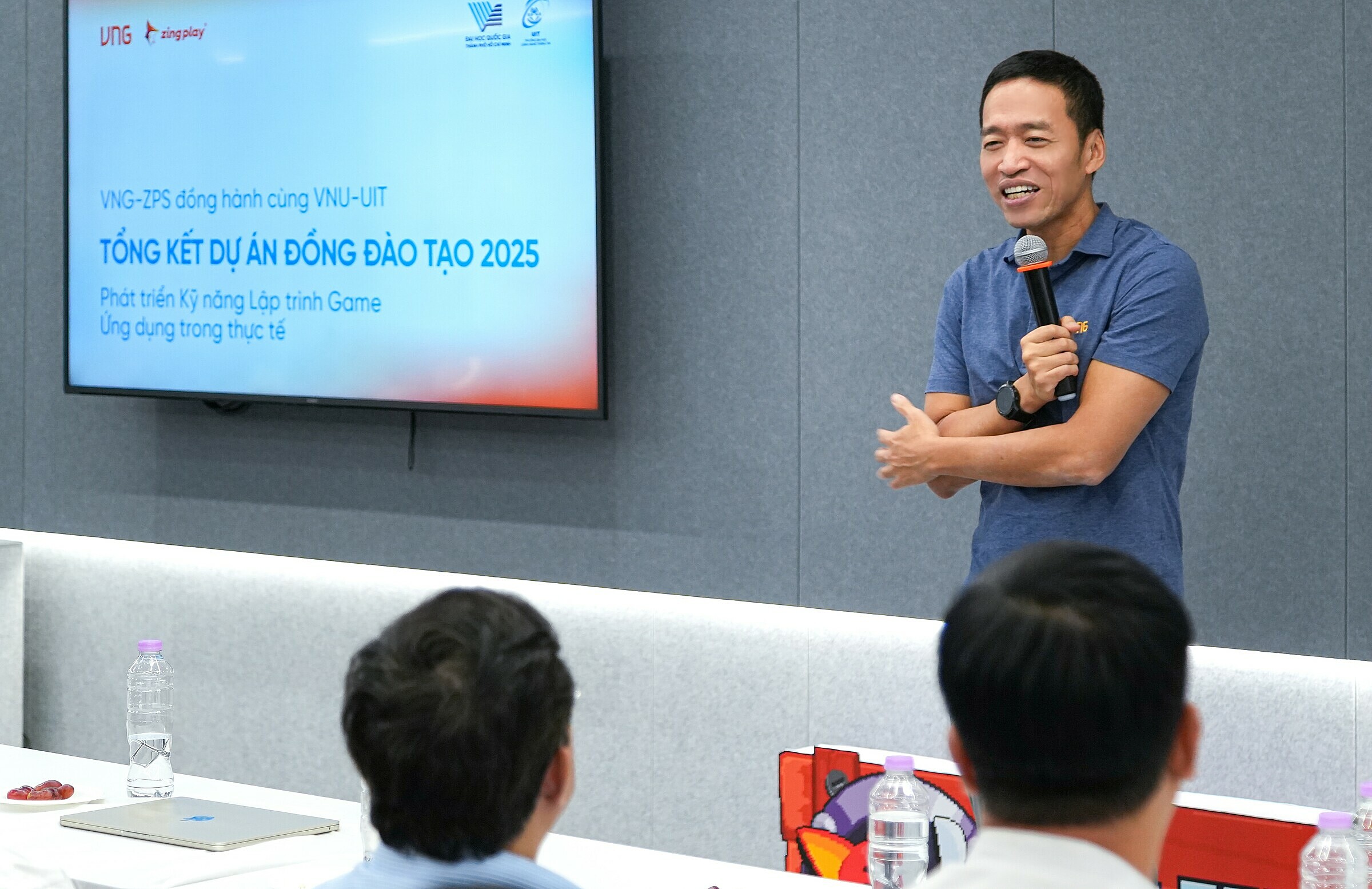 |
Le Hong Minh shares thoughts on a product developed by students. Photo: Diem Pham
Master Dang Viet Dung, a lecturer in the Faculty of Software Technology, explained that this course carries 4 credits and features a curriculum jointly developed by VNG and UIT. Student grades are also assessed by both parties.
"This course places students in the context of real projects, processes, and product standards, much like actual employees. This is a rare opportunity," Master Dung commented.
Throughout the program, Nguyen Vu Tien, VNG's Game Development Director, was surprised by the complete game titles created by the students. He initially did not have high expectations, as the students had no prior game development experience and had to manage time for many other courses. However, the students quickly absorbed the material, produced complete products, and demonstrated potential for market release with further development.
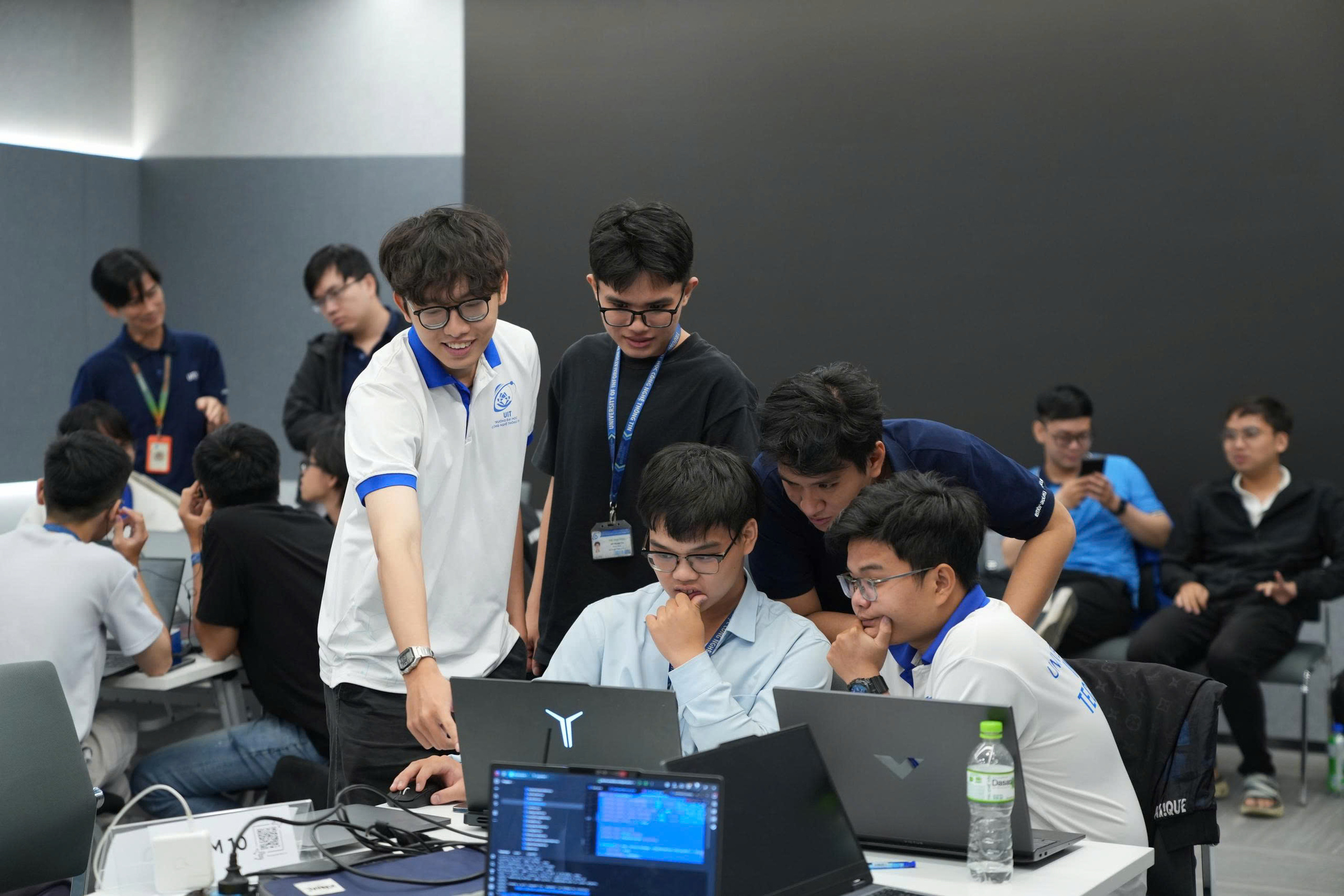 |
Students learn and practice in groups with mentors from the company. Photo: UIT
Le Nguyen


