


Governor Greg Abbott issued the decision on 27/1, as the US government is working to reform the H-1B visa program. This visa is for highly skilled foreign workers for a maximum of six years, typically in fields such as science and engineering, information technology, education, and healthcare.
This regulation will apply until the end of 5/2027, with exceptions approved by the Texas Workforce Commission.
Abbott stated that this period would allow lawmakers to establish "legal safeguards," awaiting amendments from Congress and government reform measures.
Additionally, the Governor also required entities to report in detail the number of visas, the nationality of workers, and evidence demonstrating that local residents are prioritized in recruitment over foreign nationals.
"The state government must set an example, ensuring that job opportunities—especially those using taxpayer money—must prioritize Texans," Abbott emphasized.
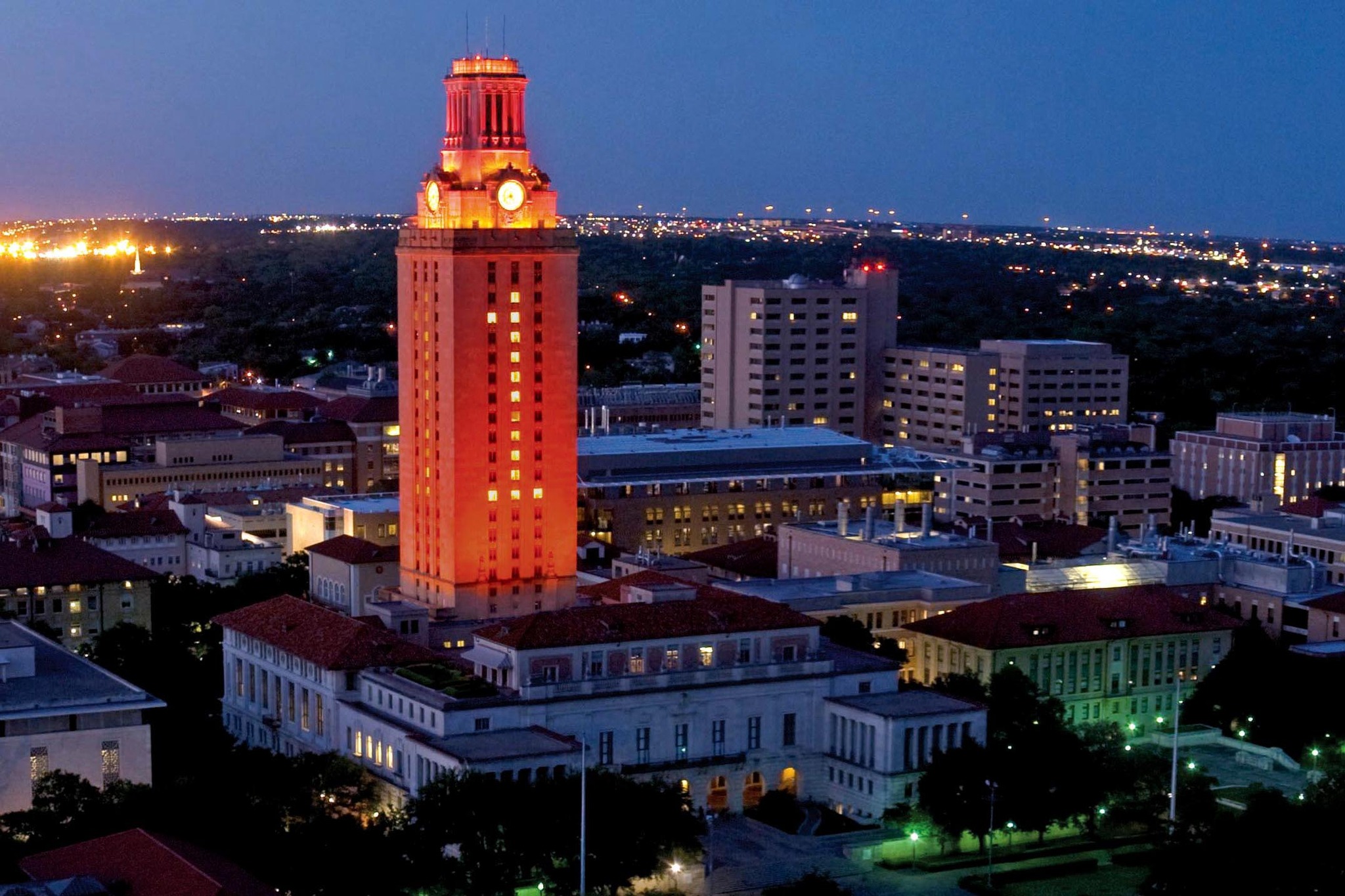 |
The main building of the University of Texas-Austin. *Photo: University of Texas at Austin.* |
Echoing his sentiment, opponents of the H-1B program argue that this visa creates a loophole for low-cost foreign labor, taking away job opportunities from local residents. However, experts warn that freezing visas will exacerbate staffing shortages at universities, hospitals, and research centers, thereby driving up public service costs.
Texas was the third most popular state for international students in the 2024-2025 academic year, with over 97,000 individuals, according to the 2025 Open Door report by the Institute of International Education (IIE).
According to data from U.S. Citizenship and Immigration Services (USCIS), UT Southwestern Medical Center is currently the public institution employing the most H-1B workers in Texas, with over 200 individuals. Other entities such as MD Anderson Cancer Center, Texas A&M University (a top 21 public university in the US, according to U.S.News), and the University of Texas-Austin (top 7) also employ hundreds of workers under this category.
Prior to Texas, Florida Governor Ron DeSantis also called for restrictions on H-1B due to concerns about abuse. Meanwhile, President Trump signed an executive order imposing an annual fee of 100,000 USD for H-1B workers.
The H-1B visa was established by the 1990 U.S. Immigration Act. Each year, the US issues a quota of 85,000 of these visas, though non-profit organizations and higher education institutions are often exempt from this cap.
Khanh Linh


