While in high school, Laura Zhang participated in a math competition sponsored by quantitative trading firms, receiving small gifts like T-shirts and water bottles with company logos. At the time, the math and computer science student at the Massachusetts Institute of Technology (MIT) could not have imagined that just a few years later, these same organizations would offer starting salaries of up to one million USD to exceptional graduates, fiercely competing for them against artificial intelligence (AI) companies.
Training large language models (LLM) in AI and building machine learning algorithms to forecast financial markets both require personnel with advanced mathematical and statistical backgrounds, according to The Herald Business. As Wall Street firms aggressively shift towards applying machine learning and LLM, they find themselves in direct competition with leading AI research labs like OpenAI and Anthropic, causing salaries to surge.
"When OpenAI emerged, that's when the real competition exploded", Matt Stabile, founder of the recruitment firm Stabile Search, told the Wall Street Journal.
Stabile added that seven-figure income packages for new hires used to be a rare occurrence in the labor market, "but now one million USD no longer surprises anyone".
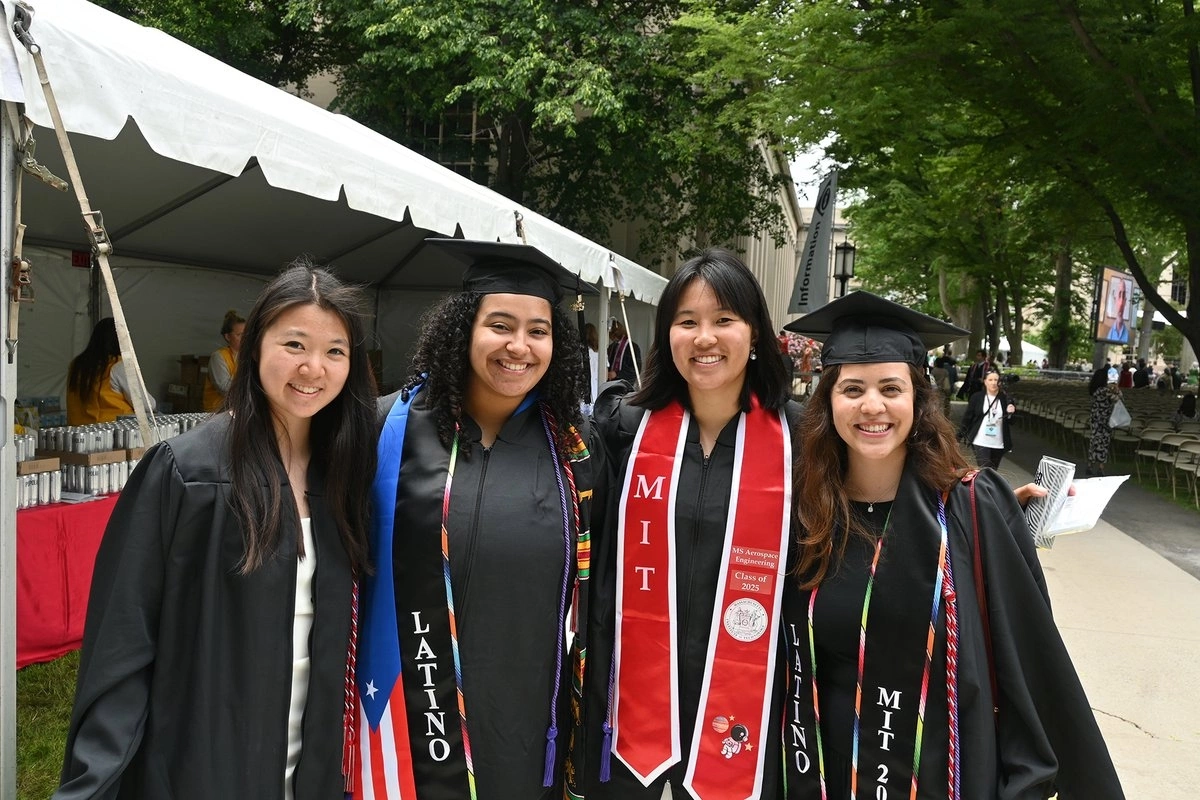 |
Students on graduation day at the Massachusetts Institute of Technology (USA), 2025. Photo: MITStudents Fanpage |
Standard starting compensation at top trading funds typically ranges from 350,000-500,000 USD per year (equivalent to 9,1-13 billion VND), but recruiters indicate it is not uncommon for individuals to receive higher amounts. This starting level can even increase, reaching one million USD after just a few years. In many cases, financial companies are willing to break salary frameworks to secure outstanding summer interns before they graduate.
"The current recruitment market is like a bidding war for free agents in professional sports", shared Kevin Cassata, founder of the executive search firm Karbon Agency. He noted witnessing some new graduates offered compensation packages reaching 1,5 million USD.
The intense compensation race among companies has extended to internship programs and student activities. For instance, OpenAI pays interns 18,300 USD per month (nearly 480 million VND). Optiver, a leading quantitative trading firm, sponsors chess competitions and organizes numerous events at universities to scout for talent.
Zhang mentioned that at MIT, these companies visit the campus to recruit her and her classmates, even sponsoring flights to bring students to their headquarters for practical work experience programs.
However, this salary craze also poses a risk of talent drain from other mathematical research fields.
At the Institute of Mathematics at Oxford University, UK, most PhD students enroll with aspirations of becoming leading academics. Yet, summer internships at quantitative trading firms, which readily pay over 30,000 USD (over 780 million VND) per month, often change their career paths.
According to Alvaro Cartea, professor of mathematics at Oxford University and director of the Oxford-Man Institute, his students typically earn between 300,000 and one million USD when transitioning into quantitative finance. Those with LLM skills often command the highest salaries.
"Once they experience working for these companies and see the money they can earn, most prefer to venture into industry rather than remain in academia", Professor Alvaro Cartea said.