While such support is common in global PhD education, a growing number of Vietnamese universities have recently begun to implement these initiatives with urgency.
Specifically, the support policies are as follows:
| Training Institution | Level/Policy of support for PhD students |
| Vietnam National University Ho Chi Minh City | Up to 560 million dong |
| Hanoi University of Science and Technology | Scholarship equivalent to tuition fees (80-100 million dong per year) |
| University of Economics Ho Chi Minh City | Scholarship equivalent to tuition fees Accommodation arrangement, guest lecturer remuneration (up to 450 hours per year) |
| Phenikaa University | Tuition fee waiver Scholarships from 96 to 282 million dong |
| University of Engineering and Technology, Vietnam National University, Hanoi | Scholarship equivalent to tuition fees Living cost support: 7 million dong per month (for those living outside the university) Remuneration for teaching, research, and other tasks (if a university lecturer) |
| Vietnamese-German University | Tuition fee waiver Living cost support: 5 million dong per month |
| University of Science and Technology of Hanoi | 50-100% tuition fee waiver 6 million dong per month (if teaching assistant for 48 hours each year) |
Most universities require PhD students to study and research full-time, or to provide teaching support, publish scientific papers, and participate in certain faculty and university activities.
Associate Professor, Doctor Tran Thien Phuc, Vice Rector of Ho Chi Minh City University of Technology, Vietnam National University Ho Chi Minh City, views this as an optimistic sign and a correct direction, especially given the competition for PhD candidates from foreign universities.
Currently, the national target for PhD enrollment is around 5,000-7,000 students annually, but typically less than 50% are recruited. Coupled with the government's scholarship policy offering up to 100 million dong per year for students in 15 engineering and technology fields, universities hope these measures will incentivize and retain excellent PhD students domestically.
"Universities are gradually adopting the PhD training model of major research centers worldwide, where PhD students are considered the core force of the science and technology ecosystem," said Professor Chu Duc Trinh, Rector of the University of Engineering and Technology, Vietnam National University, Hanoi.
Both academics agree that the objective of attracting PhD students is not merely to increase scientific publications. More importantly, universities aim to build an elite research environment and foster a deep culture of academic inquiry and scientific and technological innovation.
Associate Professor, Doctor Phuc explained that the PhD is the highest level of education. This group receives a solid foundation, from theoretical principles to research methodologies, teamwork, and laboratory management, enabling them to conduct independent research and generate new knowledge and scientific and technological breakthroughs.
As Vietnam seeks to develop new technologies like nuclear power, semiconductor microchips, and unmanned aerial vehicles, only personnel with master's or PhD degrees possess the necessary capabilities to undertake these roles.
According to Professor Trinh, leading global universities consider PhD students professional scientific workers, who receive salaries and have responsibilities for research, directly contributing to innovation activities.
By shifting this perspective, Vietnamese universities can develop appropriate mechanisms regarding scholarships, income, and working environments, allowing PhD students to confidently pursue long-term scientific careers.
However, financial support is only a necessary condition, according to Professor Trinh and Associate Professor Phuc. What students value most is the research environment and opportunities to engage with the global academic and scientific community. They need support to attend leading conferences and scientific gatherings in their fields or to participate in exchange programs with foreign universities for exposure.
"Financial support is the easiest and weakest aspect, but it is an important first step," said Associate Professor Phuc.
Professor Trinh noted that thanks to various solutions, the University of Engineering and Technology has recruited about 30 PhD students annually in recent years. While the number has not increased dramatically, the quality of incoming students has significantly improved; they are younger, and their research spirit and commitment are higher due to the full-time training model.
Similarly, Vietnamese-German University has observed a growing interest in its PhD programs, even from professionals currently working in domestic and international enterprises.
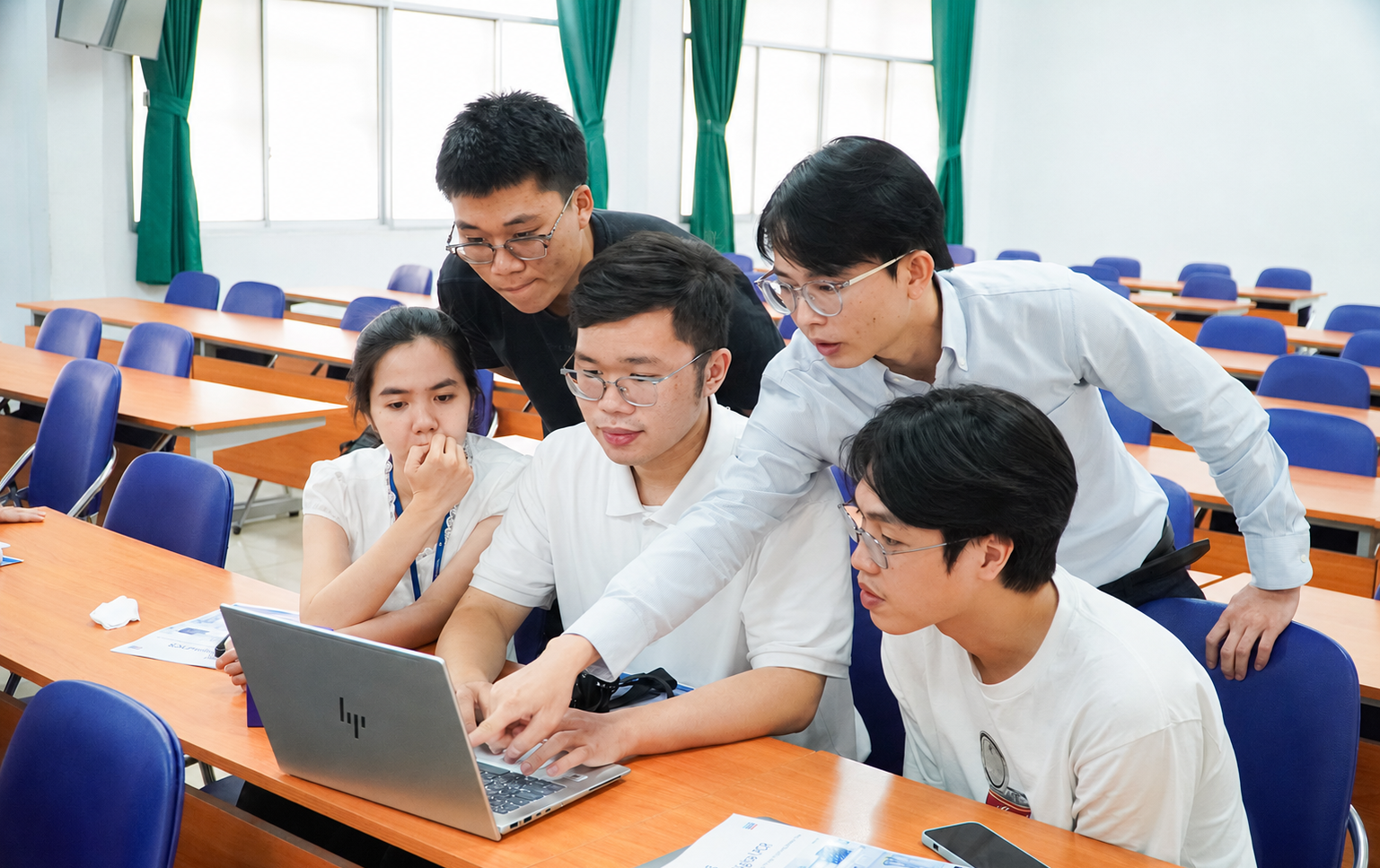 |
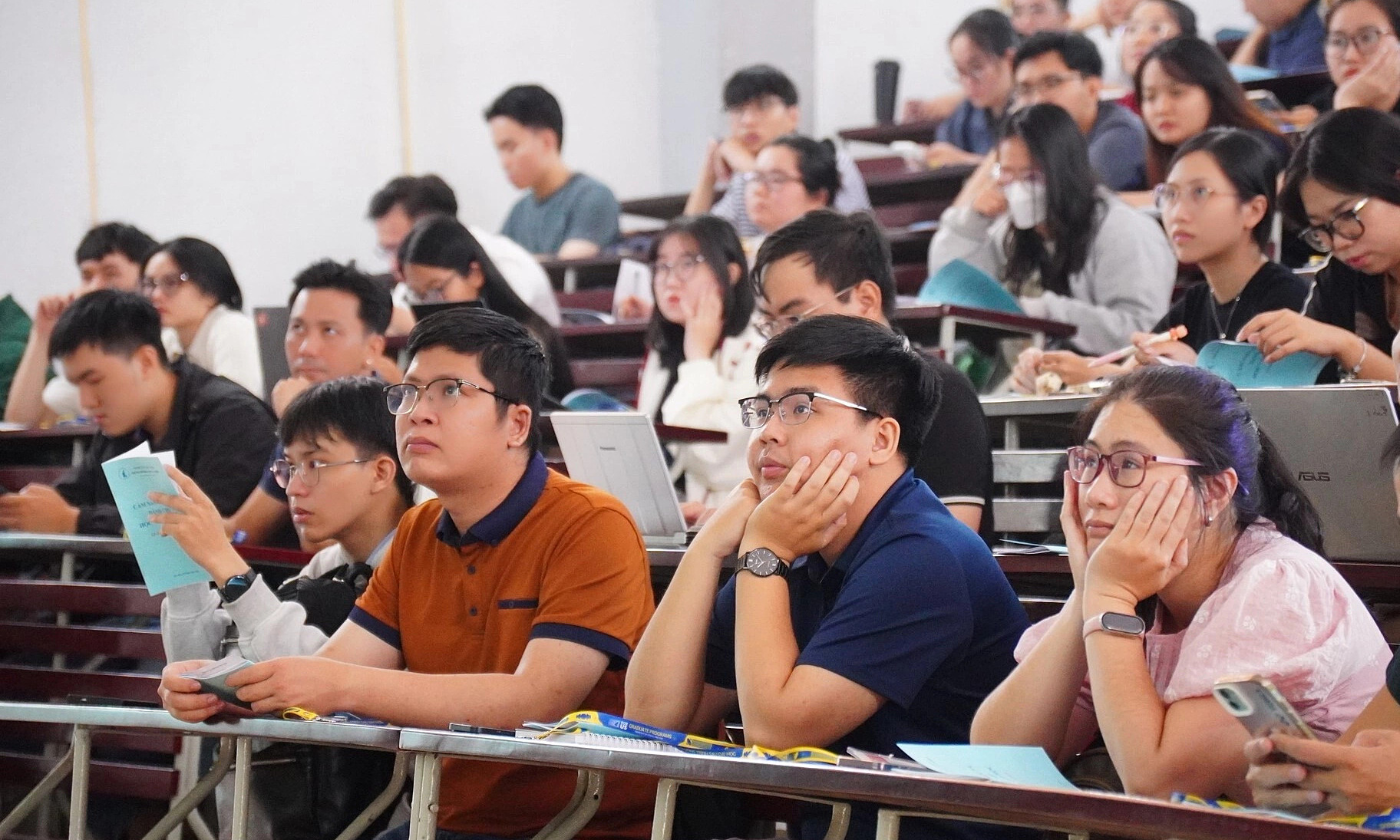
Students and lecturers from the Faculty of Biology - Biotechnology, Ho Chi Minh City University of Science, discuss during an academic session, 8/5. Photo: HCMUS |
Students and lecturers from the Faculty of Biology - Biotechnology, Ho Chi Minh City University of Science, discuss during an academic session, 8/5. Photo: HCMUS
Le Nguyen - Duong Tam